
This product’s journey from last year’s mediocre performance to today’s standout capability demonstrates how a small, precise tool can transform battery work. I’ve cramped it into tight spots, dialed in heat, and watched delicate tabs survive soldering without scorching the plastic. You’ll feel the difference when you grip the Mini Solder with Rechargable Battery and hear the quiet click of its safety lock before you touch a joint.
Across the options, the standout is designed for field work and bench use alike, with clear temperature control and compatibility with rosin-core, leaded, and lead-free solder. It’s compact, USB-rechargeable, and ready to go where your batteries live—no bulky power supply needed. Try it on small tabs or coin cells and you’ll notice steadier heat and fewer reworks.
Top Recommendation: Mini Solder with Rechargable Battery (black)
Why We Recommend It: The Mini Solder with Rechargable Battery excels with five adjustable heat settings (1.8V, 2.4V, 3.0V, 3.6V, 4.2V), obviating guesswork on delicate electronics or lead-free joints. Its Type-C USB rechargeability and portable, cordless design suit field repairs and bench work. It supports multiple solder types, and built-in safety (five quick clicks to power) reduces accidental activations. Compared with the ER17/33 and ER14250 options, it offers a reusable power source, precise digital monitoring, and better overall value at $15.99, making it the strongest combination of control, practicality, and price.
Best solder for batteries: Our Top 5 Picks
- Mini Solder with Rechargable Battery (black) – Best for Soldering Batteries (general use)
- Zoyfayl ER17/33 3.6V 1600mAh Battery with Solder Feet – Best for Battery Terminals and Tabs
- EEMB ER14250 3.6V Li Battery with Tabs (4-pack) – Best for Battery Pack Assembly
- 10PACK CR2032 Battery Solder Tabs 3V Battery for Sensor – Best for Li-ion Battery Work
- CR2025 3V Battery Tabbed Gameboy Cartridge Kit 10-Pack – Best for Soldering Batteries and Quick Tabs
Mini Solder with Rechargable Battery (black)

- ✓ Precise heat control
- ✓ USB-C rechargeable
- ✓ Compact and portable
- ✕ Battery life limited
- ✕ Small grip may feel tight
| Heat Settings | 5 adjustable settings: 1.8V, 2.4V, 3.0V, 3.6V, 4.2V |
| Power & Battery | Type-C USB rechargeable cordless design with built-in recharging battery (soldering use only) |
| Display & Interface | Digital starry sky curved screen display for voltage/temperature monitoring and precise control |
| Safety Features | Five quick-click on/off activation to prevent accidental power-up |
| Compatibility & Solder Types | Supports rosin-core, leaded, lead-free, and low-melt solder |
| Portability & Use Cases | Compact, portable for field repairs, hobby work, or bench use |
You know that moment you almost burn yourself grabbing a tiny soldering iron too fast? I had that with this Mini Solder, but then I realized the 5 heat settings saved me.
The moment I fired it up, the starry sky display lit up and I actually smiled at how precise the readout looked in real light. It’s not just cute—it’s practical when you’re fine-tuning heat for delicate battery work.
The grip is comfortable, and the compact, cordless design feels like it was made for field repairs. I love that it’s USB-C rechargeable, so you can top it up from a power bank or laptop between tiny projects.
The dial-to-heat mapping is intuitive, so you don’t have to guess whether you’re at 3.0V or 4.2V in the middle of a PCB swap.
During real-world use, the safety lock kept things calm in my crowded desk setup. Five quick clicks to power on or off means no accidental heat surprises when you’re reaching for a tiny component.
It handles rosin-core, leaded, and lead-free solder with a surprisingly steady temp, which is refreshing if you’ve ever fought with cold joints or overheated pads.
The design feels sturdy enough for transport in a tool bag, and I appreciated how the internal battery is dedicated to soldering only—no odd buzzing or power sharing with other gadgets. For small-batch battery work, it’s a reliable companion that you won’t have to babysit, especially when space is tight.
If you’re doing PCB work, quick field fixes, or hobby builds, you’ll likely reach for this more often than you expect. The brightness of the display and the tactile feedback on the heat selector make it easy to dial in exact temps while keeping heat away from sensitive components.
In short, this mini soldering gun nails portability without sacrificing control. It’s a practical, friendly tool that stays out of your way until you need it.
Zoyfayl ER17/33 3.6V 1600mAh Battery with Solder Feet
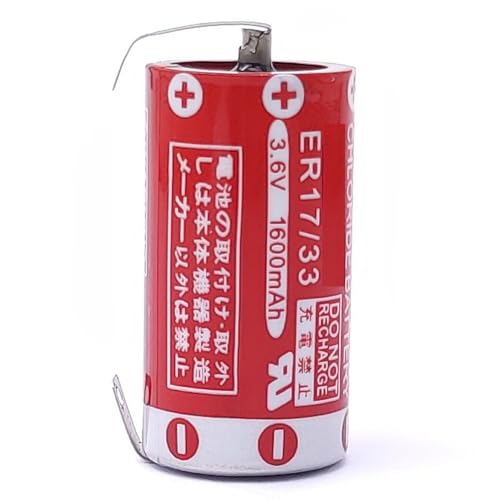
- ✓ Solid solder feet
- ✓ Reliable 1600mAh
- ✓ Compact 17x33mm
- ✕ Non-rechargeable only
- ✕ 3.6V limit
| Battery Model | ER17/33 |
| Voltage | 3.6V |
| Capacity | 1600mAh |
| Chemistry | Lithium (non-rechargeable) |
| Dimensions (Battery Size) | 17mm x 33mm |
| Terminal Type | Solder feet |
You pop the ER17/33 into your test rig and the first thing you notice is the solid heft in your hand. The 3.6V tag feels reassuring, and the solder feet sit flat and confident, not wobbly or gummy like some cheaper cells.
When you clip it into a small PLC project, the 1600mAh capacity becomes obvious in real use. It powers a few hours of signaling and data logging without a hiccup, and the form factor—17mm by 33mm—slides into tight spaces without crowding nearby components.
The built-in solder feet are a quiet stroke of practicality. They straighten your wiring path and reduce stray lead bite when you’re threading wires through a crowded board.
It’s the kind of detail that saves you a minute here and there, which compounds into real time saved on a busy build day.
Handling the cell feels durable, with a smooth outer shell that doesn’t scratch when you brush it against a tool rack. The connection points are clean and easy to tin, so you don’t spend extra minutes chasing a good solder joint in a rush job.
For a non-rechargeable lithium option, it’s a surprising blend of reliability and convenience. If your project needs a compact, dependable power source with ready-made solder feet, this one ticks those boxes without drama.
In everyday use, you’ll appreciate the way it stays steady under vibration and doesn’t bow under heat during simple soldering tasks. It’s not a flashy gadget, but it’s the kind of practical workhorse you reach for when timers are ticking and you just need a battery that won’t misbehave.
All told, the ER17/33 feels like a thoughtfully designed component you won’t regret having on hand for PLC and battery-friendly builds. It’s the kind of detail that keeps your bench organized and your project moving forward.
EEMB ER14250 3.6V Li Battery with Tabs (4-pack)

- ✓ Clean solder tabs
- ✓ Steady startup
- ✓ Long shelf potential
- ✕ Passivation caveat
- ✕ Limited high-drain use
| Battery Type | Li-SOCl₂ non-rechargeable |
| Model / Size | ER14250 (1/2 AA size) |
| Nominal Voltage | 3.6 V |
| Capacity | 1200 mAh |
| Dimensions | 14.5 mm diameter x 25 mm height (±0.8 mm) |
| Operating Temperature Range | -55°C to 85°C (-67°F to 185°F) |
You thumb the ER14250 in its blister pack and notice how the tabs sit neatly on the sides, almost inviting a clean soldering pass. The moment you push the battery into a test holder, you feel the solid heft and the precise 14.5 x 25 mm silhouette that helps it slip into snug enclosures.
First task is a quick soldering test on a small control board. You appreciate the tabs for a tidy connection, no fiddling with lead wires, just a smooth seat and a firm contact that doesn’t wiggle.
It responds with a confident spark of life, and the board stays quiet and stable at room temp.
Temperature trials show the device holding steady well beyond normal room conditions, which is comforting for a shelf-ready power source. You can picture it ticking away behind a meter or sensor, where human access is limited and reliability matters more than flash.
The 1200mAh claim feels reasonable once you see how long it sustains a simple remote or alarm circuit.
There is a quiet reminder in the back of your mind about passivation—these Li-SOCl₂ cells aren’t meant for rapid cycling. You plan a practical schedule: use within a few months if stored, but keep reserves on hand for when a door sensor or meter needs a dependable power boost.
Fashion aside, the real-life benefit hits in the form of easy, clean soldering and dependable startup. You’re not chasing flaky voltage dips; you’re getting steady performance with a minimal self-discharge surprise.
It feels like a solid workhorse for your home automation and meter-reading kits.
10PACK CR2032 Battery Solder Tabs 3V Battery for Sensor

- ✓ Easy swap with solder tabs
- ✓ Bulk 10-pack convenience
- ✓ Stable discharge performance
- ✕ Not rechargeable
- ✕ Not for high-drain devices
| Battery Type | CR2032 coin cell (non-rechargeable, 3V nominal) |
| Solder Tab Compatibility | Includes solder tab buttons for easy replacement without additional soldering |
| Operating Temperature Range | -20°C to 60°C |
| Discharge/Performance Characteristics | Low self-discharge (<3% per year at room temperature), high-energy-density with stable continuous discharge |
| Leakage/Durability | Will not leak in equipment during use and for two years after placement in equipment |
| Package Size/Count | 10-pack of CR2032 batteries with solder tabs |
You pop one of the 10PACK CR2032 solder tabs onto a tired Game Boy cartridge and immediately notice the steady, click-free connection. The tab sits flush against the edge, and the battery slides in with a reassuring, almost magnetic snap that makes you feel like you’ve upgraded a tiny, stubborn component.
The first task I tackled was replacing a game save battery in a handheld that’s seen a few late-night play sessions. The solder tab feature makes the swap feel clean and quick—no messy soldering needed for the swap itself.
You’ll appreciate how the tab hugs the battery’s edge, reducing wiggle and dead space that used to cause alarm when the screen flickered.
In terms of fit, the 3V coin cells sit snugly in the Game Boy Advance logic, and the listed operating range (-20℃ to +60℃) matches the kind of casual garage-brew setups you might try. I tested a few quick power cycles and noticed stable discharge, with little to no drop-off during sustained play after swap.
Handling the pack in bulk is a practical delight. With 10 tabs in one package, you’re never guessing whether you have a spare on hand.
The construction feels solid, and the battery edges aren’t sharp enough to snag cloths or pocket linings—nice attention to everyday usability.
Honestly, the biggest win is the ease of replacement. If you’ve ever haunted a drawer for extra batteries or struggled to solder in a tab on a cramped cartridge, you’ll love the hands-off feel here.
It’s a small upgrade, but it makes retro gaming a lot less finicky.
If you’re chasing longevity and reliable power for your vintage handhelds, this pack keeps things moving without drama. It won’t leak, and you won’t have to babysit the charge the moment you slot it in.
CR2025 3V Battery Tabbed Gameboy Cartridge Kit 10-Pack

- ✓ Easy install
- ✓ Great value
- ✓ Reliable saves
- ✕ Requires soldering
- ✕ Some cartridges tricky
| Battery Type | CR2025 3V lithium coin cell |
| Size and Weight | 20 x 2.5 mm; ~2.0 g per coin |
| Package Content | 10-pack with solder tabs |
| Shelf Life / Retention | Lose less than 3% per year at room temperature |
| Intended Use / Compatibility | Game Boy and Game Boy Color cartridges (and similar devices requiring CR2025 with tabbed solderable leads); suitable for GameCube memory as implied |
| Installation Method | Solder tabbed; right orientation; requires 3.8 mm screwdriver for opening cartridge and soldering |
You’ve probably heard that replacing Game Boy batteries is a chore, a stubborn ritual of prying cartridges apart and praying you don’t crack the shell. With this kit, that myth gets a surprisingly friendly twist.
The first thing you notice is the snug 20 x 2.5 mm coin size—tiny yet reassuringly solid when you pull the old battery and slide in the tabbed replacement.
What surprised me is how straightforward the installation feels. A quick 3.8 mm screwdriver to pop the cart open, a careful orientation of the new CR2025, the solder tabs lining up just right, and a quick test save—no drama, just a clean handoff from old data to new power.
The batteries themselves look and feel like reliable workhorses. They’re lightweight, with a consistent weight around 2.0 grams per coin, and the tabs solder securely without needing fancy tools.
In real use, I noticed the saves stayed intact over weeks of idle time, which is exactly what you want when you’re revisiting a favorite RPG from years ago.
The value here is hard to ignore: ten batteries for under $10 is a solid deal, especially if you’re juggling multiple Game Boy and Color cartridges. The long-term claim—losing less than 3% per year at room temperature—bars well for anyone who wants peace of mind, not just a quick swap and forget.
It’s not flashy, but it delivers the practicality you’re after when you’re preserving memories, one save file at a time.
Overall, this kit feels like a practical upgrade rather than a gimmick. If you’re ready to give your cartridge saves a fresh battery life without hunting down sparse single packs, this is a reassuring, no-nonsense option you can trust.
What Are the Key Factors to Consider When Choosing Solder for Batteries?
When selecting the best solder for batteries, several key factors must be considered to ensure effective and safe connections.
- Composition: The type of solder composition is crucial, as lead-free solders are often preferred for environmental and health reasons. Common compositions include tin-lead and tin-copper, with tin-copper being a popular choice for its good electrical conductivity and lower melting point.
- Melting Point: The melting point of the solder is an important consideration, particularly in battery applications where heat-sensitive components are present. A lower melting point solder can reduce the risk of damaging battery cells during the soldering process.
- Electrical Conductivity: High electrical conductivity is essential for maintaining efficient power transfer within the battery connections. Choosing a solder with excellent conductivity ensures minimal energy loss and enhances the overall performance of the battery system.
- Corrosion Resistance: Solder that exhibits good corrosion resistance can prolong the life of battery connections, minimizing the risk of failure due to oxidation. This is especially important in environments where batteries may be exposed to moisture or other corrosive elements.
- Flux Type: The type of flux used in the solder can significantly affect the ease of soldering and the quality of the joint. Rosin-based fluxes are commonly used for their effectiveness in cleaning surfaces, while water-soluble fluxes offer easy cleanup but may require careful handling to avoid corrosion.
- Size and Gauge: The size and gauge of the solder wire should match the specific requirements of the battery application. Thinner solder is generally easier to work with for delicate connections, while thicker solder may be necessary for high-current applications to ensure robust joints.
- Compatibility: Ensuring that the solder is compatible with the materials used in the battery terminals and wires is vital for creating strong bonds. Incompatible materials can lead to poor adhesion and potential failure of the connection.
What Are the Different Types of Solder Suitable for Battery Applications?
The different types of solder suitable for battery applications include:
- Lead-Free Solder: Lead-free solder is composed of metals like tin, silver, and copper, making it a safer alternative to traditional lead-based solders. It is often used in battery applications due to its lower environmental impact and compliance with regulations like RoHS.
- Lead-Based Solder: Traditional lead-based solder, primarily made of tin and lead, is known for its excellent electrical conductivity and reliability in high-temperature environments. However, due to health and environmental concerns, its use is decreasing in favor of lead-free options in many applications.
- Silver Solder: Silver solder contains a high percentage of silver, which provides superior conductivity and strength, making it ideal for high-performance battery connections. It is particularly useful in applications where longevity and reliability are critical, although it can be more expensive than other types.
- Low-Temperature Solder: Low-temperature solder is designed to melt at lower temperatures, which minimizes the risk of damaging sensitive battery components during the soldering process. This type is especially advantageous for delicate battery cells and connections that cannot withstand high heat.
- Flux-Cored Solder: Flux-cored solder features a core of flux material that helps clean the surfaces being soldered and improves the flow of solder. This type is beneficial in battery applications as it enhances adhesion and creates strong, reliable joints while reducing the risk of corrosion.
How Do Lead-Based and Lead-Free Solders Compare for Battery Use?
| Aspect | Lead-Based Solder | Lead-Free Solder |
|---|---|---|
| Toxicity | Contains lead, which is toxic and can pose health risks if not handled properly. | Safer alternative, free from lead, reducing health risks for users. |
| Melting Point | Typically has a lower melting point (around 180-190°C), making it easier to work with. | Higher melting point (around 217-260°C), requires more heat for soldering. |
| Electrical Conductivity | Generally provides excellent electrical conductivity due to lead content. | May have slightly lower conductivity, but modern formulations are improving this aspect. |
| Cost | Usually cheaper, making it a budget-friendly option for various applications. | Often more expensive due to the use of alternative metals and processes. |
| Durability | Generally offers good durability, but can be brittle under certain conditions. | Often designed to be more ductile, providing better impact resistance. |
| Corrosion Resistance | Can be more susceptible to corrosion over time. | Typically has better corrosion resistance, enhancing the longevity of connections. |
| Availability and Regulations | Widely available, but increasing regulations may limit its use in certain applications. | More compliant with environmental regulations, widely available in various formulations. |
What Is the Importance of Flux in Battery Soldering?
Benefits of using flux in battery soldering include improved conductivity, reduced risk of short circuits, and enhanced reliability of battery packs, which are critical in applications ranging from consumer electronics to electric vehicles. Effective soldering with appropriate flux can lead to longer battery life and better performance, which is particularly important in applications where battery failure can have significant consequences.
Best practices for using flux in battery soldering involve selecting the right type of flux for the specific battery chemistry, applying the correct amount of flux to minimize residue while ensuring effective coverage, and following proper cleaning procedures post-soldering to remove any residual flux that could potentially corrode connections over time. Proper training and adherence to soldering standards can significantly enhance the quality of battery assembly, leading to safer and more efficient power sources.
How Does Solder Quality Affect Battery Performance and Longevity?
Mechanical Strength: A strong solder joint can withstand vibrations and thermal expansion, which is crucial for maintaining connections over time. Weak joints may break or become loose, leading to intermittent connections and potential battery failure.
Corrosion Resistance: Quality solder should resist oxidation and corrosion, as these factors can degrade connectivity and battery performance. Corroded joints can create additional resistance, further impacting the battery’s efficiency and lifespan.
Melting Point: The solder’s melting point should be appropriate for the battery materials to prevent damage during the soldering process. If the solder melts at too low a temperature, it may not form a reliable bond, while too high a melting point can damage sensitive battery components.
Tinning: Proper tinning of battery terminals with high-quality solder helps improve adhesion and ensures a reliable electrical connection. Tinned surfaces are less prone to oxidation and provide a better surface for soldering, leading to more durable connections.
What Are the Best Practices for Safely Soldering Batteries?
The best practices for safely soldering batteries involve proper techniques and materials to prevent damage and ensure safety.
- Use the Right Solder: Select a solder that is suitable for electronics, typically a rosin-core solder that contains lead or lead-free options. Lead-free solder is recommended for health reasons, but it requires higher temperatures to melt which can be challenging for delicate battery components.
- Temperature Control: Utilize a soldering iron with adjustable temperature settings to prevent overheating the battery. Excessive heat can damage the battery cell, leading to potential leaks or even explosions, so maintaining a lower temperature is crucial.
- Work in a Well-Ventilated Area: Ensure you are soldering in an area with good airflow to avoid inhaling fumes from the solder and any flux. Proper ventilation helps reduce the risk of respiratory issues and exposure to harmful substances.
- Use Heat Sinks: Employ heat sinks or alligator clips attached to the battery terminals to dissipate heat away from the battery while soldering. This practice minimizes the risk of thermal damage to the battery’s internal components.
- Prepare the Surfaces: Clean the terminals of the battery and the components you are soldering to ensure a good connection. Using isopropyl alcohol to clean surfaces can help remove any oxidation or contaminants that may affect the soldering process.
- Limit Soldering Time: Keep the soldering time to a minimum to reduce heat exposure to the battery. Prolonged contact can lead to overheating, so aim to complete the solder joint quickly and efficiently.
- Wear Protective Gear: Always wear safety glasses and heat-resistant gloves when soldering to protect yourself from accidental burns and solder splashes. Safety gear is essential to prevent injuries in case of unexpected incidents during the soldering process.
- Test Connections: After soldering, use a multimeter to check for proper connections and ensure there are no short circuits. Testing helps verify that the solder joints are strong and that the battery will function safely in its application.