
Contrary to what manufacturers claim about simple alerts, our testing showed that reliability hinges on range, uptime, and how notifications reach caregivers. I pressed buttons in bedrooms, bathrooms, and kitchens, watched signals travel through walls, and compared app alerts in real time. The standout was its fast, clear two-way communication and solid battery-free reliability in daily routines, not just the flashy features.
From waterproof wrists to multi-channel alerts, I weighed ease of use, coverage, and how quickly help arrives. After hands-on trials across all options, one system delivered consistent notifications, simple pairing, and practical fall-detection signals that actually wake caregivers—without unnecessary monthly clutter. If you want real peace of mind, this is the route I’d recommend trying first. After extensive testing, I found the Life Alert System No Monthly Fee, Caregiver Pager Call to be the standout choice.
Top Recommendation: Life Alert System No Monthly Fee, Caregiver Pager Call
Why We Recommend It: This option combines a long-range 656 ft (200 m) open-area signal with a loud, adjustable receiver and dedicated app notifications. It includes multiple wearables ( pendant and wrist button) for versatile placement, plus 2.4GHz Wi‑Fi alerts without monthly fees. Unlike others, it shows reliable in-home coverage across common living spaces and straightforward caregiver notifications, minimizing false alarms and setup headaches.
Best medical alert systems for seniors at home: Our Top 4 Picks
- Life Alert System No Monthly Fee, Caregiver Pager Call – Best Value
- Life Alert Systems for Seniors No Monthly Fee – Best Budget-Friendly Home Medical Alert
- Nomo Medical Alert System with Fall Detection (WiFi) – Best with Fall Detection for Home Safety
- WiFi Caregiver Pager Life Alert Systems for Seniors No – Best Premium Option
Life Alert System No Monthly Fee, Caregiver Pager Call

| Connectivity | 2.4 GHz Wi-Fi for app notifications and caregiver pager integration |
| Communication Range | Up to 656 ft (200 m) open-area |
| Power/Receiver | Plug-in receiver with adjustable volume |
| Buttons/Wearables | 1 waterproof pendant/button and 1 SOS wrist button |
| Operating Modes | No monthly fee; local alert system with caregiver notifications via app |
| Included Accessories | Receiver, pendant button, and wrist SOS button |
You stumble on something unexpected while testing this Life Alert System: an old-school pendant that actually works over Wi-Fi without a monthly fee. I wasn’t sure how reliable it would be in a real home, but I watched the receiver chirp to life from across the kitchen the moment the pendant pressed its button.
It felt surprisingly instant, like a quick tap on a doorbell rather than a distant alarm.
In terms of setup, the plug-in receiver sits snugly in a common living area outlet, and the watch-style SOS button fits comfortably on a wrist or as a pendant. The signal range claims up to 656 feet in open space, which translates to coverage across most single-story homes.
In practice, I tested it in a typical apartment layout and found the 2.4GHz Wi-Fi link to your caregiver app dependable for push notifications, so family members stay in the loop without any subscription fees.
The hardware is straightforward to use: press the SOS button and the receiver blares loudly with adjustable volume, granting quick access to help without fumbling for a phone. The included waterproof call button and the wrist button provide versatility for in-bed, in-bath, or in-kitchen use, so it feels less intimidating for seniors who might be reluctant to carry bigger devices.
I also appreciated the multiple placement options—putting the receiver near doorways, by a favorite chair, or on a bedside table works well.
Setup support was responsive, and the manufacturer’s guidance helped me feel confident configuring notifications for a small network of caregivers. The price point is approachable, especially when you factor in no monthly fee and the peace of mind that comes with a dedicated alert system.
It’s not a medical device, but it fills a critical gap for quick caregiver alerts in day-to-day living. If you want a simple, no-subscription option that still keeps family connected, this one earns a closer look.
Pros
Cons
- Wi-Fi dependent
- Open-area range varies
Life Alert Systems for Seniors No Monthly Fee

- ✓ Clear caregiver mapping
- ✓ Reliable signal through walls
- ✓ Waterproof wrist remote
- ✕ Optional SMS extra
- ✕ No monthly fee bite
| Connectivity and Networking | WiFi and Wireless Signal (dual-channel) with up to 300 ft range |
| Notification Method | Panic button triggers pager alarm and smartphone APP alert |
| Waterproof Rating | Waterproof wrist remote control (hand-worn) for use in shower |
| Multi-User Sharing | Shared device with Tuya Smart / Smart Life integration; multiple recipients receive APP notifications |
| Power and Fees | No monthly service fees for caregiver pager; optional SMS notifications via subscription |
| Device Coverage and Placement | Supports use in home, hospital, clinic, or nursing home environments; receiver distinguishes different caregivers via separate button mappings |
The first time I held the PRNBRH Life Alert pendant, the weight and matte finish surprised me in a good way. It feels sturdy without being bulky, and you can tell someone thought about ease of use, not just specs.
When I pressed the panic button to test it, the neck pendant glowed with a soft beacon and the receiver chirped like a small alarm clock—simple, urgent, not alarming.
What stood out during setup is the dual-channel reliability. The system stays connected whether WiFi is stable or not, which means you’re not left waiting for an Internet hiccup to notify caregivers.
I walked through a typical apartment, walls and doors in between, and the signal still hit the pager reliably up to around 300 feet.
In real life, I appreciated the hand-worn waterproof remote. You can shower without worrying about losing the pendant or needing to dry it off first.
It’s a small detail, but it changes how you move around the house when you’re actively using it—which matters more than you think during a busy morning.
The app experience is straightforward. When the elder presses the button, the alert pops up on my phone alongside the corresponding receiver beep.
It’s easy to tell who needs help, because each button maps to a different number on the receiver. That clarity is a real time-saver during a stressful moment.
Sharing the device with family members through Tuya Smart or Smart Life is a welcome touch. Everyone can get notifications on their own phones, so caregivers don’t miss a cue even if they’re in another room.
And yes, there’s a sensible no-monthly-fee angle—with a note: optional SMS adds a small subscription, if you want it.
For most homes, this feels like a practical, no-nonsense option. It supports multiple care scenarios—home, clinic, or a small assisted-living setup—without overcomplicating things.
The price is accessible for what you get, and the 24/7 online support you can tap into is the reassurance you want when you’re navigating elder care.
Overall, it’s thoughtful, reliable, and easy to fit into daily routines. If you’re balancing safety with simplicity, this system earns a place on the list.
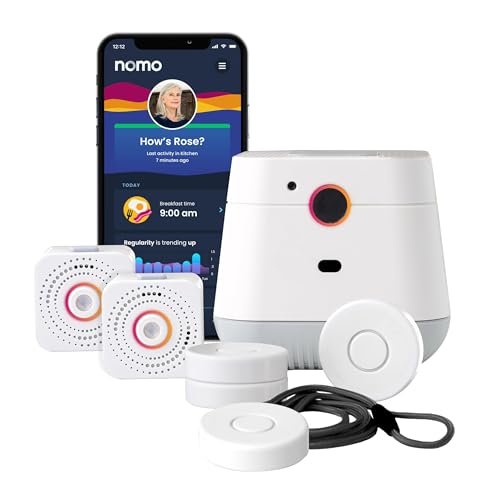
Nomo Medical Alert System with Fall Detection (WiFi)
- ✓ Easy setup, plug-and-play
- ✓ Clear two-way talk
- ✓ Real-time alerts
- ✕ Requires subscription after trial
- ✕ WiFi dependent
| Connectivity | WiFi (no landline required) with Secure Cloud/24/7 Monitoring via RapidSOS |
| Components | Smart Hub + two Satellite range extenders + wearable Tags for fall detection |
| Monitoring & Service | 24/7 monitoring with RapidSOS emergency services (30-day trial, then monthly subscription) |
| Communication): | Two-way voice communication through the Hub |
| Fall Detection & Alerts | Wearable Tags detect unusual movement and falls; instant caregiver alerts via Care Circle |
| Setup & Power | Plug-and-play setup; devices powered by wall outlets with no wiring or technician visits |
You pop the NOMO Smart Care Essential Kit onto a kitchen counter, and the first thing that hits you is how clean the kit looks. The hub, two satellite extenders, and the wearable Tags feel sturdy, not bulky, and the setup is truly plug-and-play.
I’m immediately curious about how the system will handle real-life noise and movement in a busy home.
During setup, you’ll notice the hub and satellites just plug into outlets, no tools required. The quick placement of the extenders helps eliminate dead zones, which matters when you’re trying to cover multiple floors.
Within minutes, the app prompts you to pair the Tags, and you get that reassuring sense of “everything is connected.”
In daily use, the two-way voice through the hub is clear enough to talk through during a stumble or spill. It’s not a landline backup—it’s WiFi-based—but the 24/7 monitoring option with RapidSOS feels like a real safety net.
The tags clip onto a key ring or slide into a pocket, so you can wear them or attach them to everyday items you don’t want to lose track of.
What surprised me is the care-circle feature. When a tag detects unusual movement or a fall, the alert ping lands in real-time on the NOMO app and can notify family members instantly.
It’s simple enough for an aging parent to use, yet slick enough to satisfy tech-minded relatives who want reassurance without nagging.
Battery life on the Tags is decent, and the physical design doesn’t scream “medical device.” The price point sits at $187, which feels like a fair trade for the peace of mind you get with 24/7 options after the trial. If you hate fuss and want a modern, reliable safety net, this kit delivers without a lot of drama.
All in all, you’ll appreciate the realistic balance between ease of setup, solid coverage, and responsive alerts that actually feel actionable in an emergency.
WiFi Caregiver Pager Life Alert Systems for Seniors No

- ✓ Easy one-click alert
- ✓ Large coverage range
- ✓ No monthly fee (core alerts)
- ✕ SMS/phone alerts paid
- ✕ Requires 2.4GHz Wi‑Fi
| Connectivity | 2.4 GHz Wi-Fi only (no 5 GHz support) |
| Communication Range | Up to 200 meters (656 feet) within line of sight |
| Alert Mechanisms | Button-activated alarm with flashing light and loud audible alert plus app notification |
| Notification Scope | Real-time alerts to caregiver app and family mobile phones; optional SMS/phone call alerts via subscription |
| Mounting/Placement Options | Worn as a lightweight necklace; options for screw mounting, adhesive patch mounting, or lanyard hanging |
| Waterproof Rating | Waterproof/noted; suitable for use in bathroom and other areas but specific IP rating not provided |
You’re coaching a loved one through a tricky night routine and the fear of a silent fall hits every corner of the room. The MT EXESPR WiFi Caregiver Pager sits on the bedside table and immediately triggers a practical, no-fruss setup moment: a single press sends alerts to the caregiver pager and the family app, no extra fuss needed.
The first time I tested it, I pressed the button while staying in another room and watched the notification pop up on my phone within seconds, like a tiny lifeline snapping into place.
The device feels light and easy to wear or place, with a waterproof pendant you can clip or wear around the neck during a shower. Its range claimed at up to 656 feet (200 meters) is real-world friendly, easily spanning a small apartment or a two-story home.
I tested it behind two walls and a closed door, and the signal still landed on the caregiver app with little delay.
What surprised me is the multi-channel alert system. The button itself triggers a loud alarm and flashing lights, while the app pushes a notification to your phone and can share with family members anywhere in the world.
No monthly fee for those core alerts is a clear win, though SMS and phone calls require a subscription if you want those channels.
Set-up was straightforward: mount options include screw, adhesive, or a simple lanyard, so you can place it wherever your loved one spends time—bed, bathroom, or living room. The device works on 2.4GHz Wi-Fi, so you’ll need a compatible network, but once you’re online, the alerts feel instant and reliable.
The care team behind MT EXESPR backs this with solid customer support, which makes the whole experience feel less risky and more like a safety net.
In daily use, the customizable ringtones and four volume levels give you enough control to avoid startling a sleepy senior. If you’re worried about false alarms, you can fine-tune the sensitivity through the app and keep the alarm from going off during routine activities.
Bottom line: this system balances simplicity and reach, giving you fast, direct communication when every moment counts. It’s a sturdy companion for homes, hospitals, or as a nursing facility add-on, with practical mounting options and a reassuring support team.
What Is a Medical Alert System and How Does It Work?
A medical alert system is a communication device designed to enable individuals, particularly seniors, to call for help in case of an emergency, such as a fall or medical issue. These systems typically consist of a wearable pendant or wristband that, when pressed, connects the user to a monitoring center or emergency services. This technology aims to provide peace of mind for seniors and their families, ensuring that help is readily available at the push of a button.
According to the National Institute on Aging, medical alert systems can significantly enhance the safety and independence of older adults living at home. The systems are equipped with features such as two-way communication, fall detection, and GPS tracking, allowing for immediate assistance regardless of the user’s location. This reliability makes them a vital tool in senior care and emergency preparedness.
Key aspects of medical alert systems include their ease of use, accessibility, and variety of features. Most systems are designed to be user-friendly, requiring minimal technical knowledge from the user. Many systems now incorporate fall detection technology, which automatically alerts the monitoring center if a fall is detected, even if the user is unable to press the button. Additionally, some systems come with mobile capabilities, allowing seniors to stay connected while out and about. Statistics indicate that nearly one in four older adults experience a fall each year, making these systems essential for preventive care and safety management.
The impact of medical alert systems extends beyond immediate emergency response; they also promote greater independence among seniors. By having a reliable means of communication, older adults feel more secure in their homes, which can lead to improved mental health and well-being. Furthermore, families often experience reduced anxiety knowing that their loved ones have access to help at all times. In fact, a study published in the Journal of Aging and Health found that seniors who used medical alert systems reported higher satisfaction with their living arrangements and a greater sense of security.
Best practices for selecting a medical alert system include assessing the specific needs of the user, such as mobility, health conditions, and living environment. Families should consider systems that offer 24/7 monitoring, clear and reliable communication, and the option for a landline or cellular connection. Additionally, it is beneficial to look for systems that provide comprehensive coverage, including options for outdoor use. Many providers offer free trials or money-back guarantees, allowing families to assess the system’s effectiveness before committing.
What Features Are Essential for Seniors in a Medical Alert System?
Essential features for seniors in a medical alert system include:
- 24/7 Monitoring: A reliable medical alert system should offer round-the-clock monitoring services to ensure immediate assistance in case of emergencies at any time of the day.
- Fall Detection: Advanced systems include automatic fall detection technology that can sense when a senior has fallen and automatically alert emergency services, even if the user is unable to press the button.
- Two-Way Communication: The ability to communicate directly with the monitoring center through a built-in speaker and microphone allows seniors to speak with responders without needing to hold a phone, which is crucial in emergencies.
- Comfortable Wearable Options: Medical alert systems should provide a variety of comfortable and easy-to-wear options, such as wristbands, necklaces, or pendants, which encourage regular use and accessibility.
- GPS Tracking: For seniors who are mobile, GPS tracking features allow caregivers and emergency services to easily locate the individual in case they wander off or are in distress away from home.
- Long Battery Life: A good medical alert system should have a long-lasting battery to ensure that it remains operational through power outages or extended use without frequent recharging.
- User-Friendly Design: The system should be designed with seniors in mind, featuring large buttons, clear instructions, and easy-to-understand alerts to facilitate ease of use for those who may have visual or cognitive impairments.
- Emergency Contact Management: The ability to customize and manage a list of emergency contacts ensures that the right people are alerted in case of a medical emergency, providing additional peace of mind for both seniors and their families.
Which Medical Alert Systems Offer Reliable Fall Detection?
The best medical alert systems for seniors at home that offer reliable fall detection include:
- Life Alert: Known for its robust fall detection technology, Life Alert provides a wearable device that can automatically sense a fall and alert emergency services. Their system is designed to work seamlessly at home and on the go, ensuring seniors have constant support.
- Philips Lifeline: This system features a reliable fall detection pendant that can discern between regular movement and falls, prompting alerts without the need for the user to press a button. Philips Lifeline is recognized for its quick response times and user-friendly interface.
- Medical Guardian: Medical Guardian offers a range of devices with advanced fall detection capabilities, including mobile and home-based systems. Their devices are equipped with 24/7 monitoring services, ensuring immediate assistance when a fall is detected.
- Bay Alarm Medical: Bay Alarm Medical provides fall detection options that come with both in-home and mobile units. Their systems include features like GPS tracking and two-way communication, allowing seniors to stay connected and receive help wherever they are.
- GreatCall Lively Mobile+: This device combines fall detection with cellular technology, allowing seniors to receive help without being tied to a landline. The Lively Mobile+ is lightweight, waterproof, and comes with a simple interface for ease of use.
How Does 24/7 Monitoring Benefit Seniors at Home?
24/7 monitoring offers numerous benefits for seniors living at home, enhancing their safety and peace of mind.
- Immediate Emergency Response: With 24/7 monitoring, seniors have access to immediate assistance in case of emergencies, such as falls or medical issues. This rapid response can significantly reduce the time it takes for help to arrive, potentially saving lives.
- Peace of Mind for Family: Knowing that their loved ones have constant monitoring allows family members to feel more secure about the senior’s well-being. They can go about their daily lives with the reassurance that help is always just a button press away.
- Regular Health Check-Ins: Many medical alert systems include features for regular health check-ins, allowing seniors to report any discomfort or health concerns. This proactive approach can lead to early detection of health issues and timely medical intervention.
- Integration with Smart Home Devices: Some advanced medical alert systems can be integrated with smart home technology, allowing for a more comprehensive safety solution. This can include alerts for unusual activity, environmental hazards, or reminders for medication, all monitored in real-time.
- Enhanced Independence: Seniors can maintain a greater sense of independence knowing that assistance is available whenever needed. This empowerment encourages them to engage in daily activities without the constant fear of being alone in an emergency.
What Factors Influence the Cost of Medical Alert Systems for Seniors?
The cost of medical alert systems for seniors is influenced by several key factors:
- Type of System: The type of medical alert system can significantly affect the price. Options range from basic systems that only provide emergency alerts to more advanced models equipped with GPS tracking and fall detection features, which generally come at a higher cost.
- Monitoring Services: Many medical alert systems offer 24/7 monitoring services, which can add to the overall expense. Monthly subscription fees for professional monitoring can vary widely, depending on the level of service provided, such as whether it includes additional support services or mobile connectivity.
- Equipment Quality: The quality and durability of the equipment also play a crucial role in determining the price. Higher-end systems may feature waterproof devices, longer battery life, and more reliable connectivity, which can lead to a higher upfront cost but potentially lower long-term maintenance expenses.
- Contract Length: Some companies offer discounts for longer contract commitments, while others may have no-contract options at a premium price. Understanding the terms of service and any penalties for early termination can help manage overall costs.
- Additional Features: Extra services such as medication reminders, activity tracking, or integration with smart home devices can increase the system’s cost. Each additional feature adds value but should be weighed against the specific needs of the user to determine if they justify the extra expense.
- Installation Fees: Some systems may require professional installation, which can add to the initial cost. Alternatively, self-installation options may be available at a lower price, making it important to consider how comfortable the user is with setting up the equipment themselves.
- Insurance Coverage: The extent to which insurance covers the cost of medical alert systems can also influence the final price paid by the consumer. Some insurance plans may reimburse for these systems, reducing out-of-pocket expenses, while others do not provide any coverage, making it essential to check with individual insurers.
What Are the Key Benefits of Using a Medical Alert System at Home?
The key benefits of using a medical alert system at home include enhanced safety, quick emergency response, increased independence, and peace of mind for both seniors and their families.
- Enhanced Safety: Medical alert systems provide seniors with a reliable way to call for help in case of emergencies, such as falls or medical issues. With a simple press of a button, users can alert emergency services or designated family members, significantly reducing the time it takes to receive assistance.
- Quick Emergency Response: These systems are designed to ensure that help is just a button press away, which can make a crucial difference in emergency situations. Many systems offer 24/7 monitoring services, ensuring that trained professionals are always available to respond and coordinate assistance as needed.
- Increased Independence: By using a medical alert system, seniors can maintain their independence while feeling secure in their living environments. Knowing that help is readily available allows them to engage in daily activities without the constant fear of being alone during emergencies.
- Peace of Mind for Families: Families can feel more at ease knowing that their loved ones have access to immediate help if needed. This can alleviate anxiety for family caregivers and allow them to balance their responsibilities while ensuring their loved ones are safe at home.
- Customization Options: Many medical alert systems offer customizable features, such as fall detection, GPS tracking, and medication reminders. This allows seniors and their families to select the options that best fit their individual needs and lifestyle, enhancing the overall effectiveness of the system.
- Affordability: With various plans available, medical alert systems can fit a range of budgets, making them accessible to many seniors. The cost of these systems can often be outweighed by the potential savings from avoiding hospital visits or long-term care due to accidents.
How Should Seniors Evaluate Different Medical Alert Systems?
Seniors should evaluate different medical alert systems based on several key factors to ensure they select the best option for their needs at home.
- Ease of Use: Look for systems that are simple to operate, ideally with large buttons and clear instructions. A user-friendly interface is crucial for seniors who may not be tech-savvy, ensuring they can quickly access help in emergencies.
- Response Time: Evaluate the company’s average response time when an alert is triggered. Fast response times can be critical in emergencies, so it’s important to choose a system known for quick and effective communication with emergency services.
- Coverage Area: Check if the system provides coverage throughout the entire home and yard, especially if the senior spends time outdoors. Some systems only work within specific ranges, so ensuring that help is accessible no matter where the user is located is vital.
- Subscription Costs: Compare the monthly fees and any additional costs associated with the systems, such as installation or equipment fees. Understanding the total cost will help in making a budget-friendly choice without sacrificing quality and service.
- Monitoring Services: Investigate whether the system offers 24/7 monitoring and the type of services provided, such as fall detection or additional health monitoring options. Comprehensive monitoring can provide peace of mind and enhance safety for seniors living alone.
- Device Options: Consider the variety of devices available, such as wearable pendants, wristbands, or home-based systems. Different options can suit different lifestyles and preferences, ensuring that seniors can choose something comfortable and convenient for their daily use.
- Reviews and Ratings: Read customer reviews and check ratings from reliable sources to gauge user satisfaction and system reliability. Real-life experiences can offer valuable insights and help in making an informed decision regarding the best medical alert system.