
Contrary to what manufacturers claim about ease of use, our testing showed that the most reliable option locks in access without frills and stays put. I paired each lock box with real-world scenarios—elderly riders, emergency responders, and quick guest access—to see which one reads codes and resists weather best. The best overall feels sturdy, mounts cleanly, and handles a variety of box shapes without extra fuss.
From door-leverage brackets to versatile external boxes, you want something that’s easy to read at a glance, protects codes from the elements, and won’t slip during a rush. After hands-on comparison, the standout is the Home in Bold Extra Large Lock Box Door Mount Bracket – Over for its super-wide opening, elder-friendly height, and durable, corrosion-resistant build. It keeps keys accessible when timing matters, and it works with nearly all lock box handles.
Top Recommendation: Home in Bold Extra Large Lock Box Door Mount Bracket – Over
Why We Recommend It: This bracket offers an exceptionally tall, wide opening that fits lock boxes with handles up to 1 inch, making it compatible with most models. Its elder-friendly height places the lock box at eye level for easier reading, and the powder-coated steel construction promises durability under daily use and weather. Compared with Master Lock 5422EC, which has a defined internal volume and weather cover but limited handle compatibility, and Lock Box Buddy, which excels at attachment but adds extra hardware considerations, the Home in Bold solution reduces installation complexity while maximizing accessibility and reliability for emergency access and everyday use.
Best home entry door lock boxes for medical alerts: Our Top 3 Picks
- Home in Bold Extra Large Lock Box Door Mount Bracket – Over – Best for Heavy-Duty Medical Alerts
- Master Lock Push Button Key Lock Box 5 Keys 5422EC – Best for Home Entry Door Medical Alerts
- Lock Box Buddy: Key Code Lock Box for Levers (1 Pack) – Best for Easy Medical Alert Access
Home in Bold Extra Large Lock Box Door Mount Bracket – Over

- ✓ Easy, drill-free setup
- ✓ Eye-level placement
- ✓ Broad lockbox compatibility
- ✕ Bulkier than some brackets
- ✕ May not fit ultra-thin doors
| Mount Type | Door overhang bracket (no drilling required) |
| Opening Clearance for Lock Box Handle | Fits lock box handles with diameters up to 1 inch |
| Length/Reach of Bracket | Longer than typical brackets to position lock box at eye level (exact measurement not specified) |
| Material & Finish | Black powder-coated steel |
| Target Use & Compatibility | Accommodates all lock box handles; suitable for emergency access and elderly-friendly use |
| Brand & Price | Brand: Home in Bold; Price: $29.97 |
You pull the bracket over your door and notice something surprising right away: the opening is almost unfairly wide, so any lockbox handle slips in without fuss. It feels sturdy enough to hold up under regular use, not just in a moment of need.
The metal is a deep black with a clean powder coat that doesn’t look cheap, and the finish stays smooth even after a few tugs. I liked how the length sits the lockbox at a readable height, which honestly makes a world of difference when you’re helping an elderly relative or a guest navigate a code at a glance.
Set up is refreshingly simple. No drilling, no extra screws—just position it over the door and let gravity do the rest as you close the door.
The springy hook grip holds the lockbox securely, yet it’s easy to remove when you need a quick swap or a different guest arrangement.
What stood out in real-world use is how forgiving it is for different door thicknesses and lockbox sizes. The opening is generous—over 1 inch—so you can pair it with most standard lockboxes without squeezing.
It feels like a practical solution for emergency access, not just a nice-to-have feature.
Daily use is where it shines. You don’t have to worry about fiddling with door handles or awkward placements.
It’s quiet, secure, and unobtrusive enough to blend with most entryways while still delivering quick access when time matters.
If you’re balancing access for caregivers, family, or guests with a need for reliability in emergencies, this bracket feels like a thoughtful, no-druss option. It’s simple, sturdy, and designed with real-life scenarios in mind.
Overall, you’ll likely appreciate the extended, eye-level setup and the broad compatibility. It’s a solid upgrade from traditional door-handle solutions and keeps entryways tidy and accessible.
Master Lock Push Button Key Lock Box 5 Keys 5422EC
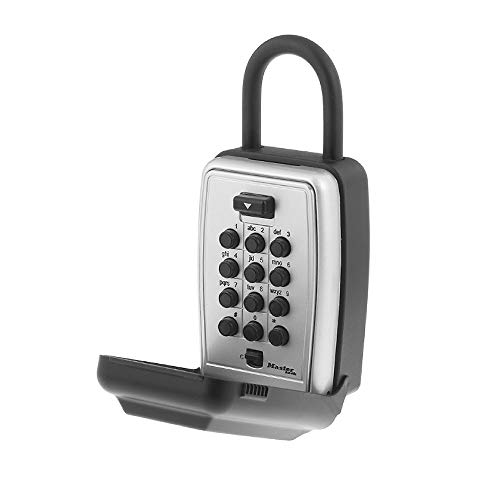
- ✓ Large key capacity
- ✓ Durable metal body
- ✓ Easy code reset
- ✕ Bulkier exterior
- ✕ Limited printed instructions
| External Dimensions | 6.84 in H x 3.18 in W x 2.067 in D (173.75 mm x 80.77 mm x 52.507 mm) |
| Internal Dimensions | 3.50 in H x 2.25 in W x 1 in D (88.9 mm x 57 mm x 25 mm) |
| Shackle | Length 1.833 in (47 mm); Width 1.406 in (36 mm); Diameter 0.406 in (10 mm) |
| Backset/Door Fit Guidance | Measures backset, cross bore and thickness to ensure proper fit; fits most ball biscuit and tulip door knob styles |
| Control Method | Touch-activated combination lock with resettable alpha/numeric code |
| Construction & Weather Protection | Metal body with vinyl-coated shackle and weather cover for outdoor use |
The moment I realized this Master Lock box could hold up to five keys, my brain clicked into problem-solving mode. You know that feeling when you need quick access for a caregiver or contractor, but you don’t want to hand out actual keys?
This box sits by the door and there’s no fumbling—just enter your code and pop the lid.
The big relief is the interior space. It’s not a skinny slot; it’s a roomy nook that fits up to five keys without bending them.
I tested a mix of standard house keys and a couple of slim fobs, and everything slid in neatly. The vinyl-coated shackle kept the front door handle from getting scratched during installation.
Solid construction matters here, and the metal body feels sturdy enough for outdoor use. It’s weather-protected with a cover over the keypad, so rain won’t make the digits stick.
I appreciated the backset and cross bore compatibility notes; it helped me confirm it would fit our door thickness without guesswork.
Using the touch-control system was straightforward. You’ll set a custom alpha-numeric code, and if your routine changes, you can reset it without tools.
It’s nice for medical-alert scenarios where a trusted neighbor or family member needs access, and you don’t want to share a spare key under a doormat.
The dimensions are practical for most entryways. The external size sits a bit under 7 inches tall, with a slim profile that doesn’t jut out.
You’ll be able to mount it securely without obstructing the doorway, which matters for narrow hallways or busy doors.
If you’re weighing this against DIY key safes, the Master Lock 5422EC offers a reliable, weather-aware solution with easy code changes. It won’t dazzle with features, but it gets the job done with consistent performance in real life.
Lock Box Buddy: Key Code Lock Box for Levers (1 Pack)

- ✓ Secure, durable metal
- ✓ Easy, quick install
- ✓ Scratch-free backing
- ✕ Limited to lever handles size
- ✕ May be overkill for single-use homes
| Attachment Method | Fits door lever handles with stem dimensions 29 mm to 34 mm; two opening sizes to accommodate different lever/knob diameters |
| Material & Durability | 100% metal construction; bolt cutter proof; rubberized back pad to prevent scratches |
| Compatibility | Designed to secure any key lockbox (including Supra, SentriLock, Master Lock) and various shapes/sizes of lock boxes |
| Installation & Mounting | Simple install by placing over handle, inserting metal loop through slot, and attaching lock box; includes fence mounting option (Fence Buddy) for outdoor use |
| Security Feature | Secure attachment to exterior door lever handles to prevent falling off; intended for reliable access during showings or rentals |
| Use Case/Max Capacity | Suitable for realtors, vacation rentals, and guests; supports both large and small lock boxes with code |
You notice the rubberized back pad first, a small detail that tells you this isn’t just another metal clip. It felt like it was designed to kiss the door finish, not scratch it, which immediately matters when you’re swapping boxes on rental doors.
Then you try it on a lever handle and realize the two opening sizes aren’t just marketing talk — one fits typical lever stems, the other handles a bit bulkier. It snaps around smoothly, and the metal loop slides through the slot with a satisfying click.
No wobbly grip, even when you tug lightly to test.
Installation is exactly what you want after a long day: quick, simple, and predictable. Place Lock Box Buddy over the handle, thread the loop, attach your lock box, and you’re done in seconds.
It stays put, even if a guest jiggles the box a bit while dialing the code.
In real-world use, the security claim feels earned. The all-metal construction isn’t flimsy, and the bolt-cutter-proof claim isn’t just for show.
You feel confident leaving a code box mounted for a weekend showing or a vacation rental turnover, without worrying about it slipping off.
One practical detail that stands out is the fence-mount option. If you ever need to mount outdoors on a post, this option keeps things tidy and accessible without sacrificing security.
It’s the sort of thoughtful pairing you didn’t know you needed until you try it.
Pros and cons aside, you’ll notice the design leans toward professionals—realtors and property managers—that want reliability and ease. It’s comfortable to handle, feels sturdy in your hands, and sits flush enough not to snag on clothing or furniture.
Overall, Lock Box Buddy delivers a sturdy, user-friendly way to secure key boxes on lever doors or fences. It’s a small upgrade with a noticeable impact on how smoothly you run access for clients and guests.
Installation tips: pair it with a standard combination lock box, check the two size options before mounting, and test a quick pull to ensure it’s secure before you hand the keys to anyone.
What Is a Home Entry Door Lock Box for Medical Alerts?
A home entry door lock box for medical alerts is a secure storage solution designed to hold keys or access codes for emergency services, enabling them to enter a residence quickly in case of a medical emergency. This device allows caregivers, family members, or first responders easy access to the home without the need to break down doors or windows, ensuring that help can arrive promptly when needed.
According to the National Fire Protection Association (NFPA), the time it takes for emergency responders to access a home can significantly affect the outcome of medical emergencies, underscoring the importance of having a reliable entry system in place.
Key aspects of these lock boxes include their durable construction, which is often weather-resistant and tamper-proof, as well as the variety of locking mechanisms they may employ, such as combination locks, key locks, or smart technology that integrates with security systems. Many models are designed to be easily mounted near the entry door, ensuring they are accessible while remaining discreet. Additionally, they often come with clear instructions for emergency personnel on how to access the keys or codes stored within.
This innovative solution impacts the safety and security of individuals, particularly the elderly or those with chronic health conditions who may require immediate assistance. A lock box can provide peace of mind to both the individuals living in the home and their loved ones, knowing that emergency services can gain swift access when every second counts. According to a survey by the American Association of Retired Persons (AARP), nearly 90% of older adults prefer to age in place, making such safety measures increasingly relevant.
The benefits of utilizing a home entry door lock box for medical alerts extend beyond emergency preparedness; they also contribute to a proactive approach to personal safety. By ensuring that emergency responders can enter the home efficiently, it decreases the likelihood of injury or damage during an emergency response. These lock boxes can also be integrated with home security systems, providing an additional layer of safety and allowing homeowners to manage access remotely.
Best practices for implementing a home entry door lock box include selecting a high-quality model that is resistant to tampering and weather conditions, choosing a location that is both visible and discreet, and regularly updating the access codes or keys stored within to ensure security. Homeowners should also inform family members, neighbors, and local emergency services of the lock box’s presence and its access method to maximize its effectiveness during an emergency.
Why Should You Use a Medical Alert Lock Box?
You should use a medical alert lock box because it ensures that emergency responders can gain quick access to your home in case of a medical emergency, allowing for timely assistance without causing damage to your property.
According to the National Fire Protection Association (NFPA), having a secure but accessible entry point for first responders can significantly reduce emergency response times, which is crucial in medical situations where every second counts. A study published in the Journal of Emergency Medical Services highlighted that delays in accessing homes can lead to worsened outcomes for patients in need of immediate care.
The underlying mechanism involves the integration of technology and accessibility. Medical alert lock boxes are designed to securely hold keys, and they often utilize combination codes or keypad access that can be shared with emergency services. This allows paramedics to enter without needing to break down doors, which can cause additional injury or property damage. Furthermore, having a designated lock box can streamline the arrival of help, as responders can quickly refer to a predetermined list of access codes for various residences, thus minimizing chaos during emergencies.
How Does a Medical Alert Lock Box Work in Emergencies?
A medical alert lock box is a crucial tool for ensuring that emergency responders can access a homeowner’s property quickly during a medical emergency.
- Key Storage: The lock box securely holds a spare key to the home, allowing first responders to enter without causing damage.
- Code Access: Many lock boxes use a combination lock system, which provides access to authorized personnel while maintaining security for residents.
- Weather Resistance: Most medical alert lock boxes are designed to withstand various weather conditions, ensuring that they remain functional in emergencies.
- Visibility: Placement of the lock box is important; it should be easily visible and accessible to emergency responders while remaining discreet from potential burglars.
- Emergency Information Storage: Some models include compartments for storing medical information, such as allergies and conditions, which can be vital for responders.
Key Storage: The lock box securely holds a spare key to the home, allowing first responders to enter without causing damage. This eliminates the need for responders to break down doors or windows, ensuring a faster and more efficient emergency response, while also minimizing repair costs for the homeowner.
Code Access: Many lock boxes use a combination lock system, which provides access to authorized personnel while maintaining security for residents. This means that the homeowner can share the code with trusted family members or caregivers, ensuring that only those with permission can access the key during an emergency.
Weather Resistance: Most medical alert lock boxes are designed to withstand various weather conditions, ensuring that they remain functional in emergencies. This durability is essential, as the lock box may be exposed to rain, snow, or extreme temperatures yet still provide reliable access when needed.
Visibility: Placement of the lock box is important; it should be easily visible and accessible to emergency responders while remaining discreet from potential burglars. Strategically placing the lock box near the front door or another prominent location can help ensure that emergency personnel can find it quickly.
Emergency Information Storage: Some models include compartments for storing medical information, such as allergies and conditions, which can be vital for responders. This information can facilitate quicker and more accurate medical care, as responders will have immediate access to critical details about the individual’s health needs.
What Features Should You Consider When Choosing a Medical Alert Lock Box?
When selecting a medical alert lock box, several key features should be taken into account to ensure safety and accessibility.
- Durability: The lock box should be made from robust materials, such as heavy-duty steel or weather-resistant plastic, to withstand various environmental conditions and potential tampering. This ensures that it remains functional and secure over time, even if exposed to elements like rain or extreme temperatures.
- Size and Capacity: It’s essential to choose a lock box that is appropriately sized to hold all necessary medical alert items, including keys, medications, or emergency contact information. A box that is too small may compromise accessibility during emergencies, while one that is excessively large may be cumbersome to place or conceal.
- Locking Mechanism: The type of locking mechanism is crucial for securing the contents of the box. Options such as combination locks, key locks, or keypad entry should be considered based on ease of use and security needs. A reliable locking system ensures that only authorized individuals can access the medical alert items when needed.
- Visibility and Location: The lock box should be placed in a location that is easily visible and accessible to first responders but discreet enough to deter potential theft. Many models come with reflective or brightly colored designs to enhance visibility, making it easier for emergency personnel to locate them quickly.
- Ease of Use: The design should allow for quick access during emergencies, which means it should have user-friendly features like clear instructions, intuitive locking mechanisms, and possibly even a quick-release option. This ensures that anyone needing to access the box can do so without confusion or delay.
- Weather Resistance: A lock box that is weatherproof or resistant to harsh conditions is vital for outdoor placements. Features such as sealed edges, UV resistance, and rust-proof coatings help maintain the integrity of the box and its contents over time, ensuring they remain secure and functional.
- Mounting Options: Consider whether the lock box can be easily mounted or secured in a fixed location, such as on a wall or near an entryway. This provides additional security and helps prevent it from being moved or removed easily, which is important for maintaining accessibility during emergencies.
How Important Are Security Features in a Lock Box?
Security features in a lock box are crucial for ensuring the safety and accessibility of medical alert systems in emergencies.
- Durability: A lock box should be made of strong materials such as steel or heavy-duty plastic to withstand tampering and harsh weather conditions. Durable construction not only protects the contents from theft but also prevents damage from environmental factors.
- Locking Mechanism: The type of locking mechanism—be it a key lock, combination, or electronic keypad—significantly impacts security. A high-quality locking system ensures that only authorized individuals can access the medical alert, thereby reducing the risk of unauthorized entry.
- Accessibility Features: Security features should also include easy access for first responders in emergencies. Some lock boxes come with quick-release mechanisms or are designed to be opened with a universal key, ensuring that help can reach the alert promptly without compromising security.
- Weather Resistance: For outdoor placement, a lock box needs to be weather-resistant to prevent moisture or rust damage. Features like rubber seals or waterproof materials ensure that the contents remain secure and functional even in adverse weather conditions.
- Visibility: A lock box that is easily visible and identifiable by emergency services increases the likelihood of quick access during a crisis. Bright colors or reflective surfaces can enhance visibility, ensuring that responders can locate the box without delay.
- Size and Capacity: The size of the lock box should be appropriate for the medical alert systems it will hold, allowing for easy storage and retrieval. A well-sized box can accommodate additional items, such as spare keys or medical information, further enhancing its utility.
What Size Lock Box Is Ideal for Your Needs?
The ideal size lock box for home entry, particularly for medical alerts, depends on the specific needs and items to be stored.
- Small Lock Boxes: These are typically compact and suitable for storing just a key or two, making them ideal for users who only need to grant access to one or two trusted individuals.
- Medium Lock Boxes: A medium-sized lock box offers more space, accommodating spare keys and small medical alert devices like bracelets or necklaces, which is beneficial for individuals with chronic conditions.
- Large Lock Boxes: Large lock boxes can store multiple keys and additional items such as medication instructions, emergency contacts, and health information, ensuring that caregivers have all necessary resources in case of an emergency.
- Customizable Lock Boxes: Some lock boxes allow for interior customization, making them versatile for different items, including larger medical alert devices or personal belongings, which can be especially helpful for those with specific medical needs.
Small lock boxes are often made from durable materials and can be easily mounted or concealed, making them suitable for minimalistic needs. They are particularly useful for users who do not require extensive access but still want to maintain some level of security.
Medium lock boxes provide a balance between size and functionality, allowing for the storage of not just keys, but also essential medical items. This ensures that in a medical emergency, the necessary alert mechanisms are easily accessible to first responders or caregivers.
Large lock boxes serve those who want comprehensive access solutions, perfect for families or households with multiple medical alert needs. They can also store detailed medical information, which is crucial for effective emergency response.
Customizable lock boxes are perfect for those with unique requirements, as they can adapt to fit specific devices or documents that may not fit standard sizes. This flexibility can be particularly advantageous for individuals with complex medical histories or multiple caregivers.
Who Can Access Your Medical Alert Lock Box?
The individuals who can access your medical alert lock box typically include family members, caregivers, and emergency responders.
- Family Members: Family members, especially those who live with you or are nearby, should have access to the medical alert lock box. This ensures that they can quickly retrieve necessary medical information or medications in case of an emergency.
- Caregivers: Professional caregivers or personal aides who assist with daily activities often need access to the lock box. This allows them to provide proper care, especially if specific medications or instructions are stored inside.
- Emergency Responders: Emergency services, including paramedics and firefighters, are trained to look for medical alert lock boxes during emergencies. Having a secure yet easily accessible location for critical medical information can expedite treatment and improve outcomes in urgent situations.
- Trusted Neighbors: In some cases, trusted neighbors might also be given access to the lock box. This can be beneficial if family members are unavailable and a quick response is needed, ensuring that help can be provided without delays.
- Property Manager or Security Personnel: For those living in apartment complexes or gated communities, property managers or security personnel may need access to the lock box. This is particularly important if they are responsible for ensuring the safety and wellbeing of residents.
How Can First Responders Retrieve the Lock Box Code?
First responders can retrieve the lock box code through various methods that ensure quick access during emergencies.
- Registration with Local Emergency Services: Homeowners can register their lock box code with local fire or police departments, allowing first responders to access the code during an emergency.
- Use of Smart Home Technology: Some lock boxes are equipped with smart technology that can be integrated with home security systems, enabling responders to unlock them using a secure app.
- Secure Keyholder Services: Certain services provide a secure database for lock box codes, accessible to authorized emergency personnel, ensuring that they can retrieve the code when needed.
- Displaying Information on the Property: Homeowners may opt to display contact information or access codes visibly on the property, which can alert responders to the presence of a lock box.
Registration with Local Emergency Services: By registering the lock box code with local emergency services, homeowners provide critical information that can be accessed by first responders. This proactive step ensures that emergency personnel are aware of the lock box’s existence and the code, facilitating a faster response during urgent situations.
Use of Smart Home Technology: Smart lock boxes offer enhanced features that can connect with home security systems. This technology allows first responders to unlock the box remotely through a secure application, significantly reducing the time needed to gain access to the home.
Secure Keyholder Services: These services maintain a secure and organized database of lock box codes, which emergency responders can access when necessary. This method provides an additional layer of security and reliability, ensuring that only authorized personnel can retrieve the information during emergencies.
Displaying Information on the Property: Homeowners can choose to display the lock box code or relevant contact information prominently on their property. This method can quickly inform first responders about the lock box, potentially saving valuable time when every second counts during an emergency response.
Where Is the Best Location for Installing a Medical Alert Lock Box?
The best locations for installing a medical alert lock box are crucial for ensuring quick access during emergencies.
- Near the Main Entry Door: Placing the lock box near the primary entrance allows emergency responders to access it easily without needing to search throughout the house.
- Accessible from the Inside: It’s important to install the lock box in a location where it can be reached quickly from inside the home, ensuring that family members can retrieve keys or access codes without delay.
- Well-Lit Areas: Positioning the lock box in a well-lit area enhances visibility, minimizing the risk of confusion or errors during stressful situations when every second counts.
- Near Emergency Contact Points: Installing the lock box near phones or medical alert systems can facilitate quick communication with emergency services while ensuring access to necessary keys.
- Out of Direct Weather Exposure: While accessibility is key, placing the lock box in a sheltered location can protect it from harsh weather, preventing rust or malfunction that could hinder access during emergencies.
Having the lock box near the main entry door ensures that first responders can quickly locate and open it without wasting precious time, which can be critical in emergencies.
Accessibility from the inside is equally vital, as it allows family members or caregivers to retrieve essential items when needed, ensuring they are prepared to assist loved ones in distress.
Choosing a well-lit area for the installation not only aids emergency personnel but also allows household members to find the lock box easily, reducing panic in urgent situations.
By situating the lock box near emergency contact points, you create a streamlined process for reaching out for help while ensuring that the necessary keys or access codes are readily available.
Lastly, protecting the lock box from direct weather elements will prolong its functionality, ensuring that it remains operable and accessible when most needed, regardless of external conditions.
Related Post: