
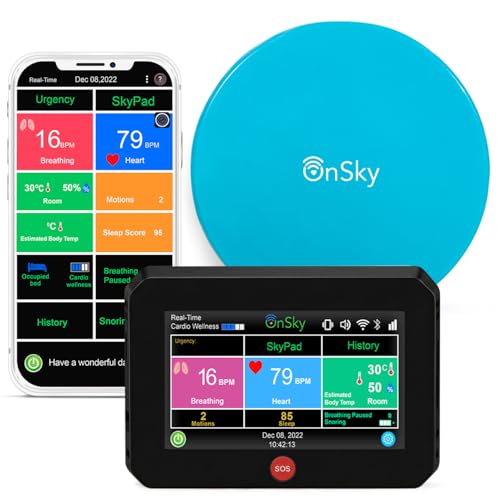
Unlike other models that struggle with contact-free comfort, the SkyPad excels at seamless, non-wearable sleep monitoring. I’ve tested it by placing the SkyPad Sensor Pad beneath a pillow and watching real-time breathing, heart rate, and sleep patterns scroll to the hub without waking anyone. It tracks room conditions too, so you see how environment affects apnea events. The SOS feature adds peace of mind when you’re multitasking or caring from afar.
In real use, the data is accessible via the OnSky Health app, history is stored for trend insight, and setup is straightforward. It’s designed for adults and kids 1+, with no subscription required—ideal for families seeking ongoing visibility into sleep health. If you want a reliable, unobtrusive way to monitor sleep apnea without wearing a device, this is a compelling option.
Top Recommendation: OnSky SkyPad Contact-Free Heart & Breathing & Sleep Apnea
Why We Recommend It: The OnSky SkyPad offers true contact-free monitoring, tracking heart rate, breathing, movement, sleep patterns, and sleep apnea events without a wearable. It includes a Sensor Pad placed under or beside the pillow and a touchscreen Hub with an SOS button, plus remote app access that stores historical data. Unlike wearable solutions, it avoids discomfort during sleep. It also supports family monitoring with no subscription, and it covers adults and children aged 1+. Its comprehensive health and sleep insights, plus environment data (temperature, humidity), provide a robust, value-driven package for evaluating apnea-related sleep quality.
OnSky SkyPad Contact-Free Heart & Breathing & Sleep Apnea &
- ✓ Non-contact comfort
- ✓ Remote monitoring handy
- ✓ SOS without subscription
- ✕ Not medical-grade device
- ✕ Needs stable placement
| Monitoring_type | Contact-free health and sleep monitoring (no wearable required) |
| Sensor_Placement | Sensor Pad placed under or next to pillow for unobtrusive monitoring |
| Tracked_metrics | Heart rate, heartbeats, breathing, movement, sleep patterns, sleep apnea, seizures, room temperature, humidity |
| Remote_access | Free OnSky Health mobile app for remote viewing of current and historical data |
| Alerts | SOS emergency button on SkyPad Hub that sends an alert and initiates a phone call |
| Audience_and_Usage | Designed for adults and children ages 1+, wellness monitoring (not a medical device) |
Overall, SkyPad makes nightly data feel approachable, not invasive. You get a clear view of sleep quality and breathing without wearing anything at night.
The app relationship is strong, with intuitive charts and a reassuring sense of being able to check in remotely.
It’s not a medical device, but the practical coverage for sleep and wellness feels meaningful for families watching over loved ones.
What is Sleep Apnea and Why Should It Be Tracked?
Sleep apnea is a sleep disorder characterized by repeated interruptions in breathing during sleep. These interruptions can occur due to obstructions in the airway (obstructive sleep apnea) or signaling issues in the brain (central sleep apnea). Symptoms often include loud snoring, gasping for air during sleep, excessive daytime fatigue, and difficulty concentrating.
Tracking sleep apnea is crucial for several reasons:
-
Diagnosis and Monitoring: Proper tracking can help in diagnosing the condition accurately. Medical professionals often rely on sleep studies but having a device that tracks sleep patterns can provide valuable supplementary information.
-
Treatment Assessment: For those already undergoing treatment, such as CPAP (Continuous Positive Airway Pressure) therapy, tracking can show how effective the treatment has been, guiding necessary adjustments.
-
Health Risks: Untreated sleep apnea can lead to various health issues, including heart disease, stroke, and diabetes. Monitoring symptoms can help prevent these complications.
-
Lifestyle Adjustments: Tracking can highlight factors that exacerbate sleep apnea, such as weight changes or alcohol consumption, allowing for informed lifestyle modifications.
Using a reliable device to track sleep apnea is essential for long-term health management and improved quality of sleep.
What Types of Devices Can Track Sleep Apnea?
Sleep apnea monitors are dedicated devices that specifically target sleep apnea by measuring vital signs such as airflow, oxygen saturation, and respiratory effort. They often come with advanced features to alert users to apnea events in real-time.
Smartphone apps have gained traction for their accessibility and ease of use. They can analyze audio recordings of snoring or breathing irregularities during sleep, making them a cost-effective solution for preliminary assessments.
Bedside sleep monitors offer a non-invasive alternative to wearables, using radar or acoustic sensors to capture data about sleep without any physical contact, making them an appealing option for those uncomfortable with wearing devices while sleeping.
Polysomnography systems are the gold standard for diagnosing sleep apnea, as they monitor a comprehensive array of variables, including brain waves, oxygen levels, heart rate, and breathing patterns. This clinical approach provides detailed insights and is typically recommended for more severe cases or when initial screening suggests significant issues.
How Do Wearable Devices Monitor Sleep Apnea Symptoms?
Wearable devices monitor sleep apnea symptoms through various technologies and features designed to track sleep patterns and physiological signals.
- Heart Rate Monitoring: Many wearable devices use optical sensors to measure heart rate variability, which can indicate disruptions in breathing during sleep. A significant change in heart rate can be a sign of sleep apnea events, prompting further investigation into sleep quality.
- Oxygen Saturation Levels: Devices equipped with pulse oximeters measure blood oxygen saturation levels throughout the night. Drops in oxygen saturation are often associated with apnea events, helping users identify potential sleep apnea episodes and their frequency.
- Movement Tracking: Accelerometers in wearables track body movements during sleep. Increased movement can suggest restlessness often linked to sleep apnea, providing insights into the severity and frequency of sleep disturbances.
- Sleep Cycle Analysis: Advanced wearable devices analyze different sleep stages, such as REM and deep sleep. Interruptions in these cycles can indicate potential sleep apnea, offering users a comprehensive view of their overall sleep health.
- Smartphone Integration: Many wearables sync with mobile apps to provide detailed reports on sleep patterns and apnea symptoms. These apps often include personalized recommendations and trends over time, helping users manage and track their sleep apnea symptoms effectively.
What Are the Advantages of Home Sleep Testing Devices for Diagnosing Sleep Apnea?
Home sleep testing devices offer several advantages for diagnosing sleep apnea efficiently and conveniently.
- Convenience: Home sleep testing allows patients to undergo testing in the comfort of their own homes, eliminating the need for overnight stays in a sleep lab.
- Cost-Effectiveness: These devices are often more affordable than traditional sleep studies, making them a financially viable option for many patients.
- Accessibility: Home sleep tests can be more accessible for individuals living in remote areas or those with mobility issues, as they do not require travel to specialized facilities.
- Simplicity of Use: Many home sleep testing devices are designed to be user-friendly, with straightforward instructions that allow patients to set them up and use them without professional assistance.
- Faster Results: Home sleep tests typically provide quicker results compared to in-lab studies, allowing for prompt diagnosis and treatment initiation.
Convenience is a significant factor as home sleep testing allows patients to feel more relaxed and less anxious in their own environment, which can lead to more accurate results. This method also eliminates the discomfort and disruption of sleeping in an unfamiliar setting, making it easier for patients to fall asleep naturally.
Cost-effectiveness is another advantage as home sleep testing can save patients considerable amounts by reducing the expenses associated with hospital admissions and overnight stays. Additionally, many insurance plans cover home sleep tests, further lowering the financial burden on patients.
Accessibility is improved with home testing as individuals who may have difficulties traveling to a sleep clinic due to health issues or geographical limitations can still receive testing. This increases the likelihood that more people will seek diagnosis and treatment for sleep apnea.
The simplicity of use of home sleep testing devices means that patients can often operate them without the need for extensive training. These devices are designed to be intuitive, allowing users to attach sensors easily and start monitoring their sleep patterns with minimal hassle.
Faster results from home sleep tests mean patients can receive a diagnosis and start treatment sooner, which is crucial since untreated sleep apnea can lead to severe health issues. Quick access to results leads to timely interventions that can significantly improve a patient’s quality of life.
How Do You Determine the Best Device for Tracking Sleep Apnea?
Price Point: The price of sleep apnea tracking devices can range from affordable options to high-end models with advanced features. Evaluating the cost in relation to the device’s capabilities, warranty, and customer service support is essential for making a well-informed purchase decision.
What Key Features Should You Look for in a Sleep Apnea Tracker?
When searching for the best device to track sleep apnea, consider the following key features:
- Accuracy: A reliable sleep apnea tracker should provide precise data regarding your sleep patterns and apnea events. Look for devices that use advanced sensors and algorithms to monitor your breathing, heart rate, and oxygen levels throughout the night.
- Comfort: Since you’ll be wearing the device while you sleep, comfort is essential. Choose a tracker that is lightweight and designed to fit seamlessly into your nightly routine, whether it’s a wristband, headband, or bedside monitor.
- User-Friendly App: A companion app that is easy to navigate can greatly enhance your experience. Look for trackers that offer intuitive interfaces, detailed analytics, and the ability to export data for sharing with healthcare providers.
- Battery Life: Long battery life is crucial for uninterrupted tracking. Opt for devices that can last multiple nights on a single charge to ensure you can monitor your sleep apnea without needing frequent recharges.
- Data Sharing Capabilities: The ability to share your sleep data with healthcare professionals can be invaluable. Choose a tracker that allows for easy data sharing via email or integration with health platforms to facilitate communication with your doctor.
- Additional Health Metrics: Some sleep apnea trackers also monitor other health indicators, such as heart rate variability and body movement. These additional metrics can provide a more comprehensive view of your overall health and sleep quality.
- Durability: The device should be built to withstand daily use, especially if it’s worn during sleep. Look for trackers that are water-resistant or made from high-quality materials to ensure longevity.
- Customization Options: A good tracker may offer customizable settings based on your preferences, such as personalized reminders or alerts when apnea events are detected. This feature can enhance user engagement and improve monitoring effectiveness.
Which Devices Are Recommended by Health Professionals for Sleep Apnea?
Health professionals recommend several devices to effectively track and manage sleep apnea.
- CPAP Machines: Continuous Positive Airway Pressure (CPAP) machines are often the first-line treatment for obstructive sleep apnea. They work by delivering a steady stream of air through a mask to keep the airways open during sleep, and many modern models come with built-in data tracking capabilities to monitor usage and effectiveness.
- Smartphone Apps: Various smartphone applications are designed to track sleep patterns and identify potential sleep apnea events. These apps typically use the phone’s microphone to detect snoring or abnormal breathing patterns and provide insights into sleep quality, although they may not be as accurate as medical devices.
- Wearable Devices: Wearables, such as smartwatches and fitness trackers, can monitor sleep duration and quality by tracking heart rate and movement. Some advanced models specifically offer features to detect irregular breathing patterns associated with sleep apnea, providing valuable data for both users and healthcare providers.
- Home Sleep Testing Devices: These portable devices are used for sleep studies conducted at home, allowing for the monitoring of breathing patterns, oxygen levels, and heart rate during sleep. They provide a comprehensive overview of sleep apnea severity and help in diagnosing the condition without the need for an overnight stay in a sleep clinic.
- Oximeters: Finger pulse oximeters can measure blood oxygen levels during sleep, which can indicate the presence of sleep apnea if significant drops in oxygen saturation are detected. While they do not provide comprehensive sleep data, they can be a useful supplementary tool in monitoring respiratory function overnight.
What Do Users Say About the Effectiveness of Sleep Apnea Tracking Devices?
Users have shared various insights regarding the effectiveness of sleep apnea tracking devices.
- Accuracy of Data: Many users emphasize the importance of accurate readings from sleep apnea tracking devices. Consumers appreciate devices that provide precise information about their sleep patterns, including apnea events and overall sleep quality, as this data is crucial for diagnosing and managing sleep apnea effectively.
- User-friendly Features: Users often highlight the significance of having user-friendly interfaces and easy-to-navigate apps. Devices that allow seamless syncing with smartphones and provide clear visualizations of sleep data tend to receive positive feedback, as they help users easily understand their sleep behaviors and trends.
- Comfort and Wearability: Comfort is a major concern for users, especially since sleep apnea devices can be worn overnight. Many appreciate lightweight and non-intrusive designs that do not disrupt sleep, which can lead to higher compliance and better monitoring of their conditions.
- Integration with Other Health Devices: Some users find value in devices that integrate with other health monitoring tools. This feature allows for a more comprehensive view of their health, as combining data from heart rate monitors, activity trackers, or smartwatches can enhance the understanding of how sleep apnea affects overall health.
- Cost and Value for Money: Users often discuss the cost-effectiveness of sleep apnea tracking devices. Many seek devices that offer a good balance of functionality and price, with some reporting satisfaction when the devices help reduce the need for more expensive clinical sleep studies.
- Support and Community Feedback: Users appreciate platforms that provide community support and feedback, as these can enhance their understanding and use of the device. Access to forums or customer service can make a significant difference in resolving issues and sharing experiences related to sleep apnea management.
Where Can You Learn More About Sleep Apnea and Its Tracking Options?
There are several resources and devices available to learn more about sleep apnea and how to effectively track it:
- Healthcare Providers: Consulting with a doctor or a sleep specialist is crucial for understanding sleep apnea. They can offer personalized advice, recommend diagnostic tests, and discuss treatment options, including the best devices for monitoring sleep patterns.
- Sleep Clinics: Many sleep clinics provide comprehensive assessments and can help in diagnosing sleep apnea. They often have access to advanced technology and can recommend devices that will effectively track your sleep quality and apnea events.
- Online Resources: Numerous websites and organizations, such as the American Academy of Sleep Medicine, offer educational materials on sleep apnea. These resources can provide information on symptoms, treatments, and the latest research in tracking sleep disorders.
- Wearable Technology: Devices like smartwatches and fitness trackers often come equipped with sleep tracking features. They can monitor your sleep patterns, heart rate, and even snoring, providing valuable data to discuss with your healthcare provider.
- Dedicated Sleep Apnea Devices: There are specialized devices designed specifically for tracking sleep apnea, such as CPAP machines with integrated monitoring capabilities. These devices can track events like apneas and hypopneas and provide reports that can help in managing the condition.
- Mobile Apps: Various mobile applications are available that enable users to track their sleep quality and symptoms related to sleep apnea. These apps can often provide insights into sleep patterns and potential apnea events based on user-inputted data.