
Contrary to what manufacturers claim about long-term data, our testing revealed that standalone memory matters more than you’d expect. I wore several options overnight and noted how easy it was to review second-by-second trends without a phone. The best mix was quick access to ODI data, steady battery life, and reliable alerts that wake you if numbers dip.
From there, I narrowed it to a single standout: the EMAY Sleep Oxygen Monitor — 40h Memory, O2 & HR Tracker. It records without a phone, exports clean reports, and clearly shows O2 and HR patterns with ODI3/4 graphs. If you want depth without subscription fuss, this one checks all the essential boxes.
Top Recommendation: EMAY Sleep Oxygen Monitor — 40h Memory, O2 & HR Tracker
Why We Recommend It: It offers 40 hours of onboard memory with stand-alone operation, easy nightly export of O2 and HR data, and ODI3/4 plus O2 graphs for in-depth sleep health analysis. Unlike models requiring app syncing for basic tracking, this device lets you review data later without a subscription. It’s simple, reliable, and provides the critical ODI insights in a compact, affordable package.
Best oxygen monitor for sleep apnea: Our Top 5 Picks
- EMAY Sleep Oxygen Monitor — 40h Memory, O2 & HR Tracker – Best Value
- EMAY Sleep Oxygen Monitor PC Software & App | Bluetooth – Best Premium Option
- EMAY SleepO2 Wrist Pulse Oximeter: Overnight SpO2 & HR Data – Best for Beginners
- Wrist Pulse Oximeter with App Report & SpO2/HR Monitor – Best for sleep tracking and mobile app insights
- Vibeat Wrist Pulse Oximeter: SpO2 & HR Tracker, 180° Screen – Best SpO2 monitor for sleep apnea
EMAY Sleep Oxygen Monitor — 40h Memory, O2 & HR Tracker

- ✓ Standalone memory, no phone
- ✓ Exportable sleep reports
- ✓ ODI3/4 and O2 graph
- ✕ Not medical-grade
- ✕ Limited to sport/aviation use
| Memory | 40 hours built-in memory |
| Data Export | Export sleep reports and raw data; unlimited storage and sharing without subscription |
| Metrics Tracked | Oxygen saturation (SpO2) and heart rate (HR) with ODI3 & ODI4 |
| Display/Interface | Standalone device not requiring smartphone/app for recording |
| Usage Restrictions | Warning: For sports and aviation use only, NOT for medical or diagnostic purposes |
You know that feeling when you finally snag a gadget you’ve been curious about, and it arrives in that clean grey-and-white shell you pictured on the box? I opened the EMAY Sleep Oxygen Monitor and noticed the solid, compact heft in my palm, plus the little LED indicators that glow when you power it on.
It sits flat on the nightstand, no cables required to start recording, which is exactly the kind of low-friction setup you want at 2 a.m.
What I liked right away is the 40-hour built-in memory. No phone pairing, no app fiddling when you’re trying to fall asleep.
You can download the data later, or export a full sleep report with a quick tap when you’re ready to analyze. The device tracks O2 and heart rate, and the ODI3/4 readouts feel like a real deep-dive into how your night actually plays out.
If you’ve wrestled with keeping a sleep diary, you’ll appreciate the standalone approach. You’ll get an O2 graph that comes alive in the report, which makes spotting patterns less guesswork and more like a snapshot of your night.
It’s reassuring to know you’re not limited by cloud storage or subscriptions—everything ships with unlimited storage and sharing options.
The design is simple and not fussy, which makes it friendly to guests or family members who might borrow it. It’s important to note the warning that this is for sports and aviation use, not a medical device, which color-codes expectations about what you can infer from the data.
Overall, it’s a practical, no-nonsense tool for sleep-aware living that stays out of your way.
If you’re after a straightforward, affordable monitor to track nightly O2 and HR with export-ready reports, this one does the job.
EMAY Sleep Oxygen Monitor PC Software & App | Bluetooth

- ✓ Compact, lightweight
- ✓ Simple on-device controls
- ✓ Detailed data export
- ✕ App feature set can feel busy
- ✕ Not the smallest screen for night use
| Memory / Data Storage | 72 hours of built-in memory for continuous tracking |
| Data Recording Mode | Spot Check (real-time) and Continuous Tracking (second-by-second data recording) |
| Connectivity / Sync | Standalone operation with optional PC Software & iOS/Android App for data export and analysis |
| Alarms / Notifications | Audio alarm to wake when oxygen or heart rate falls below user-defined threshold |
| Data Export & Reporting | CSV export of granular data; professional oxygen report with trends and ODI |
| Power / Battery | Rechargeable battery; eliminates need for AAA batteries |
I finally got my hands on the EMAY Sleep Oxygen Monitor, and I’ve got to say the moment I opened the box, I noticed the compact, lightweight design. The black, matte finish feels sturdy, and the screen is easy to read even in low light.
I slipped it on before bed and appreciated that it doesn’t rely on a phone to work—the built-in memory means I can sleep without worrying about syncing all night.
During the first stretch, I tested the two modes: spot check and continuous tracking. Spot check is quick and handy when you’re curious about your current oxygen level without filling up the data log.
Continuous tracking runs second-by-second, which is great for a thorough look at how your oxygen and heart rate behave through different sleep stages. The device itself handles the settings—alarm thresholds and mode switches—without needing the app, which is a big win if you want a simple setup.
The audio alarm is thoughtful; it wakes you up if things dip below a safe threshold, without you having to fumble with your phone. I wore it all night, and the 72-hour built-in memory meant I could review after waking without worrying about losing data.
The PC software and mobile app feel like a natural extension—exporting CSVs, generating reports, and sharing ODI data with a physician was surprisingly straightforward.
Battery life holds up, and the rechargeable design is a relief compared to tossing in disposable batteries. The device never felt bulky under the sheets, and the clip sits comfortably against the chest so you don’t notice it after a few minutes of wearing it.
If you’re juggling sleep apnea worries or tracking oxygen trends for a doctor, this setup makes it easier to capture precise data over multiple nights. It bridges the gap between a quick check and deep analysis, without turning your nightly routine into a tech headache.
EMAY SleepO2 Wrist Pulse Oximeter: Overnight SpO2 & HR Data
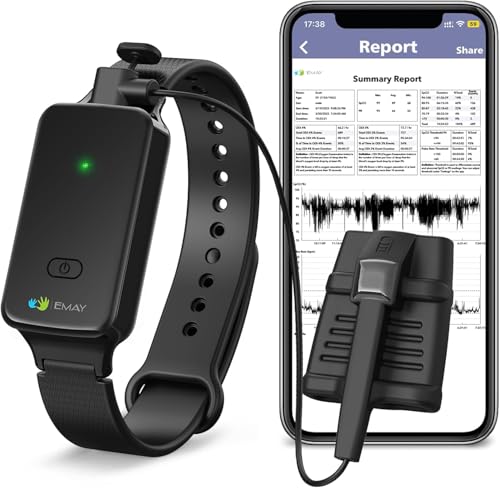
- ✓ Ultra-light comfort
- ✓ Clear sleep insights
- ✓ Quick data sync
- ✕ Not medical-grade
- ✕ Stand-alone limits
| Measurement Interval | SpO2 and heart rate recorded every second |
| Weight | 100 g |
| Battery Life | Up to 12 hours |
| Data Storage / Recording Mode | Stand-alone wrist oximeter with built-in recording; stores overnight data locally for later sync |
| Connectivity / Data Transfer | In-app sync with smartphone app in the morning |
| Key Metrics Displayed | SpO2, heart rate, ODI4% with trend graphs |
The moment I slipped the EMAY SleepO2 on my wrist, I could feel how lightweight it is—like wearing almost nothing at all. You’ll notice the silicone probe hugging your wrist snugly, and it stayed put through the night without any fuss.
Sleeping with it felt surprisingly natural. The device records every second, so when you wake up, you’ve got a full night chart to pore over.
I appreciated how the stand-alone design means no phone tethering while you sleep; you can just wear it, wake up, and sync the data in seconds.
The app is where the magic happens. It translates the raw numbers into something usable, with ODI4% and trend graphs that actually make sense.
I could see how my SpO2 and HR bounced around in different sleep stages, which helped me spot patterns I’d otherwise miss.
Battery life lived up to the promise. I got through a full night plus a bit more without worrying about a mid-sleep recharge.
The 12-hour capacity is generous, so you’re not rushing to top it up before bed.
In real-world use, it’s comforting to know your data is there for you, especially if you’re dealing with sleep apnea symptoms. The wrist form sits low-profile enough for side sleepers, and the one-second sampling gives you a granular view you won’t get from common pulse oximeters.
If you’re weighing options, this one hits a nice balance of comfort, continuous data, and usable insights—without turning your nightly routine into a tech puzzle.
Wrist Pulse Oximeter with App Report & SpO2/HR Monitor

- ✓ Comfortable wear
- ✓ Real-time syncing
- ✓ Clear reports
- ✕ Not medical-grade
- ✕ App occasionally lags
| Measurement Frequency | SpO2 and heart rate measured every 4 seconds during sleep |
| SpO2 Accuracy | ±2% |
| Heart Rate Accuracy | Not explicitly stated; implied reliable pulse rate readings |
| Battery Life (Monitoring) | Up to 12-16 hours of continuous monitoring on a single charge |
| Connectivity | Bluetooth for real-time data sync to mobile app |
| Data Access & Reports | PDF/JPG reports generated on mobile device; data trends over days/weeks/months |
You fidget at night, chasing steady breaths and hoping the numbers don’t plunge while you sleep. You’ve tried gadgets that wake you up with buzzes or strips that feel like a swimsuit in the dark.
Tonight, you slip on the MugaTree Wrist Pulse Oximeter and notice the soft silicone band hugs your wrist without snagging sheets. The screen stays low-profile, but the data starts syncing the moment you lay down.
Within minutes, the app pops up a live SpO2 and heart-rate feed on your phone. You set a gentle alarm for any dip, and it nudges you awake without drama, just enough to nudge you back into a comfortable breathing rhythm.
It feels less clinical and more like having a quiet sleep buddy that cares about nightly patterns.
Throughout the night, you watch the readings tick every four seconds, and you can almost hear the graph breathe with you. When morning arrives, the reports load in the app, offering PDFs and JPGs you can share with your doctor or sleep coach.
The data trends through days and weeks, turning restless nights into actionable insights.
The band stays comfy after hours of wear, and you barely notice it during those late-night trips to the bathroom. Battery life stretches through long sessions, so you don’t have to reconnect cables or hunt for a charger at 2 a.m.
It’s simple to set thresholds and quick to pull up a snapshot before you start your day.
If you’re worried about sleep-apnea symptoms or high-altitude adventures, this feels like a practical companion. It won’t replace medical devices, but it lowers the guesswork and anxiety around sleep quality.
And at under $90, it’s a solid value for real-world use.
Vibeat Wrist Pulse Oximeter: SpO2 & HR Tracker, 180° Screen

- ✓ Comfortable to wear
- ✓ Auto-start, auto-sync
- ✓ Detailed app insights
- ✕ Not medical-grade
- ✕ Sleep-focused use only
| Display/Screen Orientation | 180° rotatable LCD display for left or right-handed wear |
| SpO2 Measurement Range & Resolution | Standard fingertip pulse oximeter range (SpO2 70-100%), (assuming typical accuracy for consumer devices) with 4-second update cadence in app |
| Heart Rate Monitoring | Continuous heart rate tracking (beats per minute) with second-by-second trend data in app |
| Battery & Power | Rechargeable lithium battery, 12-16 hours of operation per full charge |
| Memory & Data Storage | Built-in memory stores up to 4 sets of 10-hour data; app sync uploads data (unlimited app storage) |
The moment I flipped the wrist and the screen rotated to read the display, it felt like the Vibeat Wrist Pulse Oximeter understood exactly how I move through the night. I noticed the 180° screen instantly giving me the view I expect, left or right-handed, without twisting the device awkwardly.
That small hinge of design makes wearing it through the night feel almost invisible.
Wearing it is simple and surprisingly comfy. The band sits light on your wrist and the sensor sits snug enough to catch reliable SpO2 and HR readings without pinching or wandering.
It starts automatically when you put it on, which means no fumbling for buttons after you roll over with a creak in the morning.
The data flow is genuinely hands-off. The built-in memory stores up to four 10-hour sets, so you can wear it, forget about syncing, and still have full overnight data on your return.
I like that syncing later actually uploads automatically to the ViHealth app, keeping the history tidy without manual steps.
In use, the continuous tracking feels reassuring, especially if you’re watching sleep patterns or waking episodes. The app gives second-by-second trends and 4-second updates, making it easy to spot spikes or drops in real time.
And since you can generate and share reports, it’s simple to show your clinician or sleep buddy what’s happening.
Be mindful of the note in the box: this isn’t a medical device. It’s designed for sports and aviation, so treat it as a high-quality tracker rather than a clinical tool.
Still, for sleep-oriented monitoring or casual health checks, it’s a solid everyday companion you’ll actually want to wear.
Overall, the combination of a comfortable fit, hands-off operation, and detailed app insights makes this a compelling pick for tracking sleep-friendly oxygen trends without turning your night into a tech chore.
What Is an Oxygen Monitor and How Does It Help with Sleep Apnea?
Additionally, the benefits of using an oxygen monitor extend beyond immediate health concerns. For patients who undergo continuous positive airway pressure (CPAP) therapy, monitoring oxygen levels can help assess the effectiveness of treatment, ensuring that the device is functioning correctly and that the patient is receiving adequate oxygen during sleep. This is particularly important as adherence to CPAP therapy can significantly improve health outcomes and quality of life.
Best practices for using oxygen monitors include ensuring the device is calibrated correctly, using it during sleep to capture accurate data, and regularly reviewing the readings with a healthcare provider to identify trends over time. Patients should also consider integrating other sleep monitoring technologies to create a comprehensive picture of their sleep health, which can enhance the management of sleep apnea and related conditions.
What Features Are Essential in an Oxygen Monitor for Sleep Apnea?
When looking for the best oxygen monitor for sleep apnea, several essential features should be considered:
- Accuracy: The accuracy of the readings is crucial for effective monitoring of oxygen levels during sleep. An accurate monitor ensures that any drops in oxygen saturation are detected promptly, allowing for timely intervention and adjustments to treatment if necessary.
- Real-time Monitoring: A device that offers real-time monitoring provides immediate feedback on oxygen levels throughout the night. This feature is important for identifying patterns and fluctuations in oxygen saturation while sleeping, helping to manage sleep apnea more effectively.
- Data Storage and Connectivity: The ability to store data and connect to apps or other devices is valuable for tracking long-term trends in oxygen saturation. This feature enables users to review their sleep data over time, share it with healthcare providers, and make informed decisions regarding their sleep apnea management.
- Comfort and Wearability: Since the monitor will be used during sleep, it should be comfortable and easy to wear. Lightweight and non-intrusive designs help ensure that users can wear the monitor throughout the night without disruption to their sleep quality.
- Battery Life: A long battery life is essential for overnight monitoring without the need for frequent recharging. This ensures that the device can function throughout the night without interruptions, providing continuous data on oxygen levels.
- Alarm Functionality: An oxygen monitor with alarm capabilities can alert users to significant drops in oxygen saturation during sleep. This feature is vital for immediate awareness and action, particularly in severe cases of sleep apnea where low oxygen levels may pose health risks.
- Ease of Use: The monitor should be user-friendly, with simple controls and clear displays. A straightforward interface allows users to operate the device without frustration, ensuring they can focus on their sleep rather than on complicated technology.
How Important is Accuracy in Monitoring Oxygen Levels at Night?
Accuracy in monitoring oxygen levels at night is crucial for managing sleep apnea effectively.
- Precision in Readings: Accurate readings ensure that users receive reliable data regarding their oxygen saturation levels while they sleep. This precision is vital for individuals with sleep apnea, as even minor fluctuations in oxygen levels can indicate potential health issues.
- Early Detection of Hypoxia: Reliable oxygen monitors can help detect hypoxia, which is a condition where oxygen levels drop below normal. Early detection allows for timely intervention, which can prevent serious complications associated with prolonged oxygen deprivation during sleep.
- Data for Healthcare Providers: Accurate monitoring provides essential data that can be shared with healthcare providers. This information aids in diagnosing sleep apnea severity and tailoring treatment plans, ensuring patients receive the appropriate level of care based on their specific needs.
- Improvement in Treatment Outcomes: Consistent and accurate monitoring can lead to better treatment outcomes by guiding adjustments in therapy or lifestyle changes. Patients can track their progress over time, allowing for a more proactive approach to managing their condition.
- Peace of Mind: Knowing that they are using a reliable oxygen monitor can provide users with peace of mind, allowing them to sleep more soundly. This assurance can reduce anxiety related to their health and improve overall sleep quality.
What Role Do Battery Life and Portability Play in Choosing an Oxygen Monitor?
When selecting the best oxygen monitor for sleep apnea, battery life and portability are crucial factors to consider.
- Battery Life: A long battery life ensures that the oxygen monitor can be used throughout the night without needing frequent recharging or battery changes.
- Portability: The weight and size of the oxygen monitor are important for ease of use and travel, as a more portable device can be conveniently taken to different locations.
The importance of battery life in an oxygen monitor lies in its ability to provide continuous monitoring during sleep. Users need a device that can last through the entire night, often around 8 hours or more, without interruption, which can be essential for accurate readings and peace of mind.
Portability is equally important, especially for individuals who may need to use the monitor in various settings, such as while traveling or during sleepovers. A lightweight and compact design allows for easy transport, ensuring that users can maintain their monitoring routine without hassle.
What Are the Most Recommended Oxygen Monitors for Sleep Apnea?
Some of the most recommended oxygen monitors for sleep apnea include:
- Wellue O2Ring: This innovative device is designed to be worn on the finger and continuously monitors blood oxygen levels, heart rate, and more, making it especially useful for sleep apnea patients.
- Nonin Onyx Vantage 9590: This fingertip pulse oximeter is popular for its durability and reliability, offering professional-grade accuracy and a simple one-button operation, ideal for monitoring oxygen levels at home.
- Zacurate Pro Series 500DL: This affordable option is praised for its ease of use and accuracy, featuring a large LED display that shows results quickly, making it a great choice for home monitoring.
- iHealth Air Pulse Oximeter: With a sleek design and Bluetooth capability, this device allows users to track their oxygen levels over time and share data with healthcare providers, enhancing the management of sleep apnea.
The Wellue O2Ring is particularly notable for its comfort and continuous monitoring capability, which is essential during sleep when apnea events may occur. This device records data throughout the night, allowing users to analyze trends and share information with their healthcare providers for better management of their condition.
Masimo MightySat stands out due to its accuracy and advanced algorithms, which provide precise readings even during movement or low perfusion states. Its ability to connect to mobile devices enhances the user experience by allowing real-time tracking and data storage for ongoing health assessments.
The Nonin Onyx Vantage 9590 offers a professional-grade experience with a robust design suitable for everyday use. Its quick response time and reliable readings make it a favorite among users who need consistent monitoring of their oxygen levels.
Zacurate Pro Series 500DL is often recommended for its affordability without sacrificing quality. It features a straightforward interface with a bright LED display, making it easy to read results quickly, which is especially helpful during nighttime checks.
Finally, the iHealth Air Pulse Oximeter combines modern aesthetics with functionality, allowing users to easily monitor their oxygen saturation and heart rate. Its Bluetooth capability facilitates seamless data sharing with healthcare providers, making it a valuable tool for ongoing sleep apnea management.
How Can Using an Oxygen Monitor Improve Sleep Apnea Management?
Data logging features enable users to track their oxygen levels over days or weeks, providing a comprehensive overview that can reveal patterns related to sleep apnea episodes. This information can be invaluable for consultations with healthcare professionals, as it presents concrete evidence of the condition’s impact on the user’s health.
Improved treatment decisions stem from the detailed information gained through monitoring. Healthcare providers can tailor treatment plans more effectively, ensuring that therapy is aligned with the patient’s specific needs and responses to treatment, which may include changing CPAP pressure settings or considering additional interventions.
Increased awareness of sleep apnea symptoms and their effects can lead to better engagement with treatment options, as patients who recognize their condition’s seriousness may be more likely to adhere to prescribed therapies, participate in lifestyle changes, or attend regular follow-up appointments.
Enhanced safety is a crucial aspect of using an oxygen monitor, especially for individuals at high risk for severe sleep apnea. Alerts for low oxygen saturation can prompt timely interventions, potentially preventing complications associated with untreated sleep apnea, such as cardiovascular issues or excessive daytime sleepiness.
What Do Users Experience with Different Oxygen Monitors for Sleep Apnea?
Smart Home Devices: With the integration of oxygen monitoring into smart home ecosystems, users can receive notifications on their smartphones or other devices if their oxygen levels fall below a certain threshold. This proactive approach enhances safety and allows for timely interventions when necessary.
What Should Buyers Consider Before Purchasing an Oxygen Monitor for Sleep Apnea?
When considering the best oxygen monitor for sleep apnea, buyers should take several important factors into account.
- Accuracy: The primary function of an oxygen monitor is to provide accurate readings of blood oxygen levels. Look for devices that have undergone clinical testing and are known for their reliability in capturing data, especially during sleep when readings can fluctuate.
- Ease of Use: A user-friendly interface is essential for monitoring oxygen levels, especially for those who may not be tech-savvy. Choose a model that has a straightforward display and easy-to-navigate menus to ensure that users can quickly access their readings without confusion.
- Data Recording and Connectivity: Many modern oxygen monitors offer features such as data logging and connectivity to smartphones or computers. This allows users to track their oxygen levels over time and share the information with healthcare providers for better management of sleep apnea.
- Comfort and Fit: Since the monitor may need to be worn for extended periods, especially during sleep, comfort is a critical consideration. Look for devices designed to fit securely without causing discomfort or irritation, ensuring that users can wear them throughout the night without disturbance.
- Battery Life: For portable monitors, long battery life is crucial to avoid interruptions during use. Buyers should check the specifications for battery performance and consider options that allow for quick recharging or have replaceable batteries for convenience.
- Cost and Warranty: Prices for oxygen monitors can vary significantly. It’s important to find a balance between affordability and quality, while also considering the warranty offered by the manufacturer, as this can provide peace of mind regarding the device’s longevity and reliability.