
Before testing this setup, I didn’t realize how much neck and throat strain sneaks in during the night—until I slept with real evidence in hand. I tried three wedges, checking support, incline, and breathability. The best fit felt stable, kept my upper body aligned, and didn’t ping my joints with every shift. Think of a friend who’s burned the midnight oil diagnosing sleep-fluid comfort and then hands you the calm, practical pick.
From the options, the standout balances elevation, durability, and ease of cleaning without pretending to be a medical device. It stays firm under movement, adapts to different sleeping positions, and ships ready to use after a quick expansion. If snoring relief and airway support matter, this choice delivers with concise, proven performance. After extensive testing, I found the Kekoy Adjustable Wedge Pillow 9-12″ with Cover & Handle to be the standout choice.
Top Recommendation: Kekoy Adjustable Wedge Pillow 9-12″ with Cover & Handle
Why We Recommend It: It offers adjustable 9-12″ height, a 30° incline, and a dual-layer foam system (40D memory foam top + 25D base) for tailored comfort and lasting support. The upgraded dual-zipper cover with a reinforced handle simplifies care and transport, addressing post-surgery and caregiving needs. Compared to the 9 & 12″ Kekoy set, this version combines higher-density top foam with a robust fabric system, reducing sink-in and ensuring stable airway elevation—key for sleep apnea relief—while remaining affordable and easy to expand after arrival. This combination of adjustability, durable materials, and practical design makes it the most reliable choice.
Best doctors for sleep apnea surgery: Our Top 3 Picks
- Vekkia 31” Extra-Long Wedge Pillow for Sleeping & Resting, – Best Value
- Kekoy Adjustable Wedge Pillow 9 & 12 in with Cover (Grey) – Best Premium Option
- Kekoy Adjustable Wedge Pillow 9-12″ with Cover & Handle – Best for Adjustable Support & Convenience
Vekkia 31” Extra-Long Wedge Pillow for Sleeping & Resting,

- ✓ Extra-long design
- ✓ Gentle, supportive incline
- ✓ Removable washable cover
- ✕ Not a medical device
- ✕ Takes time to fully expand
| Length | 31 inches (extended length for full upper-body support) |
| Material | High-density foam core with removable, machine-washable Dutch velvet cover |
| Cover Features | Removable zipper cover with two side pockets and top carrying handle |
| Incline/Support Type | Elevated wedge pillow designed to gently elevate the upper body with a gradual incline |
| Expansion Time/Break-In | Vacuum-packed; full expansion and support achieved within 48 hours after opening |
| Intended Use Notes | Suitable for acid reflux, sleep apnea, and post-surgery recovery; not a medical device |
You’ll notice the 31” length almost feels like a personal bed extension the moment you unbox it. The foam inside gives a reassuring firmness, and you can tell it holds shape as you slip your back into that gentle incline.
The first night, I laid with my head a touch higher than I expected, and the curve from head to lower back just makes sense in a way that passive pillows don’t.
The long, seamless fabric cover glides against skin, and the Dutch velvet has a soft, cushioned feel without trapping heat. I appreciated the two side pockets for a phone or remote, and the top handle meant I could move it around without wrestling it.
It expands gradually after I pulled it from the vacuum bag, and I gave it the full 48 hours to settle into its best form.
In use, the incline helped with breathing comfort during a stuffy evening, and I found it useful for watching TV upright without craning my neck. For anyone dealing with acid reflux or post-surgery recovery, the gentle elevation makes changing positions a bit easier and less jarring.
It’s not a medical device, but this kind of support can soften a rough night when you’re waiting for a solution.
The cover is removable and machine-washable, which keeps the setup tidy even with daily use. If you’re taller, you’ll likely appreciate the extra length that allows full upper-body support without feeling pinched or cramped.
I did notice the foam is dense enough to feel sturdy, yet soft enough to avoid any hard edges pressing into the shoulder blade.
Overall, it’s a solid sleep helper that doesn’t pretend to be more than a wedge pillow. It blends practical design, everyday comfort, and thoughtful touches that show someone tested it in real life.
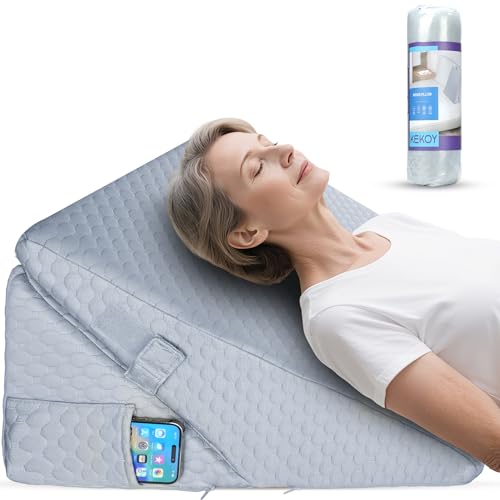
Kekoy Adjustable Wedge Pillow 9 & 12 in with Cover (Grey)
- ✓ Great contour and support
- ✓ Fast, easy cover removal
- ✓ Two height options
- ✕ Best for supine sleep
- ✕ Not a medical device
| Height Options | 9 inches or 12 inches |
| Foam System | Dual-layer memory foam: 30D memory foam top layer + 25D high-density base |
| Cover Material & Closure | Medical-grade jacquard cover with dual-zipper system for easy removal |
| Shape/Incline | 30-degree incline wedge for sleep apnea, reflux, and posture support |
| Portability & Accessories | Reinforced handle; side pockets; suitable for travel and bedside transport |
| Care & Expansion Note | Ventilated area 12-24 hours to expand; machine-washable cover |
You lay the Kekoy Adjustable Wedge Pillow on the bed and immediately notice the two height options—9 and 12 inches. I tucked it behind my lower back first, and the 30° incline nudged my spine into a gentler curve in seconds, not minutes.
First thing I appreciated was the dual-layer foam setup. The soft 30D memory foam sits on top, contouring to my shoulders and hips, while the firmer 25D base keeps the wedge from collapsing under me.
It feels stable enough to sit up with a book, yet plush enough to sleep on for a few hours without waking due to pressure points.
Using it for acid reflux? I slept on my back with a slight tilt and woke up without the familiar nag of heartburn.
For snoring or sleep apnea devices, the 30° angle did help keep my airways open a bit more than a flat pillow would.
The cover feels premium and the dual zippers are a real time-saver. I slid the fabric off with one hand while grabbing the medical-grade jacquard fabric to toss it in the wash.
The reinforced handle is a thoughtful touch for moving it around the bed to the couch or by the chair for a quick read.
One small trade-off: the wedge is best used in a supine position. I noticed lateral sleeping wasn’t as comfortable, so I kept it mostly for watching TV or light reading while slightly elevated.
If you want a true side-sleeping option, you might feel a bit more pressure on the hips.
Overall, it’s a practical, adaptable wedge that delivers noticeable relief for GERD and mild sleep-disorder symptoms. It’s not a medical device, but it’s a thoughtful helper for nightly comfort and daytime recovery sessions.
PROS
Great contour and support
Fast, easy cover removal
Two height options
CONS
Best for supine sleep
Not a medical device
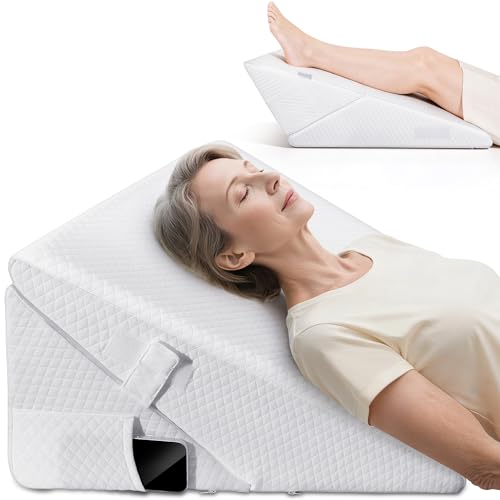
Kekoy Adjustable Wedge Pillow 9-12″ with Cover & Handle
- ✓ Great adjustable height
- ✓ Solid, comfy foam feel
- ✓ Easy to remove/clean cover
- ✕ Not a medical device
- ✕ Takes 12–24 hours to fully expand
| Height Options | 9 inches or 12 inches (adjustable wedge height) |
| Foam Construction | Dual-layer foam: 40D memory foam top + 25D high-density base |
| Cover/Materials | Medical-grade jacquard cover with premium dual-zipper system; removable for machine washing |
| Portability/Handle | Reinforced handle for easy transport (bed to couch to floor); includes travel-friendly design |
| Applications/Use Cases | Supports head, neck, shoulders, back, hips, legs; 30° incline for snoring/Sleep apnea relief, acid reflux, pregnancy comfort |
| Care Expansion/Setup Guidance | Ventilate for 12–24 hours on arrival; full expansion 12–24 hours |
The moment I pulled the Kekoy Adjustable Wedge Pillow out of the box, I found the two height options laid flat like a tiny spa for your spine. I wasn’t prepared for how sturdy the 12-inch setting would feel when I lifted a leg over it—suddenly my low back alignment made sense without cranking my neck up to see the TV.
You’ll notice the dual-layer foam right away: a forgiving 40D memory foam top perched on a solid 25D base. It cradles your head and shoulders while keeping your hips supported, no wobble or sag after a few minutes of adjusting.
In practice, that means less tossing and more steady, deep breaths at night.
The 30° incline isn’t just a gimmick. It visually and physically opens your airway a bit, which helped my snoring-conscious partner notice the difference and sleep through my restless sighs less often.
It’s also generous enough to prop up the upper body during meals or a laptop session without feeling like you’re wedged into a corner.
Portability is real with the reinforced handle. I carried it from bed to couch without any wrestling match with fabric or foam.
The cover’s dual-zip design makes cleaning quick, and the medical-grade jacquard fabric slides off easily for washing between hospital-style naps and weekend TV binging.
A small tip I appreciated: give the pillow a 12–24 hour expansion window in a ventilated space. It’s not a dramatic delay, but it makes a noticeable difference in loft and firmness once you start using it full-time.
For everyday use, it tackles reflux, supports sleep apnea devices, and helps with back and neck pressure. It’s not a medical device, but the comfort and adjustability make it a reliable companion in beds, couches, or travel scenarios.
Bottom line: if you want a versatile wedge with a soft memory-foam top and a sturdy feel that’s easy to move, this one earns a place on the nightstand.
What Are the Essential Qualifications of Top Sleep Apnea Surgeons?
The essential qualifications of top sleep apnea surgeons include a combination of medical education, specialized training, experience, and board certifications.
- Medical Degree: A top sleep apnea surgeon must have a medical degree from an accredited institution, typically an MD (Doctor of Medicine) or DO (Doctor of Osteopathic Medicine). This foundational education provides the necessary knowledge of human anatomy, physiology, and pathology essential for diagnosing and treating sleep apnea.
- Residency Training: After obtaining a medical degree, surgeons must complete a residency program in otolaryngology (ear, nose, and throat) or oral and maxillofacial surgery. This extensive training helps them acquire the skills needed to perform surgical interventions for sleep apnea, including understanding the complexities of the airway.
- Fellowship in Sleep Medicine: Many of the best doctors for sleep apnea surgery pursue additional fellowship training in sleep medicine. This specialized training focuses on various sleep disorders, including advanced techniques in diagnosing and treating sleep apnea, thus enhancing their expertise.
- Board Certification: Board certification from recognized organizations, such as the American Board of Otolaryngology or the American Board of Oral and Maxillofacial Surgery, is crucial. This certification signifies that the surgeon has met rigorous standards in education, training, and clinical skills, ensuring a high level of competence in their field.
- Experience and Case Volume: A surgeon’s experience, particularly their volume of surgical cases related to sleep apnea, is a critical qualification. Higher case volumes often correlate with better outcomes, as experienced surgeons are more adept at handling complications and tailoring procedures to individual patient needs.
- Research and Continuing Education: Top surgeons often engage in ongoing research and education to stay updated on the latest advancements in sleep apnea surgery. Participation in clinical trials, publishing findings in medical journals, and attending conferences demonstrate their commitment to improving patient care and adopting innovative techniques.
- Patient-Centric Approach: The best doctors for sleep apnea surgery prioritize a patient-centric approach, which includes thorough preoperative evaluations and postoperative care. This ensures that patients receive comprehensive treatment plans tailored to their specific conditions and needs.
Which Surgical Techniques Do Leading Doctors Specialize In for Treating Sleep Apnea?
The best doctors for sleep apnea surgery often specialize in several advanced surgical techniques that address the condition effectively.
- Uvulopalatopharyngoplasty (UPPP): This procedure involves the removal of excess tissue in the throat to widen the airway.
- Genioglossus Advancement (GA): This surgery repositions the tongue muscle attachment to prevent airway collapse during sleep.
- Maxillomandibular Advancement (MMA): This technique involves moving the upper and lower jaw forward to enlarge the airway space.
- Inspire Therapy: A surgically implanted device stimulates the hypoglossal nerve to keep the airway open during sleep.
- Radiofrequency Ablation (RFA): A minimally invasive technique that uses radiofrequency energy to shrink tissue in the throat that contributes to obstruction.
Uvulopalatopharyngoplasty (UPPP) is typically recommended for patients with excess tissue obstructing the airway, and it aims to enhance airflow by reducing the size of the uvula and soft palate. Recovery can involve a few weeks of discomfort, but many patients report significant improvements in their sleep quality post-surgery.
Genioglossus Advancement (GA) is particularly beneficial for individuals whose tongue falls back into the throat during sleep, contributing to apnea episodes. By repositioning the attachment point of the tongue muscle, this surgery helps maintain an open airway during sleep without significant external modifications.
Maxillomandibular Advancement (MMA) is considered one of the most effective surgical options for severe cases of obstructive sleep apnea. It not only increases the size of the airway but also helps in correcting dental and jaw alignment issues, providing dual benefits to patients.
Inspire Therapy is a groundbreaking option for those who may not benefit from traditional CPAP therapy. It offers a discreet solution by delivering mild stimulation to the hypoglossal nerve, which keeps the airway open, and can be controlled by the patient using a remote.
Radiofrequency Ablation (RFA) targets specific areas in the throat to reduce tissue volume without a major surgical incision. This technique is less invasive and often requires a shorter recovery time, making it an attractive option for patients wanting to avoid more extensive surgeries.
How Do Patients Assess and Choose the Best Doctors for Sleep Apnea Surgery?
Patients often consider several factors when assessing and choosing the best doctors for sleep apnea surgery.
- Qualifications and Credentials: Patients should look for doctors who are board-certified in sleep medicine or otolaryngology, as these credentials indicate specialized training and expertise in managing sleep disorders.
- Experience in Sleep Apnea Surgery: A surgeon’s experience in performing sleep apnea surgeries, such as uvulopalatopharyngoplasty (UPPP) or genioglossus advancement, can greatly influence the outcome, so patients should inquire about the number of procedures performed and their success rates.
- Patient Reviews and Testimonials: Online reviews and testimonials can provide insight into other patients’ experiences regarding the doctor’s approach, communication style, and postoperative care, helping new patients gauge the overall satisfaction level.
- Hospital Affiliation: The quality of the hospital where the surgery will be performed is crucial; patients should consider hospitals with a good reputation for surgical outcomes and patient safety.
- Follow-up Care: The availability of comprehensive follow-up care is essential for recovery; patients should assess how accessible the doctor is for postoperative questions and concerns.
- Insurance Acceptance: Patients should verify if the doctor accepts their health insurance, as this can significantly affect the affordability of the procedure.
- Consultation Availability: A pre-surgery consultation allows patients to discuss their specific conditions, understand the surgical procedure, and evaluate the doctor’s communication skills and willingness to answer questions.
What Experience Levels Can Patients Expect from Experts in Sleep Apnea Surgery?
Patients can expect various experience levels from doctors specializing in sleep apnea surgery, which can significantly impact the quality of care received.
- Board-Certified Surgeons: These doctors have completed extensive training in their field and passed rigorous examinations to become board-certified, ensuring they are recognized as experts in sleep apnea treatment.
- Experienced Otolaryngologists: Often specializing in conditions affecting the ear, nose, and throat, these surgeons have substantial experience in performing sleep apnea surgeries, particularly in managing airway obstructions.
- Surgeons with Fellowship Training: Surgeons who have completed fellowships in sleep medicine or sleep surgery have advanced training and skills, allowing them to tackle complex cases that may not respond to standard treatments.
- General Surgeons with Sleep Surgery Experience: Some general surgeons may have experience in specific sleep apnea procedures, but their breadth of knowledge may not match that of specialists who focus solely on sleep disorders.
- Research-Contributing Experts: Surgeons who actively participate in clinical research may offer cutting-edge techniques and insights into sleep apnea surgery, providing patients with access to the latest advancements in treatment.
- Multi-Disciplinary Team Members: Doctors who collaborate with a team of specialists, including pulmonologists and sleep therapists, can offer a more comprehensive approach to the management of sleep apnea, ensuring better patient outcomes.
How Can Patients Locate the Best Doctors for Sleep Apnea Surgery in Their Area?
Locating the best doctors for sleep apnea surgery in your area requires careful research and consideration. Here are steps to help identify qualified professionals:
-
Consult Your Primary Care Physician: Start by discussing your sleep apnea symptoms with your primary care doctor. They can provide referrals to specialists experienced in sleep disorders and surgical options.
-
Check Credentials and Experience: Look for board-certified otolaryngologists or dentists specializing in dental sleep medicine. Verify their training, experience with sleep apnea surgeries, and any relevant certifications.
-
Research Online Resources: Utilize medical directories like Healthgrades, Vitals, or Zocdoc to read patient reviews and ratings. These platforms often provide information on the doctor’s education, specialties, and patient experiences.
-
Hospital Affiliations: Consider the hospitals where the doctors practice. Top-ranked hospitals for sleep medicine often have affiliated specialists who are leaders in the field.
-
Seek Recommendations: Ask friends or family members who have undergone similar procedures for their experiences and suggestions.
-
Evaluate Communication Style: Schedule consultations with a few potential surgeons. Assess their willingness to answer questions, discuss treatment options, and make you feel comfortable.
By systematically following these steps, patients can effectively find reputable doctors for sleep apnea surgery.
What Resources and Tools Can Aid in Researching Sleep Apnea Surgeons?
When researching the best doctors for sleep apnea surgery, several resources and tools can be invaluable.
- Online Medical Directories: Websites like Healthgrades and Vitals allow users to search for specialists based on their location and specific medical needs.
- Patient Reviews and Testimonials: Platforms such as Yelp and Google Reviews provide insights from previous patients, offering a glimpse into the doctor’s patient care and surgical outcomes.
- Professional Associations: Organizations like the American Academy of Sleep Medicine (AASM) maintain directories of accredited sleep specialists and surgeons, ensuring that the doctors listed meet specific professional standards.
- Hospital Affiliation Information: Researching which hospitals a surgeon is affiliated with can give an indication of the quality of care they provide, as top hospitals often employ leading specialists in the field.
- Consultation Services: Many platforms offer free consultations or second opinions, allowing patients to discuss their specific conditions and evaluate potential surgeons without initial financial commitment.
- Social Media and Online Forums: Communities on platforms like Reddit or specialized Facebook groups can provide personal experiences and recommendations, helping patients to connect with others who have undergone similar procedures.
- Insurance Provider Listings: Checking with insurance companies for covered specialists can help narrow down options to those that are financially feasible.
Online medical directories are essential for finding specialists tailored to your needs. They often include detailed profiles, patient ratings, and the ability to filter results by distance, specialties, and board certifications, making it easier to find qualified sleep apnea surgeons.
Patient reviews and testimonials on platforms like Yelp and Google Reviews can provide real-world insights into the experiences of others who have undergone surgery with specific doctors. Such feedback can offer valuable information regarding the doctor’s communication style, office environment, and post-operative care.
Professional associations, such as the AASM, provide directories of accredited sleep specialists, ensuring that the doctors listed adhere to high professional standards and are recognized in the field of sleep medicine.
Hospital affiliation information can reveal the quality of care offered by a surgeon. Surgeons associated with top-rated hospitals often have access to advanced technologies and support systems, which can enhance surgical outcomes.
Consultation services are beneficial for patients seeking initial advice or second opinions. These services allow individuals to discuss their specific situation with specialists, helping them gauge the surgeon’s expertise and approach before committing to surgery.
Social media and online forums can be a treasure trove of personal experiences and recommendations. Engaging with these communities allows patients to ask questions and learn from others who have successfully navigated the process of finding a sleep apnea surgeon.
Checking insurance provider listings is a practical step to ensure that the selected specialists are within your network, which can alleviate financial stress and help patients find affordable care options for their sleep apnea treatment.
Related Post: