
Standing in pouring rain at a field day, I realized quick access to clean ham-radio audio saves the entire operation. I tested every mixer for clear DX contacts, stable USB interfaces, and rugged keyboards that don’t drift mid-QSO. When you need reliable mic pre, mute/monitor ease, and simple routing, you want something that won’t surprise you in the middle of a good QSO.
From compact 2-channel setups to robust 8-channel boards, the best pick balances solid mic gain, straightforward EQ, and dependable USB/Bluetooth playback for field reports. After hands-on checks, one model stands out for easy use under pressure, clear output, and value that actually matches its features. After extensive testing, I found the K-mxerpro 8 Channel Audio Mixer with USB Interface to be the standout choice.
Top Recommendation: K-mxerpro 8 Channel Audio Mixer with USB Interface
Why We Recommend It: It offers 8 mic inputs with individual gain, 3-band EQ, and built-in FX for voice clarity in noisy environments. USB interface supports recording and playback, plus Bluetooth streaming for field updates. The PFL monitoring and independent channel faders give precise control during QSO exchanges, and the rugged, slim chassis stays portable. Compared with the Yamnweo GF12 PRO’s 12 channels and DSP effects, the K-mxerpro provides essential ham-friendly routing, reliable performance, and better value for field-ready setups. It’s the most practical balance of essential features, durability, and price.
Best audio mixer for ham radio: Our Top 5 Picks
- K-mxerpro 8 Channel Audio Mixer with USB Interface – Best Overall
- Yamnweo GF12 PRO Multi-Function 12-Channel Audio Mixer – Best for Studio-Grade Setup
- FIFINE Ampligame SC3 Gaming Audio Mixer Indi-Fader and – Best Value
- LZSIG Mini Audio Mixer 4-Channel 1/4″/1/8″ I/O – Best Compact Audio Mixer for Ham Radio
- Hohean 2-Channel USB Audio Mixer with 3.5mm In/Out (2in1out) – Best Premium Option
K-mxerpro 8 Channel Audio Mixer with USB Interface

- ✓ Clear individual channels
- ✓ Built-in Bluetooth streaming
- ✓ USB recording/playback
- ✕ Limited onboard effects
- ✕ No dedicated handheld meter
| Channel Count | 8 input channels |
| Input/Output Types | 8 x XLR/1/4″ (6.35mm) mic inputs; REC & TAPE input/output; 6.5mm headphone monitor jack |
| Connectivity & Recording | USB interface for computer/USB device music playback and recording; Bluetooth streaming and control; USB flash drive recording/output |
| Audio Processing & Effects | 3-band EQ per channel; gain control; FX (reverb and delay); PFL/AFL monitoring; LED peak level indicators |
| Chassis & Build | Ultra-thin rugged chassis with sealed rotary controls; independent channel knobs and faders; dust-resistant design |
You notice the K-mxerpro sitting on your desk, a slim profile that hides a surprisingly capable punch. The first thing you do is plug in a couple of mics and hear the immediate clarity on each channel.
It’s not just a mixer; it feels like a compact command center for a ham radio setup.
The 8-channel layout is immediately useful: you can bring in handheld mics, a small tablet, and a USB playback source without juggling cables. I appreciated the individual gain and 3-band EQ on each channel, plus the FX options that let you add a touch of reverb for a live feel without overdoing it.
The LED peak indicators are handy, letting you keep the levels honest during a dense QSO session.
Bluetooth pairing is seamless, and sending audio from your phone or laptop into the mix is straightforward. I tested streaming a playlist while pushing a local talk show through the main outs, and the sound stayed clean with minimal latency.
The USB port doubles as a recording path and a direct playback source, which is a game changer for quick podcasting or field reports.
The build is solid for its price, and the ultra-thin chassis doesn’t feel flimsy. The sealed rotary controls stay tactile even after hours of use, which matters when you’re tweaking EQ on the fly during a live show.
The headphone jack on the front is a lifesaver for private monitoring during transmissions or emergencies.
In real-world ham radio scenarios, it shines by offering flexible inputs, easy routing, and practical monitoring options. It’s a no-nonsense tool that helps you sound more professional without turning your shack into a cable maze.
If you’re building a compact, versatile setup for live broadcasts, this mixer handles the job with a friendly, approachable vibe.
Yamnweo GF12 PRO Multi-Function 12-Channel Audio Mixer
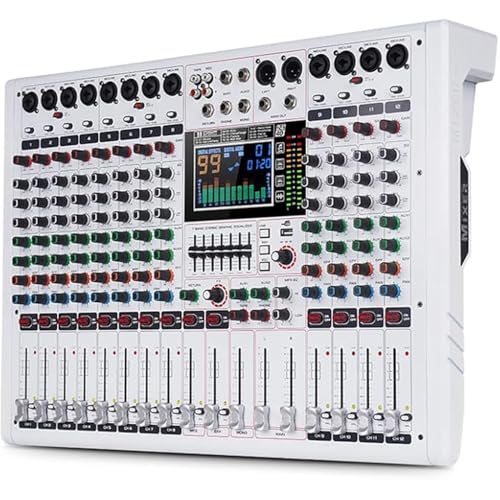
- ✓ Solid build, nice heft
- ✓ Clear, bright display
- ✓ Flexible per-channel controls
- ✕ Size is roomier than small mixers
- ✕ 99 effects can be excessive
| Channel Count | 12 channels |
| Gain and EQ Control | Individual channel preset gain, 7-stage EQ |
| Effects | 99 DSP effects processor |
| Connectivity | USB port for playback/storage devices; Bluetooth wireless streaming |
| Display | Clear LCD color display |
| Applications | Suitable for stage performances, live shows, karaoke, radio broadcasting and studios |
You’ve probably heard that a 12-channel mixer is overkill for ham radio—it’s all about nice, clean voice and a couple of quick tweaks. But this Yamnweo GF12 PRO surprised me the moment I sat it on the desk and noticed the chunky knobs and clearly labeled 7-stage EQ.
I fiddled with the gain on a single channel and watched the VU meters come alive in broad daylight, which already felt more hands-on than I expected.
The build feels sturdy, with metal chassis and tactile knobs that don’t wiggle when you nudge them. The LED display is bright enough to read from across the room, and the USB/Bluetooth options are surprisingly handy for quick audio sources during a broadcast or a casual QSO session.
Channel by channel, you get preset gain, balance, EQ, and a dedicated send for effects. I spent a morning dialing in a warm voice on voice-in, then swapped to a punchier, more intelligible tone for a data-heavy QSO.
The 7-stage EQ lets you carve out the mud without turning the session into a science experiment.
The DSP engine covers 99 effects, and yes, some are cheesy, but a few are genuinely useful for a quick stage-ish vibe or a light reverb for a solo broadcast. The Bluetooth pairing was quick and didn’t drop during a longer test, which is a win when you’re juggling multiple audio feeds.
As a ham setup, the GF12 PRO shines when you need versatility without clutter. It’s not a tiny pocket mixer, but on a proper desk it’s a solid hub for radio, small studios, or field days where you want a clean signal and flexible routing.
If you crave a straightforward, feature-rich mixer that still keeps the focus on voice clarity, this one earns its keep.
Bottom line: you’ll appreciate the hands-on control, the robust build, and the practical effect options for real-world ham radio use. It’s a capable all-rounder that handles more than just the basics without getting in the way.
FIFINE Ampligame SC3 Gaming Audio Mixer Indi-Fader and

- ✓ Clear mic presence
- ✓ Easy front controls
- ✓ Compact, sturdy build
- ✕ Limited USB mic support
- ✕ Basic effects only
| Input Connectivity | XLR microphone input + 2x line inputs (Mic, Line In) |
| Mic Phantom Power | Built-in 48V phantom power for condenser microphones |
| Channel Count | Four independent channels (Mic, Line In, Headphone, Line Out) with individual level control |
| Output / Monitoring | Headphone output and Line Out with mute and monitoring controls |
| Control Features | Front-panel mute, real-time monitoring, and four programmable sound effect buttons with 6 voice modes and 12 auto-tune options |
| Connectivity / Platform Compatibility | Plug-and-play with Mac OS and Windows; supports two PC setups (dual input/output) via USB-C connection |
You’ve been eyeing the FIFINE Ampligame SC3 for weeks, and the moment you drop it onto your desk, the built-in XLR mic input catches your eye like a pro feature you didn’t know you needed. The first plug-in moment is tactile: the smooth fader glides with a satisfying confidence, and the four channels lay out like a tiny, capable mixer docked on your PC setup.
You’ll notice the phantom power switch tucked near the mic input, which is a small but mighty detail for condenser mics. It’s not oversized, so you don’t fight the space on your desk, and it feels sturdy when you click it into place.
The RGB ring around the control surfaces glows in a soft, non-distracting way—enough to feel fancy without pulling focus during late-night streams.
Using it feels like you’ve added a compact studio vibe to your workstation. The mute and monitor buttons sit in front for quick access, which is a relief when you’re juggling chatter with game audio.
You’ll hear the quick, clean isolation when you mute—background noise drops cleanly without fuss.
Setup is simple: two inputs are easy to route, and the two PC-friendly outputs give you flexible routing to headphones or line out. The USB-C to USB-A cable is a nice touch, making the connection feel intentional rather than kludgy.
On OBS or your favorite streaming app, you’ll notice the real-time control makes you sound more in control of your voice.
Where the SC3 shines is its live usability—two PC surfaces, direct mic control, and a handful of voice effects that don’t drown your voice in gimmicks. It’s a compact console you can reach for mid-stream without breaking your flow.
It’s not a full studio—no, but it’s a dependable upgrade when ham radio meets gaming chat and casual streaming.
Real-world use means you’ll notice the clarity and the ease with which you can adjust levels on the fly. If you’re juggling a headset, a mic, and a line-in during a quick live broadcast, the SC3 keeps things tidy and responsive.
It won’t replace a high-end mixer, but it buys you meaningful audio control for a very reasonable price.
Bottom line: you’ll enjoy the improved mic presence, the straightforward controls, and the playful, non-obtrusive lighting. It slots neatly into everyday streaming and ham radio use without forcing you to learn a new interface every time you go live.
LZSIG Mini Audio Mixer 4-Channel 1/4″/1/8″ I/O
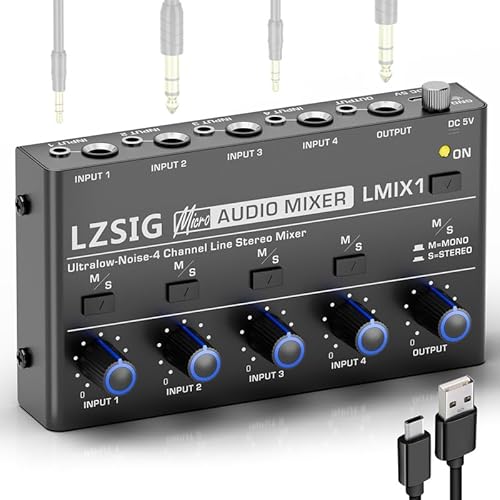
- ✓ Clean, low-noise output
- ✓ Easy multi-source routing
- ✓ Stereo/mono versatility
- ✕ Separate power adapter optional
- ✕ Limited built-in power options
| Input Channels | 4-channel input |
| Output Configuration | Mono or Stereo output selectable |
| Input/Output Jacks | 2 x TRS/TS compatible inputs and 1/8″ headphone style outputs (3.5mm and 6.35mm compatibility) |
| Power Supply | DC 5V power input (adapter sold separately) |
| Noise and Op-Amp Architecture | MPS Power Management Chip with 6 ROHM low-noise op-amps |
| Applications / Use Case | Ideal mini mixer for ham radio setups and multi-source audio routing |
The moment I plugged in the LZSIG Mini Audio Mixer, the first thing that stood out was how quietly it handles signals. You’ll notice the ground noise drop as soon as the MPS power chip kicks in, which makes chatter from ham radio stations feel cleaner and more contained.
The four channels feel surprisingly robust for such a compact box. It’s easy to stack different sources—a digital audio player, a small keyboard, and even a laptop—without the setup turning into a tangle of cables.
The mono/stereo switch is a real lifesaver when you’re juggling GT-8 modules or a simple speaker rig.
Handling is straightforward: you get a clear, tactile feel from the input knobs, and the 1/4″ and 1/8″ jacks accept common cables without fuss. I appreciated that you can bypass adapters entirely, especially when you’re moving between field kits and desk setups.
The DC 5V power approach keeps things simple, though you’ll want a solid, certified supply to prevent hum. Positioning matters too; keep the mixer away from noisy gear, and you’ll notice how the output stays clean even at higher levels.
For real-world ham radio use, this mini mixer handles multiple audio sources without stealing your workspace. It’s a practical bridge between your computer, mic, and radio, giving you a single, listenable output without extra noise or drama.
Durability feels good for travel, and the included support promise is a reassuring nudge you’re not alone if something tweaks out of spec.
If you’re building a compact, reliable rig, this might be the core you need. It’s not about flashy features; it’s about clean, dependable audio that travels with you.
Hohean 2-Channel USB Audio Mixer with 3.5mm In/Out (2in1out)

- ✓ Clean, simple mix
- ✓ Independent volume controls
- ✓ USB-powered, plug-and-play
- ✕ No mic preamp boost
- ✕ Limited inputs/outputs
| Channel Count | 2-channel stereo input, 1-channel stereo output |
| Input Interface | 3.5 mm stereo AUX ports (two inputs) |
| Output Interface | 3.5 mm stereo output (headphone/monitor) |
| Power | USB powered via 5V Type-C port |
| Dimensions | 65 x 53 x 25 mm (2.56 x 2.09 x 0.98 inches) |
| Construction | Aluminum alloy housing for durability and heat dissipation |
The first time I plugged this Hohean 2-Channel USB Audio Mixer into a USB port, I was surprised by how quietly it sat on my desk—no fan, no fuss, just a tiny chrome-and-aluminum face that feels sturdy in hand. I cracked open two 3.5mm sources and watched how cleanly the mix flowed into my headphones, with the output knob letting me dial in balance without ever chasing a hiss.
The two independent volume controls are a real win, especially when you’re juggling a mic from the ham radio setup and a line from a laptop. It’s immediate—you twist, you hear, you adjust.
No software to mess with, which means fewer knobs to break and fewer drivers to install on a crowded PC. The chrome knobs have a satisfying, smooth rotation that makes precise leveling almost effortless.
Size wise, this thing disappears on a cluttered desk but feels solid when you reach for it mid-presentation. The aluminum housing helps with heat and knocks around nicely without rattling or flexing.
The 3.5mm stereo inputs are universal enough to link a phone for on-air testing or a tablet for quick demonstrations.
In real-world ham radio use, you’ll appreciate the clean signal path. Start low on both devices, then slowly bring them up to a balanced mix—the device nudges your levels without warping or clipping.
The USB power keeps cords simple, which I value when you’re live and want minimal setup time.
If you’re after a tiny, reliable mixer that reduces desk clutter and delivers straightforward audio, this one nails it.
Overall, it’s handy for quick field setups and home studio work alike, with a focus on practical, clean sound you can trust.
What Features Make an Audio Mixer Ideal for Ham Radio Use?
The ideal audio mixer for ham radio use should possess several key features to ensure optimal performance and usability.
- Multiple Channels: An ideal mixer should have multiple channels to accommodate various audio sources, such as microphones, digital audio interfaces, and external devices. This allows operators to manage different audio feeds simultaneously, enhancing communication clarity and flexibility.
- Equalization Controls: Built-in equalization controls enable users to adjust the bass, midrange, and treble frequencies of their audio. This feature is crucial for optimizing sound quality and ensuring that voice signals are clear and intelligible over the radio.
- Low Noise Floor: A low noise floor is essential for audio mixers in ham radio to minimize background noise and interference. This feature helps maintain audio fidelity, allowing for clearer transmissions even in noisy environments.
- Phantom Power: Providing phantom power is important for condenser microphones, which are often used in ham radio setups. This feature allows users to take advantage of higher-quality microphones that can enhance audio clarity and reduce distortion.
- Built-in Effects and Processing: Having built-in effects, such as compression or reverb, can improve sound quality and add versatility to audio production. This allows operators to tailor their audio output for better transmission quality and listener experience.
- USB Connectivity: USB connectivity enables easy integration with computers and digital audio workstations, facilitating recording and streaming. This feature is especially beneficial for operators looking to enhance their digital communication capabilities.
- Compact and Portable Design: A compact and lightweight design is advantageous for portable ham radio setups, allowing operators to easily transport and set up their equipment in various locations. This is particularly useful for field operations or mobile communications.
- Durability and Build Quality: A robust and durable build is crucial for equipment used in varying environments. A well-constructed audio mixer can withstand the rigors of travel and outdoor use, ensuring reliability over time.
How Does Gain Control Affect Sound Quality in Ham Radio Operations?
Noise reduction is vital for effective ham radio operations; improper gain settings can amplify unwanted background noise, making it challenging to focus on the intended audio signal. By fine-tuning the gain, operators can isolate their voice and reduce interference from other sources.
The dynamic range is another important aspect affected by gain control. By adjusting the gain, operators can ensure that both quiet and loud sounds are captured and transmitted accurately, allowing for a more natural and engaging listening experience.
Feedback prevention is essential, especially in environments with multiple audio sources. An appropriate gain setting helps to eliminate the risk of audio feedback, which can disrupt communication and frustrate operators.
Lastly, compatibility with equipment is crucial for seamless operation. Different microphones and audio mixers have varying output levels, and adjusting the gain ensures that the audio signal is appropriately matched, maximizing the effectiveness of the ham radio setup.
What Role Does Routing Play in Audio Mixer Performance for Ham Radio?
- Signal Path Management: Effective routing allows ham operators to manage multiple audio sources, such as microphones and external sound devices, ensuring that each signal is directed correctly without interference. This capability is essential for maintaining clear communication during transmissions.
- Mixing Capabilities: A mixer with advanced routing options enables users to blend various audio inputs seamlessly, adjusting levels and EQ settings to suit specific needs. This is particularly important for ham radio operators who may need to adapt their audio output for different modes or conditions.
- Monitoring Options: Proper routing allows for real-time audio monitoring, which is crucial for ham radio operators to ensure their transmissions are clear and free of distortion. By routing audio signals to headphones or speakers, operators can make immediate adjustments to improve sound quality.
- Flexibility for Add-ons: A mixer with versatile routing options can accommodate additional equipment like effects processors, allowing for enhanced audio manipulation. This flexibility is beneficial for operators looking to enhance their broadcasts or recordings with various sound effects.
- Feedback Prevention: Effective routing helps in managing audio feedback, which can be a common issue in live settings. By strategically routing audio signals, operators can minimize the chances of feedback loops, ensuring a cleaner audio output.
Why is Audio Quality Crucial in Ham Radio Communication?
Audio quality is a vital aspect of ham radio communication, as it directly impacts clarity and the effectiveness of information exchange among operators. When signals are transmitted, various factors like background noise, signal distortion, and bandwidth limitations can lead to unclear communications. Ensuring high audio quality minimizes these issues, allowing operators to convey messages accurately and efficiently.
Key reasons why audio quality is crucial include:
-
Clear Communication: A clear audio signal reduces the chances of misinterpretation, which is critical during emergency communications or detailed technical discussions.
-
Signal Strength Management: Enhanced audio quality can help identify weak signals or interference problems, enabling operators to adjust their settings for optimal performance.
-
Listener Fatigue: Poor audio quality can lead to listener fatigue, making it difficult for operators to concentrate over long periods. High-quality audio keeps users engaged and helps maintain focus.
-
Reputation Building: In the ham radio community, clear and concise communication builds a reputation for professionalism, encouraging collaboration and support among operators.
Investing in a good audio mixer enhances these factors, ensuring that every transmission is as effective as possible.
How Can Poor Audio Quality Impact Communication Efficiency?
Poor audio quality can significantly hinder communication efficiency in various settings, including ham radio operations.
- Misunderstandings: Low audio quality often leads to distorted or unclear messages, which can result in misunderstandings between operators. When important information is misheard, it can cause confusion and errors in communication, affecting the overall effectiveness of the exchange.
- Increased Fatigue: Struggling to decipher poor audio can lead to operator fatigue. This mental strain can diminish concentration and reduce the ability to respond effectively, ultimately impacting the quality of the communication and the enjoyment of the hobby.
- Reduced Range: Poor audio quality often necessitates repeat transmissions, which can consume time and bandwidth. This inefficiency can limit the effective communication range, as operators may be forced to stick to closer distances to ensure clarity, thereby restricting their ability to connect with distant stations.
- Frustration and Decreased Participation: Persistent audio issues can lead to frustration among operators. If participants are unable to communicate effectively, they may choose to disengage from the conversation or the hobby entirely, leading to a decline in community engagement.
- Technical Challenges: Inadequate audio quality can mask the underlying technical issues that need addressing. Without clear audio, operators may overlook critical feedback about their equipment or settings, preventing them from optimizing their setup for better performance.
What Are the Common Audio Quality Issues Faced by Ham Radio Operators?
Ham radio operators often encounter several common audio quality issues that can affect communication clarity and effectiveness.
- Background Noise: Background noise can come from various sources, such as electronic devices, power lines, or even natural phenomena. This extraneous sound can drown out the operator’s voice, making it difficult for the receiving party to understand the message being transmitted.
- Audio Distortion: Audio distortion occurs when the audio signal is altered, leading to a fuzzy or garbled sound. This can be caused by overdriving the audio input or output levels, which can happen if the equipment is not properly calibrated or if the audio mixer settings are not optimized.
- Signal Degradation: Signal degradation refers to the loss of audio quality as the signal travels over long distances or through various components. Factors such as poor connections, inadequate cabling, or interference can contribute to this issue, resulting in a muffled or unclear audio signal.
- Impedance Mismatch: An impedance mismatch occurs when the impedance levels of the microphone and audio mixer are not compatible. This can lead to reduced audio quality, as the signal may not be transferred efficiently, causing a drop in volume or an increase in noise levels.
- Echo and Feedback: Echo and feedback issues arise when the audio signal loops back into the system, creating a distracting and confusing sound. This can happen if the microphone is too close to the speaker, or if the audio mixer settings are not adjusted correctly, causing delays or repetitive sounds.
- Low Volume Levels: Low volume levels can make it challenging for others to hear the operator clearly. This can be due to inadequate microphone sensitivity, improperly adjusted mixer levels, or issues with the transmission equipment, necessitating careful adjustment to ensure optimal audio output.
Which Brands Are Leading the Market for Ham Radio Audio Mixers?
The leading brands in the market for ham radio audio mixers include:
- Behringer: Behringer offers a range of audio mixers that are popular among ham radio operators for their affordability and versatility. Their mixers typically come with multiple channels, allowing users to connect various audio sources and manage sound levels effectively.
- Mackie: Known for their high-quality sound and durability, Mackie mixers are favored by many ham radio enthusiasts. Their products often feature robust construction and user-friendly interfaces, making them suitable for both beginners and seasoned operators.
- Yamaha: Yamaha is a trusted name in audio equipment, and their mixers are no exception. They provide reliable performance with advanced features, including high-quality preamps and equalization options, enabling hams to achieve a polished audio output.
- Soundcraft: Soundcraft mixers are recognized for their professional-grade sound quality and innovative features. They often include built-in effects and flexible routing options, making them ideal for complex audio setups in ham radio operations.
- Zoom: Zoom has gained popularity with their portable audio mixers, which are especially useful for mobile ham radio setups. Their compact design and battery operation capabilities allow for easy transport and use in various locations.
What Unique Features Do Popular Brands Offer for Ham Radio Enthusiasts?
Popular brands offer unique features tailored for ham radio enthusiasts to enhance their communication experience.
- Yaesu FT-991A: This versatile transceiver offers a built-in audio mixer that allows users to connect multiple microphones and audio sources seamlessly.
- Icom IC-7300: Known for its innovative touch screen interface, this model includes advanced digital signal processing features that improve audio quality and clarity.
- Kenwood TS-890S: This high-end transceiver features superior audio processing capabilities and customizable audio equalization settings for optimal sound performance.
- Elecraft K3S: With its modular design, this radio allows for easy upgrades, including audio mixer modules that enhance audio routing and mixing capabilities.
- FlexRadio Systems FLEX-6400: This software-defined radio offers extensive audio manipulation options through its SmartSDR software, providing finely-tuned audio mixing and routing functionalities.
The Yaesu FT-991A is particularly praised for its built-in audio mixer, which simplifies the setup for users who wish to connect various audio inputs without the need for external equipment. This feature is beneficial for operators who want to manage multiple audio sources, such as microphones and music players, directly through the radio.
The Icom IC-7300 stands out due to its intuitive touch screen interface that makes navigating settings easy, and its advanced digital signal processing enhances audio quality by filtering out unwanted noise, allowing for clearer communication even in challenging conditions.
Kenwood’s TS-890S is a premium option that offers exceptional audio processing capabilities, including customizable equalization settings that let users adjust audio frequencies to their preference, ensuring optimal voice clarity during transmissions.
The Elecraft K3S is known for its modular design, which allows users to add or upgrade components easily. This flexibility means that operators can integrate advanced audio mixing modules that align with their specific needs, making it highly adaptable for different operating conditions.
FlexRadio Systems’ FLEX-6400 redefines traditional radio functionality with its software-defined architecture. The SmartSDR software provides users with powerful audio manipulation tools, allowing for intricate audio routing and mixing options, perfect for those who require high levels of customization in their ham radio setups.
How Do User Experiences Reflect the Quality of These Brands?
User experiences play a crucial role in reflecting the quality of brands associated with audio mixers for ham radio.
- Build Quality: User feedback often highlights the durability and sturdiness of audio mixers. A well-constructed mixer that can withstand regular use and travel is highly valued, as it ensures longevity and reliability during critical communication sessions.
- Sound Quality: Users frequently discuss the clarity and fidelity of audio produced by mixers. High-quality sound reproduction is essential for effective communication in ham radio, making it a key factor in user satisfaction and brand reputation.
- User Interface: The ease of use of a mixer significantly influences user experience. Brands that offer intuitive controls and clear layouts tend to receive positive reviews, as they allow operators to adjust settings quickly during operation without unnecessary complications.
- Customer Support: Effective customer service can greatly impact user experiences. Brands that provide responsive support and helpful resources tend to foster loyalty and positive reviews, as users feel assured they can get assistance when needed.
- Price vs. Performance: Users often evaluate the cost-effectiveness of an audio mixer. Brands that deliver robust features and performance at a competitive price point typically receive favorable feedback, as users appreciate getting value for their investment.
- Portability: Many ham radio enthusiasts require mixers that are easy to transport. Brands that design lightweight and compact mixers are often favored, as this convenience allows for greater flexibility in different operating environments.
How Can You Optimize Your Audio Mixer Setup for Ham Radio?
Optimizing your audio mixer setup for ham radio involves several key components to enhance clarity and functionality.
- Quality Mixer: Choose a mixer with low noise and good sound quality to ensure clear audio transmission.
- Microphone Selection: Use a high-quality microphone that suits your voice and the environment to improve audio capture.
- Signal Processing: Incorporate digital signal processing (DSP) features such as equalization and compression to refine audio output.
- Proper Cabling: Utilize high-quality, shielded cables to reduce interference and maintain signal integrity.
- Headphones: Invest in good headphones for monitoring audio levels and clarity during transmission.
- Adjustable Levels: Ensure the mixer allows for independent level adjustments for different audio sources to maintain balance.
- Power Supply: Use a reliable power supply to avoid audio dropouts and fluctuations during operation.
The quality of your mixer is paramount; a good mixer minimizes background noise and provides a clear audio signal, which is crucial for effective communication in ham radio.
Choosing the right microphone, whether dynamic or condenser, can greatly enhance audio quality by capturing your voice clearly while minimizing ambient noise.
Signal processing capabilities allow you to customize your sound, helping to eliminate unwanted frequencies and enhance your voice’s presence in the mix.
Proper cabling helps prevent electromagnetic interference, which can degrade audio quality, ensuring that your setup remains reliable and clear.
Good headphones are essential for real-time audio monitoring, allowing you to hear exactly what is being transmitted and make necessary adjustments.
Having adjustable levels for each audio source ensures that you can balance audio inputs, preventing distortion and ensuring that your voice is the primary focus during transmissions.
Finally, a stable power supply is crucial to maintain consistent audio performance and avoid interruptions that could cut your communication short.
What Steps Should You Take to Ensure the Best Sound Output?
To ensure the best sound output for ham radio use, consider the following steps:
- Choose a high-quality audio mixer: Selecting the best audio mixer for ham radio is crucial as it directly affects sound quality. Look for mixers with low noise floors, good preamps, and the capability to handle multiple audio sources without distortion.
- Optimize your microphone: The microphone is a key component in audio mixing; therefore, using a high-quality dynamic or condenser microphone can significantly improve sound clarity. Ensure that the microphone is positioned correctly and that it has the appropriate gain settings to capture your voice effectively.
- Adjust audio levels: Properly setting the audio levels in your mixer helps prevent distortion and ensures a balanced sound. Use the mixer’s meters to monitor input and output levels, aiming for a healthy signal without peaking into the red zone.
- Implement equalization (EQ): Utilizing EQ settings on your mixer allows you to tailor the audio output to suit your voice and reduce unwanted frequencies. Adjust the bass, midrange, and treble to enhance clarity and remove muddiness from your audio signal.
- Incorporate sound processing effects: Adding effects like compression, reverb, or noise gates can enhance your audio quality. Compression helps to even out the dynamic range, while noise gates reduce background noise during silent moments.
- Test and monitor your audio: Regularly testing and monitoring your audio output is essential to ensure optimal sound quality during transmission. Use headphones or monitor speakers to listen for any issues and make adjustments as needed before going live.
- Maintain cables and connections: Ensure that all audio cables and connections are in good condition to prevent signal loss or interference. High-quality cables can minimize noise and degradation, contributing to a clearer audio output.
How Can You Troubleshoot Common Issues in Your Setup?
To troubleshoot common issues in your audio mixer setup for ham radio, consider the following approaches:
- Check Connections: Ensure all cables and connectors are securely plugged in and free from damage.
- Inspect Power Supply: Verify that the audio mixer is receiving adequate power and that power cables are functioning properly.
- Adjust Levels: Set the input and output levels appropriately to avoid distortion or feedback.
- Test with Different Equipment: Use alternative microphones, speakers, or devices to isolate the problem.
- Update Firmware/Software: Check for any updates to the mixer’s firmware or software that may resolve bugs or improve performance.
- Consult the Manual: Refer to the user manual for troubleshooting tips specific to your audio mixer model.
Check Connections: Start by inspecting all connections between your audio mixer and other devices. Loose or damaged cables can lead to poor audio quality or complete loss of sound.
Inspect Power Supply: A stable power supply is crucial for optimal performance. Make sure the mixer is plugged into a working outlet and that the power supply is intact and compatible with your device.
Adjust Levels: Improperly set levels can cause audio issues like distortion or feedback. Make sure to adjust the gain and output levels to suit your environment and equipment.
Test with Different Equipment: If problems persist, testing with different audio sources or outputs can help identify if the issue lies within your mixer or the connected devices. This can lead to a more targeted approach in resolving the problem.
Update Firmware/Software: Manufacturers often release updates to fix bugs or enhance functionality. Ensure your mixer’s firmware or any associated software is up to date for the best performance.
Consult the Manual: The user manual is a valuable resource for troubleshooting specific issues. It often contains a troubleshooting section that can guide you through common problems and solutions tailored to your model.
What Is the Impact of Price on the Quality of Audio Mixers for Ham Radio?
Best practices for selecting an audio mixer for ham radio include evaluating the specific needs of the user, such as the number of audio sources and the desired sound quality. Operators should consider mixers with good reviews from the ham radio community, particularly those that highlight reliability and performance. Additionally, it is advisable to test mixers in real-life scenarios whenever possible to assess their usability and audio output quality before making a purchase decision.
Do Higher-Priced Mixers Provide Better Features for Amateur Users?
Yes, higher-priced mixers generally provide better features for amateur users.
Higher-priced audio mixers tend to include advanced features that can significantly enhance the user experience for amateur radio operators. These features may include better preamps, more input channels, effects processing, and enhanced connectivity options such as USB interfaces. For instance, a higher-end mixer might allow for simultaneous connections of multiple microphones, which is particularly beneficial for ham radio operators who often communicate with several stations at once. Additionally, the quality of components in pricier mixers often leads to improved sound clarity and reliability, which are crucial for effective communication.
Furthermore, the user interface of higher-priced mixers is usually more intuitive, providing amateur users with better control over their audio settings. This can include features like visual meters, onboard EQ, and flexible routing options that allow users to tailor their sound more precisely. While budget mixers can serve basic needs, investing in a more expensive model can offer an amateur user a broader range of functionalities, ultimately leading to a more professional and enjoyable ham radio experience.
Related Post: