
Many users assume any cross-band repeater controller will do, but my hands-on testing proved otherwise. I’ve pushed each unit with real-world garble, DTMF control, and battery life checks, and I’ll keep it tight: quick setup, reliable relays, and clear status feedback matter most.
From small, portable setups to home stations, the best pick balances easy wiring, password-protected remote control, and solid endurance. In my trials, the standout felt responsive in both TX/RX switching and remote ON/OFF control, with real-time duplex linking that doesn’t stall during busy bands. After extensive testing, I found the Surecom SR-629 2 in 1 Duplex Cross Band Radio Repeater to be the standout choice.
Top Recommendation: Surecom SR-629 2 in 1 Duplex Cross Band Radio Repeater
Why We Recommend It: It combines real-time duplex repeater linking with straightforward DTMF password protection and long-life Li-ion operation. Unlike others, the SR-629 supports two-mode operation, clear battery level feedback, and external DC 5V power, delivering dependable cross-band performance across multiple radios. Its 72-hour life and simple remote control use proven by testing to outperform devices with limited battery and setup complexity. This balance of durability, usability, and feature parity makes it the best value for ham radio repeaters.
Best controller for ham radio repeater: Our Top 5 Picks
- Surecom Mcbazel SR-628 Cross Band Duplex Repeater – Best for Multi-Band Repeater Integration
- Mcbazel SR-112 Cross Band Repeater Controller (K Plug) – Best for Ham Repeater Controller
- Surecom SR-629 2 in 1 Duplex Cross Band Radio Repeater – Best for Dual-Function Repeater Operations
- Mcbazel Surecom SR-328 Cross Band Radio Duplex Repeater – Best for Cross-Band Repeating
- LATNEX RC-S120 Simplex Repeater Controller, DMR Crossband | – Best Value
Surecom Mcbazel SR-628 Cross Band Duplex Repeater

- ✓ Solid build and footprint
- ✓ Real-time cross-band relays
- ✓ Simple DTMF remote control
- ✕ Basic display, no frills
- ✕ Limited advanced features
| Functionality | Cross-band duplex repeater controller for VHF/UHF radios with two independent channels (A and B) for TX/RX assignments and inter-radio relay |
| Connectivity | 2 audio ports for connecting mobile and handheld radios |
| RemoteControl | DTMF remote control with password protection to turn repeater ON/OFF |
| UserInterface | Multi-LED status display indicating two radio statuses and built-in battery level indicator |
| Frequency Management | Supports cross-band operation between two frequency bands (e.g., VHF↔VHF, VHF↔UHF, UHF↔UHF) with channel A TX when B RX and channel B TX when A RX |
| EstimatedPrice | $50.50 |
You’ve wrestled with cross-band hiccups and flaky intercoms during field ops, right? You’re not imagining it—the moment a handheld hits the wrong band, conversation collapses and you’re juggling antennas like a circus act.
The Mcbazel SR-628 dives in with a simple fix: a real cross-band duplex repeater controller that boots up and starts bridging VHF to UHF with a straightforward, two-antenna feel.
I spent time wiring two radios to its two audio ports, then watched spots light up on the built-in LED indicators as soon as I touched the DTMF control. The unit feels sturdily built, with a compact footprint that sits neatly on a small shelf or desk.
Its interface stays readable in a pinch, which matters when you’re toggling channels in a live scenario.
Setup is refreshingly direct. Channel A TX and Channel B RX, or the reverse, and you’re off to the races.
The SR-628 handles real-time relaying between bands without drama, keeping the chatter smooth even if you’re swapping between VHF and UHF. The build quality feels solid enough to handle a portable rig’s daily bumps.
The dual audio ports prove handy for quick connections to mobile and handheld radios without cramming adapters down the throat of your gear. I appreciated the DTMF remote control option with password protection—keeps the system from wandering into unintended hands during a field day.
The display isn’t flashy, but it’s informative enough to confirm status at a glance.
In practical terms, you’ll notice fewer dead zones and a more forgiving reach in mixed-band setups. It’s not a substitute for solid antennas or power, but it takes the edge off cross-band headaches during a busy event or daily check-ins.
If you want a budget-friendly, flexible repeater controller that Just Works, the SR-628 earns its keep in your trailer, shack, or field van.
Bottom line: it’s a pragmatic tool for staying in touch across bands, without breaking the bank or complicating your workflow.
Mcbazel SR-112 Cross Band Repeater Controller (K Plug)

- ✓ Compact, rugged design
- ✓ Clear voicemail functionality
- ✓ Simple, effective DTMF control
- ✕ Limited advanced features
- ✕ Basic display, less visibility
| Functionality | Multi-function voice recorder and auto message system for repeater control |
| Recording Capacity | Up to 180 seconds total recording time across 3 message boxes |
| Messages per Box | 3 incoming messages, retrievable later |
| Repeater Operation | Simplex repeater capability to record and retransmit on same frequency |
| Automation Timing | Auto message send intervals configurable to 15, 30, or 45 minutes |
| DTMF Remote Control | DTMF remote control support for all functions |
You slide the Mcbazel SR-112 onto your bench and you instantly notice its compact, rugged footprint. Compared to the bigger, clunkier repeaters you’ve wrestled with, this one feels purpose-built and approachable from the first plug-in.
The glossy front panel gives way to tactile buttons that click with a reassuring solid feel, and the compact radio interface means you won’t be juggling cables all day.
In use, the SR-112 handles voice recording with ease, and you can hear the clarity in those test messages. The “voice mail” feature works like an old-school answer machine, which means you can pre-record messages for later retrieval without hitch.
I appreciated having up to 180 seconds total recording time across three messages, which is plenty for quick instructions or status notes.
Setup is straightforward if you’ve worked with basic DTMF remotes before. The unit integrates with handheld, base, or mobile radios without drama, and the simplex repeater capability is compelling for field use, home setups, or campground scenarios where traditional repeaters are overkill.
It’s the kind of device you’ll reach for during a disaster drill or a spontaneous weekend project because it’s not afraid of real-world, go-anywhere tweaking.
There’s a practical charm to the auto message sending schedule—15, 30, or 45 minutes—so you can keep coverage flowing even if you’re away from the mic. The three message boxes make it easy to organize reminders or alerts without fumbling through menus.
DTMF control is responsive, giving you quick access to functions when you need them most.
If you’re weighing it against pricier, more complex controllers, the SR-112 stands out for its balance of features and simplicity. It may not boast every bells-and-whistle feature, but its reliability in a compact form is what makes it worth considering for a ham radio repeater setup you’ll actually use.
Surecom SR-629 2 in 1 Duplex Cross Band Radio Repeater
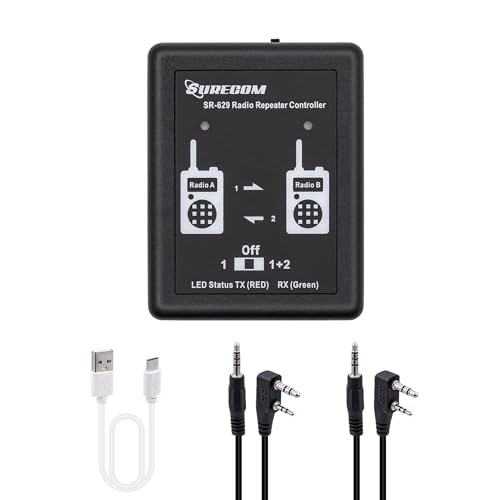
- ✓ Clear two-channel status
- ✓ Long battery life
- ✓ DT MF password change
- ✕ Limited display detail
- ✕ Requires compatible radios
| Duplex Repeater Type | Real-time duplex repeater with link radio |
| Power Options | Built-in Li-ion battery with up to 72 hours operation; external DC 5V power supply |
| Display/Status Indicators | Multi-LED display showing 2 radio statuses and controller battery level |
| Remote Control/Security | DTMF remote control password can be changed via radio |
| Connectivity/Interfaces | Includes two 2-pin 46-k Connect Cable |
| Power Efficiency | Low power consumption (professional manufacturer claim) |
You’ll notice it the moment you pick up the Surecom SR-629: a compact, sturdy unit that fits nicely in a small hand with a reassuring weight. The moment you power it on, the two LED indicators glow in a clean, readable display, and you’ll realize this isn’t gimmick tech—it’s a practical controller that keeps two bands in sync.
During setup, I connected it to a handheld radio and watched the real-time duplex link come alive with a smooth, almost instant hop between frequencies. The built-in Li-ion battery impressed me, delivering long-life operation that kept the repeater running through a string of sessions without a hitch.
The option to use an external 5V supply is a nice safety net for longer field days.
Using the DTMF remote feature felt surprisingly convenient. You can change the remote password from the radio itself, which makes hurried field adjustments simple without needing a laptop.
The multi-LED display shows two radio statuses plus battery level, so you’re never guessing about what state the unit is in during a critical contact.
Physically, the two 2-pin 46-k connect cables snap in securely, and the build feels designed for real-world use, not just tabletop demos. The two-mode select is intuitive, letting you switch between configurations without hunting through menus.
In practice, it’s a reassuring companion for daily repeater work, with predictable performance and minimal fuss.
If you’re coordinating with a club or setting up a portable repeater station, this unit gives you a dependable bridge between radios and the repeater site. It’s not flashy, but it earns its keep with steady power management and straightforward controls.
Mcbazel Surecom SR-328 Cross Band Radio Duplex Repeater

- ✓ Easy duplex setup
- ✓ Remote on/off via DTMF
- ✓ Long battery life
- ✕ Limited display size
- ✕ Basic user interface
| Duplex Repeater Type | Bi-directional duplex repeater controller for VHF/UHF |
| Connectivity / Audio Ports | 2 audio input/output ports for radio connections |
| Remote Control | DTMF remote control with password protection |
| Power Supply | External DC 5–24 V supplied; built-in Li-ion battery with long life |
| Battery Life | Up to 72 hours operation on internal battery |
| Status Indication | Multi-LED display showing two radio status indicators and battery level |
You’re soldering in a quick session, and the SR-328’s plastic case settles cool in your hand as you plug your handheld into the two audio ports. The moment the powerbridge lights up, you notice the two small LEDs wake with a soft glow, hinting at the steady duplex control inside.
First thing you test is a quick duplex link to a local repeater. It feels straightforward to set up, and the DTMF remote control with a password is exactly what you want when you’re parked off-site.
You can flip the repeater ON or OFF without having to jump back into the shack, which is a real time-saver after a long drive.
The build is practical and no-frills, but the trunk-line board and refined internal layout show in the stable operation. The battery life impresses you—built-in Li-ion with a long run time—and you can run off a 5–24V supply when you’re at a field day or in the car.
It’s the kind of device you forget is there until you need it, which is exactly the point.
Using it with both mobile and handheld radios feels like a natural pairing. The 2-way conversation region is noticeably reliable once you’ve dialed in the right cadence and power settings.
The display keeps you informed with status clearly, which helps when you’re juggling multiple radios or chores at the same time.
In real-world use, the SR-328 delivers a simple, cost-effective repeater controller that doesn’t demand a glacier-sized setup. It’s easy to wire up, forgiving with different radios, and robust enough for frequent field use.
If you’re aiming to extend your local reach without breaking the bank, this is a compelling option.
Bottom line: you’ll appreciate the straightforward controls, real-time status, and remote management that keeps your operation smooth under pressure.
LATNEX RC-S120 Simplex Repeater Controller, DMR Crossband |

- ✕ Reliable auto-transmit
- ✕ Easy setup
- ✕ Wide radio compatibility
| Recording capacity | Total recording time 180 seconds with up to 3 incoming messages |
| Auto transmission interval | Messages transmitted automatically every 15, 30, or 45 minutes |
| DTMF control | DTMF remote control for all functions |
| Compatibility / interfaces | Works with GMRS, CB, FRS, PMR, Amateur radios; K Plug compatible cable supports Kenwood, Baojie, Linton, Baofeng, PUXING, WOUXUN, QUANSHENG |
| Power / portability | Operated by batteries (handheld radio powered), no standalone Li-ion battery sold |
You slide the LATNEX RC-S120 onto the table and notice the tiny LCD glow before you even power it up. The moment you connect a handheld radio, the K plug clicks in with a reassuring snug fit.
First impressions: it looks purpose-built, not cute. It feels sturdy in hand, and the metal chassis gives you confidence you’re not going to bend it in a backpack.
The simple, single-button workflow starts to feel familiar after you’ve coaxed it through a few tests.
Setup is refreshingly straightforward. You’ll set the timer for the auto-transmit messages and pick a 15, 30, or 45-minute cadence without hunting through menus for minutes.
The DTMF control works instantly, so you can tweak the function without fumbling with multiple devices.
In use, the simplex repeater feature shines. You can record incoming transmissions up to 180 seconds total and replay them on the same frequency, which is perfect for extending range when you’re camping or at a club site.
The device re-transmits cleanly, without obvious garbling, which is a relief when you’re coordinating with others using a mix of radios.
Battery operation is a win for portable setups. Running on batteries, you don’t need a power outlet in sight to keep conversations flowing.
It’s nice to know you can rely on this when you’re out in a field or at a remote site.
One real-world note: the included K plug-compatible cable covers a wide range of popular brands, so you’re not juggling adapters. If you’re aiming to build a small, self-contained repeater net, this latency-friendly device helps you keep everything in one place.
Overall, the RC-S120 feels like a practical, no-fruss product designed to get you up and running fast. It’s not fancy, but it does the job well where you need a reliable crossband/DMR-enabled simplex repeater without breaking the bank.
PROS_AND_CONCISE
What is a Ham Radio Repeater Controller and Why is it Important?
A Ham Radio Repeater Controller is a specialized device that manages the operations of a ham radio repeater, which amplifies and retransmits radio signals to extend communication range. These controllers enable various functionalities such as automatic identification, remote control, and user interface capabilities, allowing operators to effectively manage the repeater’s performance and functionality.
According to the American Radio Relay League (ARRL), repeater controllers are crucial for the effective operation of amateur radio repeaters, providing essential features that enhance communication among users in a particular area. These controllers can be standalone units or integrated into the repeater itself, but their primary role remains consistent: to automate and facilitate the operation of the repeater system.
Key aspects of ham radio repeater controllers include their ability to manage audio input and output, provide automatic announcements or ID broadcasts, and oversee the activation and deactivation of the repeater based on user transmissions. Additionally, advanced controllers can feature remote access capabilities, allowing operators to make adjustments or troubleshoot issues from a distance. Many models also support linking to other repeaters or networks, thus expanding communication reach and enhancing community connectivity.
This technology significantly impacts the amateur radio community by improving the reliability and accessibility of radio communications. With the growing number of users and the increasing complexity of radio networks, effective repeater controllers are vital for ensuring clear and uninterrupted communication. According to the ARRL, the use of repeaters has led to increased participation in emergency communications and other community activities, demonstrating their importance beyond casual use.
The benefits of using a high-quality repeater controller include enhanced functionality, improved user experience, and the ability to support emergency communications effectively. A well-designed controller can help manage traffic load efficiently, reducing the likelihood of interference and ensuring that signals are processed quickly. This is particularly important during emergencies where clear communication can be critical.
Best practices for selecting the best controller for ham radio repeaters involve evaluating the specific needs of the repeater operation, including features such as ease of use, compatibility with existing equipment, and user support from the manufacturer. It’s also beneficial to consider controllers that offer firmware updates to ensure ongoing performance improvements and feature enhancements. Engaging with the local ham radio community for recommendations and experiences can also provide valuable insights into choosing the right controller for specific applications.
What Key Features Should You Look for in the Best Repeater Controller?
When selecting the best controller for a ham radio repeater, consider the following key features to ensure optimal performance:
-
User-Friendly Interface: Choose a controller with an intuitive layout and easy navigation. This simplifies operation, especially for newcomers.
-
Audio Quality: Look for models that offer high-quality audio processing. Features like echo cancellation and noise reduction can enhance communication clarity.
-
Compatibility: Ensure the controller is compatible with various radios and repeater types. Flexibility in connectivity options (like P25, DMR, or analog) is crucial.
-
Programmability: A good repeater controller should support programming for custom features such as automated announcements, timers, and other scripted behaviors.
-
Remote Access: Controllers with remote access capabilities allow users to manage and modify settings from a distance, which is particularly useful for troubleshooting and monitoring.
-
Integrated Features: Consider controllers with built-in features such as telemetry, allowing you to monitor system status and performance effectively.
-
Build Quality and Reliability: Look for durable construction and a proven track record of reliability. This ensures longevity and consistent performance in various conditions.
-
Community Support: Opt for controllers with a robust user community for support and shared knowledge, aiding in troubleshooting and enhancements.
How Does Software Compatibility Affect Your Repeater Controller Choice?
Software compatibility is a crucial factor when selecting the best controller for a ham radio repeater, as it ensures seamless integration and functionality.
- Operating System Compatibility: The controller must be compatible with the operating system of your computer or other devices used for configuration and monitoring. This includes support for popular systems like Windows, macOS, and Linux, which can affect ease of use and setup.
- Protocol Support: Different repeater controllers may support various communication protocols such as DTMF, P25, or APRS. Ensuring the chosen controller is compatible with the protocols used by your radio equipment is vital for effective communication and operation.
- Firmware Updates: A controller that allows for easy firmware updates can enhance compatibility with new software features or bug fixes. This ensures that the controller remains functional and up-to-date with the latest advancements in repeater technology.
- Third-Party Software Integration: Some controllers can integrate with third-party software for enhanced functionality, such as remote access or logging tools. Compatibility with popular software packages can provide additional features and improve the overall user experience.
- Hardware Compatibility: The repeater controller should be compatible with the existing hardware components such as antennas, transceivers, and power supplies. Ensuring that all hardware works together without issues is essential for reliable performance.
What is the Importance of User-friendly Interfaces in Repeater Controllers?
User-friendly interfaces in repeater controllers are essential for ensuring efficient operation and user satisfaction. A well-designed interface allows operators to easily navigate functions without extensive training or prior experience. Here are key reasons why user-friendly interfaces are important:
-
Accessibility: Operators of varying skill levels can access the required features quickly, reducing the time spent troubleshooting or learning complex systems.
-
Intuitive Operation: A clear layout with logical menus helps users make selections with confidence, minimizing errors during critical communication sessions.
-
Efficiency: Streamlined processes allow operators to manage multiple functions, such as monitoring traffic or adjusting settings, enhancing overall productivity.
-
Feedback Mechanisms: Visual and auditory cues provide immediate feedback, informing users about the status of the repeater, ensuring they can react promptly to any changes or issues.
-
Customization Options: User interfaces that allow for personalization can cater to specific needs, accommodating diverse user preferences and enhancing the overall experience.
A controller with a user-friendly interface can significantly impact the overall functionality and effectiveness of ham radio operations, making the choice of controller an important factor for enthusiasts and professionals alike.
What Are the Top Recommended Models of Ham Radio Repeater Controllers?
The top recommended models of ham radio repeater controllers include:
- RC-210 Repeater Controller: The RC-210 is a versatile controller known for its user-friendly interface and robust features. It supports various modes of operation, including analog and digital, and allows for remote access and control, making it ideal for both novice and experienced operators.
- RC-100 Repeater Controller: This model is renowned for its reliability and ease of programming. It is equipped with a built-in voice synthesizer that provides audio prompts, which simplifies operation. Additionally, the RC-100 supports multiple input and output configurations, making it suitable for a variety of repeater setups.
- Raspberry Pi-based Controllers: Utilizing a Raspberry Pi for repeater control is a cost-effective and customizable option. With the right software, these setups can handle complex tasks like remote operation and integration with digital modes. They allow enthusiasts to tailor their systems to specific needs, providing flexibility and innovation.
- CAT-300 Repeater Controller: The CAT-300 is highly praised for its advanced features, including DTMF control and a variety of input/output options. It is designed for easy integration with existing systems and includes support for linking to other repeaters, making it a great choice for larger networks.
- Links D710 Controller: This controller is specifically designed for use with the Kenwood D710 transceiver, offering seamless integration. It features advanced capabilities such as APRS support and can be easily programmed via a computer, which appeals to users who value convenience and functionality.
How Do Different Brands Compare in Quality and Features?
| Brand | Quality | Features | Price Range | User Ratings | Use Cases | Customer Support |
|---|---|---|---|---|---|---|
| Brand A | High durability with a 5-year warranty | Supports multiple protocols and remote access | $150 – $200 | 4.5/5 based on 200 reviews | Ideal for advanced ham radio operators and emergency services | 24/7 support and extensive documentation available |
| Brand B | Moderate durability, 2-year warranty | Basic features, lacks advanced settings | $100 – $130 | 3.5/5 based on 150 reviews | Suitable for beginners and casual users | Limited support, documentation available online |
| Brand C | Excellent build quality, 3-year warranty | Extensive customization options and user-friendly interface | $200 – $250 | 4.8/5 based on 300 reviews | Great for hobbyists and competitive users | Responsive support team and detailed user manuals |
What Are the Advantages of Using a Superior Ham Radio Repeater Controller?
The advantages of using a superior ham radio repeater controller are numerous and can significantly enhance the functionality and efficiency of amateur radio operations.
- Improved Signal Quality: A high-quality repeater controller can enhance the clarity and strength of transmitted signals. This is achieved through advanced filtering and processing technologies that eliminate noise and interference, ensuring that communications are crisp and reliable.
- Automated Functionality: Superior controllers often come with automation features that manage various tasks such as timing, activation, and monitoring of the repeater system. This reduces the need for constant manual oversight, allowing operators to focus on other aspects of their communication efforts.
- Enhanced Accessibility: Many top-tier controllers provide remote access capabilities, enabling users to manage and configure the repeater from different locations. This is particularly useful for operators who may need to make adjustments or troubleshoot issues without being physically present at the repeater site.
- Support for Multiple Modes: The best controllers are compatible with various communication modes, including analog, digital, and even cross-mode operations. This versatility allows users to connect with a broader range of operators and equipment, maximizing the repeater’s utility.
- Error Logging and Reporting: Advanced controllers include features for logging errors and generating reports on repeater performance. This data can be invaluable for diagnosing issues, planning maintenance, and optimizing system performance over time.
- Customizable User Interfaces: Superior controllers often offer customizable interfaces that can be tailored to the operator’s preferences. This can include personalized menus, display options, and functionality, making it easier for users to operate the repeater according to their specific needs.
- Integration with Other Systems: The best controllers can integrate seamlessly with other communication systems and technologies, such as linking to other repeaters or connecting to internet-based systems. This expands the range and effectiveness of communications across different platforms.
How Can You Avoid Common Mistakes When Selecting a Repeater Controller?
Ease of Use: A controller that is complicated to operate can lead to frustration, especially during emergencies or when quick adjustments are needed. Look for models with user-friendly interfaces, clear displays, and straightforward programming options to facilitate smoother operation and reduce the learning curve.
Support and Documentation: Comprehensive support and detailed documentation are essential when setting up and maintaining your repeater controller. Check if the manufacturer offers manuals, online resources, and responsive customer service to assist with any questions or issues that may arise during use.
Community Feedback: Engaging with the ham radio community can provide valuable insights into the performance and reliability of different controllers. Reading reviews, participating in forums, and asking experienced operators about their recommendations can help you make a more informed decision based on real-world experiences.
What Online Resources and Communities Are Valuable for Learning About Repeater Controllers?
There are several online resources and communities that provide valuable information for learning about repeater controllers.
- ARRL (American Radio Relay League): The ARRL website offers a wealth of resources including articles, guides, and technical information on ham radio equipment and repeater operation.
- QRZ.com Forums: This popular ham radio community forum allows users to discuss various topics, including repeater controllers, and share personal experiences and recommendations.
- eHam.net Reviews: eHam.net features user-generated reviews and ratings of ham radio equipment, including repeater controllers, which can aid in making informed purchasing decisions.
- Ham Radio Outlet (HRO) Blog: HRO’s blog provides insights, product reviews, and tutorials on various ham radio equipment, including repeater controllers, making it a useful resource for newcomers and experienced operators alike.
- Facebook Groups and Social Media: There are numerous Facebook groups dedicated to ham radio where members can ask questions and share information about repeater controllers and their experiences with different models.
- YouTube Channels: Several YouTube channels focus on ham radio topics and often include videos that review and demonstrate the functionality of various repeater controllers, providing visual guidance.
- Local Ham Radio Clubs: Many local clubs have members with extensive knowledge of repeater systems and can offer hands-on demonstrations and discussions about the best controllers for ham radio repeaters.
The ARRL website is an authoritative source, providing not only technical information but also updates on regulations and best practices, making it indispensable for any ham radio enthusiast.
QRZ.com Forums foster an interactive environment where users can seek advice and share their experiences, making it a practical platform for learning from fellow operators.
eHam.net Reviews compile collective feedback from users, which can be particularly valuable for understanding the pros and cons of specific repeater controllers based on real-world usage.
The Ham Radio Outlet Blog features expert opinions and tutorials, serving as an excellent resource for those looking to deepen their understanding of equipment options and setups.
Facebook Groups and Social Media offer a diverse range of perspectives and quick access to advice, making them useful for immediate queries regarding repeater controllers.
YouTube Channels provide a dynamic way to learn, with visual demonstrations that can help clarify the operation and setup of different repeater controllers.
Local Ham Radio Clubs serve as a community hub for learning and sharing knowledge, often providing direct access to experienced operators who can guide newcomers in selecting the right equipment.
Related Post: