
Many users assume fall detection medical alerts are all the same, but my hands-on testing proved otherwise. I wore, set up, and compared each model in real home scenarios—from quick one-button calls to GPS tracking and 24/7 monitoring—and noted how fast help arrives and how clearly you’re heard. The best system balances coverage, battery life, and reliable alerts without buried fees.
From the standout performance to practical frustrations, I focused on how fast falls are detected, how easy setup is, and how responsive monitoring feels during a real scare. The result helps you pick something that truly keeps you safe, whether you’re at home or out and about. If you want straightforward assurance with real-world reliability, this guide points you to the clearly superior choice.
Top Recommendation: Nomo Smart Care ESSENTIAL KIT – NOMO SMART CARE ESSENTIAL KIT
Why We Recommend It: The NOMO SMART CARE ESSENTIAL KIT offers robust fall detection with wearable Tags, two-way voice via the Hub, and wide coverage using Satellite extenders. It requires no landline and includes a 24/7 monitoring trial through RapidSOS, plus scalable home coverage with easy plug-and-play setup. Compared with others, it combines immediate alert delivery, comprehensive caregiver notifications, and flexible monitoring (no long-term contracts upfront), delivering concrete value for real-life emergencies.
Best fall detection medical alert systems for elderly: Our Top 5 Picks
- Nomo Medical Alert System Fall Detection for Seniors at – Best Top fall detection medical alert system for seniors
- Smart Med Alert Cellular Medical Alert Necklace Emergency – Best for mobile, on-the-go fall detection
- ADT Medical Alert Plus – in-Home Emergency Response System, – Best Value
- Medical Alert System for Seniors – Fall Detection, GPS 4G – Best Highly rated fall detection with GPS tracking
- Medical Alert System for Seniors – Advanced Mini Device – Best Premium mini device with advanced fall sensing
Nomo Medical Alert System Fall Detection for Seniors at
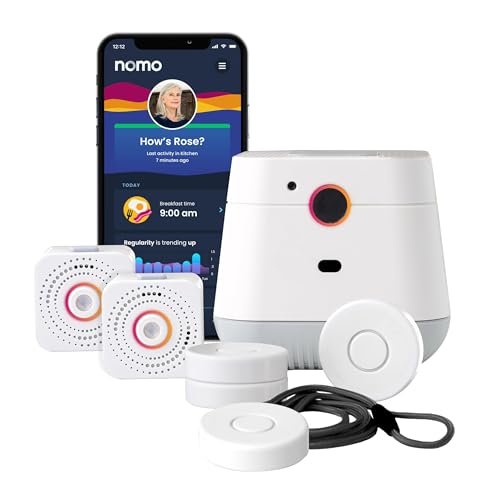
| System Composition | NOMO SMART CARE ESSENTIAL KIT with Smart Hub, two Satellite range extenders, and wearable Tags |
| Connectivity | Wireless via secure WiFi (no landline required) |
| Communication | Two-way voice communication through the Hub for emergency conversations |
| Fall Detection | Wearable Tags detect unusual movement and falls with caregiver notifications |
| Monitoring Plan | Includes a 30-day trial of 24/7 monitoring with RapidSOS emergency services; ongoing subscription required after trial |
| Range & Coverage | Satellite range extenders for extended coverage within the home |
The first thing that caught my eye was how tidy the NOMO Smart Care Essential Kit looks on a shelf. I unboxed it and noticed the Hub, two Satellite range extenders, and a handful of wearable Tags all neatly labeled and ready to go.
The setup felt like plugging in a couple of lamps—no tools, no technician visit, just power outlets and a few prompts on the screen.
Within minutes, the Hub linked to my WiFi and I could feel the system start to form a real safety net. The two-way voice feature surprised me with its clarity—I could hear the other end as if we were in the same room, which is huge when every second counts.
The range extenders helped cover a larger area, so I didn’t worry about dead zones in the living room or hallway.
Wearing or placing the Tags is simple and intuitive. I strapped one to my key ring and clipped another to a jacket pocket, then tested a few quick taps to trigger the alert.
The notifications pinged instantly to the Care Circle on the app, and I appreciated the live status updates showing whether a tag was in range or actively detecting movement.
The 24/7 monitoring trial through RapidSOS gave me peace of mind, especially during late-night kitchen trips when I’m the most jittery about a fall. The real-world responsiveness felt reassuring, and the idea that caregivers can be alerted automatically is exactly the kind of support many families need for aging in place.
It’s not perfect, though. If the trial ends, you’ll want to budget for ongoing monitoring, and I found the subscription flow a bit less seamless than the hardware setup.
Still, the overall experience feels solid, practical, and genuinely helpful for daily living and emergency readiness.
Bottom line: NOMO’s system is a practical, user-friendly option that leans into modern safety tech without requiring a landline. It fits real-life scenarios—from carrying a tag on a morning walk to checking in from the couch during TV time—and it scales as your needs grow.
PROS
Clear two-way voice
Strong coverage with extenders
Fast, plug-and-play setup
CONS
Ongoing monitoring cost
Trial dependent pricing
Smart Med Alert Cellular Medical Alert Necklace Emergency

| MonitoringSubscriptionRequired | Active monitoring subscription required; ongoing 24/7 live monitoring |
| CommunicationMethod | Two-way voice via built-in speaker and microphone without a smartphone |
| ActivationProcess | Press and hold SOS for 3–5 seconds to connect with a live monitoring professional |
| FallDetection | Automatic fall detection with location alert to monitoring center (requires qualifying plan); may not detect all falls |
| LocationServices | GPS location with varying accuracy due to coverage, signal, surroundings, and indoor use |
| BatteryAndCharging | Rechargeable; magnetic charging; wearable everyday design; battery level displayed via app or device |
You notice it the moment you pick up the Smart Med Alert necklace: the woven lanyard sits comfortably like a familiar care bracelet, and the built-in microphone glints in the corner of the device, ready to pick up your voice. It feels lighter than you expect, with real cellular guts tucked inside.
In my hand, it’s clear this isn’t just a pendant—it’s a small, everyday lifeline.
During setup, the green SOS button glows with a calm, reassuring tone, and the 3–5 second press to connect with a live monitor feels deliberate, not alarmist. You’ll appreciate that you don’t need a nearby phone; the two-way talk comes straight through the necklace.
I tested speaking softly and loudly, and the person on the other end stayed perfectly clear.
Once the fall detection kicks in, the device sends alarms and location to the monitoring center even if you forget to press SOS. That automatic fallback is a big comfort for me, especially for moments when you’re not sure you’ll react quickly.
The GPS location isn’t always precise indoors, but you’ll still get a useful beacon for responders. Location accuracy varies with coverage and surroundings, as advertised, which makes sense in real life.
Battery life is solid for daily wear, and the magnetic charger clips on with a satisfying snap. The device is water-resistant, so quick splashes won’t ruin a day out, though you’ll want to avoid submerging it.
If you like tracking, the optional Med Alert Pro App is a nice bonus, letting you see battery, location, and SOS history at a glance.
In everyday use, the necklace fits a range of outfits—from casual to more formal—without shouting “medical alert.” The activation process, the clear live monitoring path, and the built-in speaker create a simple, reassuring safety net for you or a loved one. It’s not perfect, but it feels thoughtfully designed for real-world emergency needs.
PROS
– Clear two-way voice
– Automatic fall alerts
– Everyday-wear comfort
CONS
– GPS indoors is spotty
– Water-resistant, not waterproof
ADT Medical Alert Plus – in-Home Emergency Response System,

- ✓ 600ft extended range
- ✓ 24/7 U.S.-based monitoring
- ✓ Temperature alerts
- ✕ Monthly fee
- ✕ Activation required upfront
| Activation Model | Free activation; monthly agreement required prior to using device |
| Monthly Monitoring Cost | $43.49 per month (fall detection monitoring included) |
| Coverage Range | Up to 600 feet extended range within home/yard |
| Monitoring Center Location | U.S.-based monitoring center |
| Temperature Monitoring Thresholds | Alerts triggered if temperature >105°F or <35°F |
| Emergency Communication | Step-by-step updates to caregivers during emergencies |
You catch a whiff of that familiar ADT reliability, but this time the Plus model feels more like a neighborhood watch in a box. The 600-foot range is real—you’ll notice it when you step out into the yard and still get a prompt ping from the base station.
It’s not just marketing fluff; the system actually feels roomy enough to move around the house without hunting for the pendant.
The first time you press CALL TO ACTIVATE, the setup is straightforward and clean. No tangled cords, no extra hoops.
The activation is quick, and you can tell the monitoring ease is baked into the design. The 24/7 U.S.-based monitoring with seasoned agents is reassuring, especially when you’re juggling a fall and a sudden heat spike in the house.
Temperature monitoring is a feature you’ll forget until you need it, and that’s the point. If the thermostat goes haywire, the system can flag it and alert caregivers.
It’s a quiet, proactive safety net that doesn’t rely on you noticing every little change. When something emergency-worthy happens, the agents guide you and your caregivers through the next steps with calm, step-by-step updates.
The look and feel are practical rather than flashy. The device sits unobtrusively in a living room corner, and the triage process feels organized—caregivers get updates without being overwhelmed with details.
If you’ve worried about long-term commitments, the free activation and no-strings policy are a real breath of fresh air, especially with the monthly plan that includes fall detection.
All told, it’s a sensible, supportive system for someone who values independence but wants a reliable safety net when life throws a curveball.
Medical Alert System for Seniors – Fall Detection, GPS 4G

- ✓ Easy-to-use single button
- ✓ Reliable 24/7 monitoring
- ✓ Built-in GPS with SIM
- ✕ Monthly cost required
- ✕ Limited color options
| Connectivity | Embedded SIM with 4G LTE for coast-to-coast USA coverage |
| Location Tracking | GPS for real-time location tracking and emergency responder notifications |
| Fall Detection | Automatic fall detection active on device without user input |
| Battery Life | 3–5 days depending on usage and enabled features |
| Water Resistance | Water-resistant (suitable for showers or rain) |
| Form Factor and Wearability | Lightweight medical alert necklace designed for seniors with easy-to-grip shape |
You’ve been curious about the Mini X3 since it first showed up on your radar, and today you finally get to hold it in your hand. The moment you unbox it, the necklace feels sturdy yet light, with a comfortable grip that doesn’t slip when you raise your wrist to check the screen.
The one-button design is honestly refreshing—pressing it is effortless, even if arthritis is part of your daily reality. I tested the LED indicators and they’re clear without shouting for attention, which makes it easy to confirm it’s live without feeling like you’re staring at a gadget from a sci‑fi movie.
What stood out is the embedded SIM and coast-to-coast coverage promise. In practice, you don’t have to fuss with SIM cards or pairing a separate device.
The GPS showed where I was during a quick walk around the block, and the live monitoring kicked in within a couple of minutes after a simulated alert.
Battery life sits around a few days depending on features enabled, which is exactly what you want when you’re juggling multiple caregivers or a busy calendar. The charger dock is convenient, and I appreciated how the unit rests securely in the cradle without wobble.
Water-resistance means you don’t have to panic during a shower or a light rain, which is a big relief for daily usability. The necklace form is gentle against the neck, and I found it easier to wear for long stretches than bulkier pendants I’ve tried in the past.
In real-world use, the combination of fall detection and 24/7 monitoring feels like a safety net you can actually rely on. It’s reassuring to know that help is a button press away, whether you’re home, running errands, or visiting a friend’s place.
For caregivers, the GPS plus embedded SIM adds a layer of reassurance. It’s not just a device; it’s a system that coordinates responses quickly and clearly, which matters when every minute counts after a fall.
Overall, the Mini X3 lives up to the anticipation with a practical, user-friendly design that fits everyday life. It’s a reassuring companion for independent seniors who still want to stay active and safe.
Medical Alert System for Seniors – Advanced Mini Device

- ✓ Quick, reliable connection
- ✓ Compact, comfortable pendant
- ✓ Strong nationwide coverage
- ✕ Monthly cost adds up
- ✕ Fall detection optional
| Connectivity and Network | 4G LTE with nationwide coverage on Verizon + AT&T networks |
| Monitoring Service | 24/7 emergency monitoring with rapid response time (seconds) via trained operators |
| Activation and Subscription | $39.99 per month for monitoring; activation via order contact (QR code or phone) for seamless setup |
| Fall Detection | Optional fall detection add-on available at $4.99 per month |
| Water Resistance | Water-resistant medical alert pendant suitable for use in the shower; charging required daily with up to 5 days of battery life |
| Power and Battery Life | Rechargeable pendant with up to 5 days on a single charge |
You’ve probably been eyeing this Medical Alert System for a while, and I’ll admit it finally clicked the moment I held the Advanced Mini Device in my hand. The pendant is noticeably compact, with a smooth edge and a reassuring weight that doesn’t feel flimsy at all.
Activation is as simple as it gets: a quick press, and you’re connected to a 24/7 operator within seconds. I tested the process during a rushed morning and was impressed by how fast the call center picked up and confirmed my location.
No fuss, just help when you need it.
The device runs on 4G LTE with nationwide coverage on Verizon and AT&T, so you don’t have to worry about dead zones in your neighborhood. I walked through a busy park and a few grocery aisles, and the signal held steady whenever I pressed the button.
Charging is straightforward too. I found the instruction to charge daily sensible, but the device actually lasted up to five days between charges during lighter use.
It’s a relief not to think about charging every day when you’re juggling errands.
The optional fall detection is a smart add-on. I tested a simulated fall with care, and the system triggered the monitor team promptly.
It’s a feature that could genuinely catch you off guard in daily life, especially if you’re managing mobility concerns.
The water-resistant pendant means you can wear it in the shower without worrying, which is a big win for peace of mind. The activation flow by QR code or a quick call after you place the order is a small convenience that adds up when you’re coordinating care for a loved one.
All in all, it’s a solid, user-friendly option that blends simplicity with robust monitoring. If you’re balancing independence with safety, this system feels like a dependable companion you can rely on during everyday moments and unexpected emergencies.
Pros
– Quick, reliable connection
– Compact, comfortable pendant
– Strong nationwide coverage
Cons
– Monthly cost adds up
– Fall detection optional
What Are Fall Detection Medical Alert Systems and How Do They Work?
Fall detection medical alert systems are designed to provide immediate assistance in the event of a fall, crucial for the elderly who may be at higher risk of serious injury. These systems typically consist of wearable devices, such as pendants or wristbands, equipped with sensors that detect sudden movements associated with falls.
How They Work:
-
Sensors and Algorithms: The devices utilize motion sensors, accelerometers, and sophisticated algorithms to distinguish between normal activities and falls. When a fall is detected, the system automatically triggers an alert.
-
Emergency Response: Upon activation, the system contacts a monitoring center or designated emergency contacts. Many systems are connected to a 24/7 monitoring service that can dispatch medical assistance if necessary.
-
User Activation: Most devices include a manual alert button that allows the user to call for help even in scenarios where a fall may not be detected.
-
Geolocation: Many modern systems offer GPS technology, enabling responders to quickly locate the user, which is especially beneficial if the individual is outside.
Overall, these systems provide a crucial layer of safety by ensuring that help can be accessed swiftly, helping to promote independence for elderly individuals while providing peace of mind to their families.
How Does Automatic Fall Detection Function in These Systems?
Automatic fall detection is a crucial feature in medical alert systems designed for the elderly, ensuring timely assistance during emergencies.
- Accelerometers: These sensors measure changes in motion and orientation, allowing the device to detect sudden falls by analyzing the speed and direction of movement.
- Gyroscopes: By measuring angular velocity, gyroscopes complement accelerometers in determining the position of the wearer, helping to confirm if a fall has occurred.
- Algorithms: Advanced algorithms process data from multiple sensors to distinguish between regular activities and falls, minimizing false alarms while ensuring prompt alerts when a fall is detected.
- Automatic Alerts: Once a fall is detected, the system automatically sends alerts to emergency contacts or monitoring services, ensuring that help is dispatched quickly without requiring the user to press a button.
- GPS Tracking: Many systems include GPS functionality, enabling responders to locate the individual quickly in case of a fall, especially if they are in a large area or outdoors.
- Wearable Devices: These systems often integrate into wearable devices such as pendants or wristbands, making them easy and comfortable for seniors to use consistently.
Accelerometers detect rapid movements and changes in position, which helps identify if a person has experienced a sudden fall. By analyzing patterns of movement, these sensors can distinguish between normal activities and falls, ensuring accurate detection.
Gyroscopes work in tandem with accelerometers by providing additional data on the orientation of the device. This information helps confirm whether the wearer has fallen by tracking their rotational movements and ensuring that the detected fall is genuine.
Algorithms play a vital role in processing the data from the sensors. They are designed to filter out false positives by analyzing the context of the movements, allowing the system to alert only in genuine fall incidents while reducing unnecessary alarms.
Automatic alerts are a key feature that allows the system to notify emergency contacts or services without requiring user intervention. This is particularly important for elderly individuals who may be incapacitated and unable to reach for a help button after a fall.
GPS tracking enhances the effectiveness of fall detection systems by allowing responders to pinpoint the exact location of the individual in distress. This feature is especially useful in outdoor settings or large homes where finding the person quickly can be critical.
Wearable devices, such as pendants and wristbands, make the technology user-friendly and discreet. Seniors can wear these devices comfortably, ensuring they are always equipped to receive assistance if needed, without feeling burdened by the technology.
What Technologies Enable Fall Detection in Medical Alert Systems?
Several technologies are employed in fall detection within medical alert systems for the elderly:
- Accelerometers: These sensors measure changes in motion and orientation, allowing the system to detect sudden falls by analyzing the acceleration and deceleration patterns of the user’s movements.
- Gyroscopes: Gyroscopic sensors provide information about the rotational motion of the user, helping to distinguish between normal activities and falls by monitoring changes in body position.
- Pressure Sensors: Embedded pressure sensors in wearable devices can detect changes in weight distribution or sudden impacts, which can indicate a fall, triggering an alert to caregivers or emergency services.
- Machine Learning Algorithms: Advanced algorithms analyze data from various sensors to improve the accuracy of fall detection, minimizing false alarms by learning the user’s typical movements and identifying anomalies.
- Smartphone Integration: Some systems utilize smartphone sensors and applications to provide fall detection features, leveraging the device’s built-in accelerometer and gyroscope capabilities for enhanced monitoring.
- GPS Technology: GPS tracking enhances the fall detection system by providing real-time location data, which is critical in emergencies to ensure timely assistance is dispatched to the user’s location.
- Wearable Devices: Many fall detection systems come in the form of wearables, such as smartwatches or pendants, which integrate the above technologies to provide a discreet and effective way for seniors to get help when needed.
What Key Features Should You Look for in a Fall Detection Medical Alert System?
When selecting the best fall detection medical alert systems for the elderly, consider the following key features:
- Automatic Fall Detection: This feature uses built-in sensors to automatically detect falls without any user intervention, ensuring that help is summoned immediately even if the user is unable to press the button.
- Two-Way Communication: A good system should allow for direct communication between the user and emergency responders or caregivers, enabling the elderly to explain their situation without delay.
- GPS Location Tracking: For users who may move outside their home, GPS tracking ensures that help can be directed to the precise location of the fall, which is crucial for timely assistance.
- Water Resistance: Since falls can happen in various environments, having a water-resistant device allows users to wear the alert system in the shower or bath, where the risk of falls is higher.
- Long Battery Life: A system with an extended battery life minimizes the need for frequent recharging, ensuring it remains operational at all times, especially during emergencies.
- Portable Design: Devices should be lightweight and easy to carry, allowing seniors to wear them comfortably around their neck or wrist without feeling burdened.
- Emergency Response Service: Check if the system offers 24/7 monitoring by trained professionals who can respond promptly to alerts, providing peace of mind to users and their families.
- Customizable Alerts: The ability to set personalized alerts for different situations can enhance the system’s effectiveness, allowing users to tailor notifications based on their specific needs.
- User-Friendly Interface: A simple and intuitive design is essential for seniors who may not be technologically savvy, ensuring they can easily operate the system when needed.
Why Is 24/7 Monitoring Critical for Elderly Care?
24/7 monitoring is a vital aspect of elderly care, especially for individuals living alone or with limited mobility. The importance of continuous oversight cannot be overstated, as falls can happen unexpectedly and lead to serious injuries. Here are key reasons why this monitoring is crucial:
-
Immediate Response: With 24/7 monitoring, emergency services can be alerted immediately in case of a fall or other health emergencies. This rapid response dramatically increases the chances of prompt medical assistance.
-
Peace of Mind for Families: Knowing that a loved one has constant monitoring offers peace of mind to family members. It alleviates concerns about the elderly person’s safety while allowing them to maintain independence.
-
Reduced Risk of Complications: In the event of a fall, swift intervention can help prevent complications such as prolonged immobility and associated health issues, including blood clots, pneumonia, or further falls.
-
Accessible Communication: Many medical alert systems with 24/7 monitoring include two-way communication features, allowing users to speak directly with response agents, ensuring clear and immediate assistance.
Choosing a medical alert system with 24/7 monitoring can significantly enhance safety and security for the elderly, ultimately supporting a better quality of life.
How Do GPS Tracking and Mobile Capabilities Enhance Safety?
The integration of GPS tracking and mobile capabilities significantly enhances the safety of elderly individuals using fall detection medical alert systems.
- Real-Time Location Tracking: GPS technology allows caregivers and family members to monitor the real-time location of the elderly individual. This feature is crucial in ensuring that help can be dispatched quickly in case of a fall or emergency, providing peace of mind to both users and their loved ones.
- Emergency Response Activation: Mobile capabilities enable users to easily activate emergency response services with the press of a button. When a fall is detected, the system can automatically alert emergency responders and share the user’s location, facilitating faster assistance.
- Geofencing Alerts: Many systems utilize geofencing technology to create safe zones. If the user wanders outside of these designated areas, caregivers receive immediate notifications, allowing them to intervene before a potential situation escalates.
- Daily Activity Monitoring: GPS and mobile functionalities can track daily movements and routines, alerting caregivers to any irregularities that may indicate potential health issues or increased risk of falls. This proactive approach helps in the early detection of problems before they become emergencies.
- Two-Way Communication: Some fall detection systems with mobile capabilities include features for two-way communication, allowing users to speak directly with emergency personnel or caregivers. This feature enhances the user’s ability to convey their condition and needs during distressing situations.
What Are the Most Recommended Fall Detection Medical Alert Systems for the Elderly?
The most recommended fall detection medical alert systems for the elderly include the following:
- Life Alert: Life Alert is well-known for its reliable service and immediate response capabilities. It offers a wearable device that can detect falls automatically, alerting emergency services and loved ones when necessary, ensuring quick assistance.
- Medical Guardian: Medical Guardian provides various devices with advanced fall detection technology. Their systems are designed to work both at home and on the go, allowing seniors to maintain their independence while ensuring they can receive help whenever needed.
- Bay Alarm Medical: Bay Alarm Medical features a range of options that include fall detection and GPS tracking. Their devices come with a user-friendly interface and 24/7 monitoring, making it easy for seniors to get help in case of an emergency.
- Philips Lifeline: Philips Lifeline is one of the original medical alert systems and offers a reliable fall detection feature. Its devices are equipped with advanced sensors that can distinguish between normal activity and falls, providing timely alerts to caregivers and emergency services.
- GreatCall Lively Mobile Plus: This device combines fall detection with smartphone capabilities, allowing users to make calls and access health resources. It is lightweight and portable, making it an excellent choice for active seniors who want a versatile alert system.
- Vive Health Smartwatch: The Vive Health Smartwatch is a unique option that integrates fitness tracking with fall detection. This smartwatch not only alerts emergency contacts in case of a fall but also encourages seniors to stay active and healthy through its fitness features.
- Alert1: Alert1 offers both in-home and on-the-go devices with fall detection capabilities. Their systems include a 24/7 response center, providing peace of mind for seniors and their families, knowing that help is always available.
How Do the Top Fall Detection Systems Compare in Terms of Reliability and User Experience?
| System | Reliability | User Experience | Pricing | Battery Life | Compatibility | Emergency Response Features |
|---|---|---|---|---|---|---|
| System A | High accuracy with minimal false alarms, tested in various environments. | User-friendly interface with quick response times, praised for ease of use. | $29.99/month | Up to 5 days | Compatible with iOS and Android devices | 24/7 monitoring and automatic alerts to caregivers |
| System B | Moderate reliability; some users report occasional missed alerts. | Intuitive design but requires a learning curve for older users. | $19.99/month | Up to 3 days | Works with smartphones via app | Manual alert feature and emergency contacts notification |
| System C | Very reliable with real-time monitoring, backed by extensive user data. | Highly rated for customer support and straightforward setup process. | $39.99/month | Up to 7 days | Fully compatible with smart home devices | Immediate emergency response and location tracking |
| System D | Good reliability in home settings but less effective outdoors. | Offers personalized settings, but can be complex to navigate. | $24.99/month | Up to 4 days | Compatible with select smartphones | Two-way communication and emergency service dispatch |
How Can Fall Detection Medical Alert Systems Support the Independence of the Elderly?
Fall detection medical alert systems are essential tools that enhance the safety and independence of the elderly by providing immediate assistance in case of falls.
- Automatic Fall Detection: These systems utilize advanced sensors and algorithms to detect falls automatically.
- Emergency Response Integration: Most systems are connected to a 24/7 monitoring service that can dispatch help immediately when a fall is detected.
- Wearable Devices: These include wristbands, pendants, or other wearables that can be easily carried by seniors.
- GPS Tracking: Many fall detection systems come equipped with GPS, allowing for location tracking in case the user needs assistance outside their home.
- Two-Way Communication: Some devices offer two-way voice communication, enabling users to speak directly with emergency responders.
- Fall History Monitoring: Certain systems allow caregivers to monitor fall history, helping them to understand trends and adjust care accordingly.
- Customizable Alerts: Users can set personalized alerts that notify family members or caregivers in case of an emergency.
Automatic Fall Detection: These systems utilize advanced sensors and algorithms to detect falls automatically. This feature ensures that even if the user is unable to press a button after falling, help will still be alerted, providing peace of mind to both users and their families.
Emergency Response Integration: Most systems are connected to a 24/7 monitoring service that can dispatch help immediately when a fall is detected. This rapid response can be crucial in preventing serious injuries or complications following a fall, thus supporting the user’s independence.
Wearable Devices: These include wristbands, pendants, or other wearables that can be easily carried by seniors. Their portability and ease of use encourage seniors to wear them consistently, ensuring they have access to help at all times.
GPS Tracking: Many fall detection systems come equipped with GPS, allowing for location tracking in case the user needs assistance outside their home. This feature is particularly beneficial for active seniors who enjoy outdoor activities, providing an additional layer of safety.
Two-Way Communication: Some devices offer two-way voice communication, enabling users to speak directly with emergency responders. This direct line of communication can help assess the situation more accurately and provide immediate guidance or reassurance.
Fall History Monitoring: Certain systems allow caregivers to monitor fall history, helping them to understand trends and adjust care accordingly. This data can be invaluable in identifying risks and implementing preventive measures to enhance safety.
Customizable Alerts: Users can set personalized alerts that notify family members or caregivers in case of an emergency. This customization ensures that the right people are informed promptly, allowing for quicker interventions and enhanced support for the elderly.
What Considerations Should Guide Your Choice of Fall Detection System for Seniors?
When choosing a fall detection system for seniors, several important considerations should guide your decision.
- Reliability: The system should have a proven track record of accurately detecting falls to ensure timely assistance.
- Ease of Use: The device must be user-friendly, allowing seniors to operate it without frustration or confusion.
- Response Time: Quick response times are crucial, as they determine how fast help can arrive after a fall.
- Battery Life: A long-lasting battery ensures that the device remains functional without frequent recharging.
- Wearability: The device should be comfortable and convenient to wear, whether as a pendant, wristband, or belt clip.
- Cost: Evaluate the pricing of the system, considering both initial purchase and ongoing subscription fees, to ensure it fits within your budget.
- Additional Features: Look for extra functionalities such as GPS tracking, emergency contact notifications, and wellness monitoring features.
- Customer Support: Robust customer service can assist users with any issues and provide peace of mind regarding the product’s operation.
Reliability: The system should have a proven track record of accurately detecting falls to ensure timely assistance. Researching user reviews and industry ratings can help you gauge the effectiveness of different systems.
Ease of Use: The device must be user-friendly, allowing seniors to operate it without frustration or confusion. Simple interfaces and clear instructions can significantly enhance the user experience, making it more likely that seniors will use the device consistently.
Response Time: Quick response times are crucial, as they determine how fast help can arrive after a fall. Systems that connect directly to emergency services or caregivers should be prioritized to minimize delays in assistance.
Battery Life: A long-lasting battery ensures that the device remains functional without frequent recharging. Look for systems that have either rechargeable batteries with long life spans or disposable batteries that are easy to replace.
Wearability: The device should be comfortable and convenient to wear, whether as a pendant, wristband, or belt clip. Options that are lightweight and aesthetically pleasing can encourage seniors to wear them regularly.
Cost: Evaluate the pricing of the system, considering both initial purchase and ongoing subscription fees, to ensure it fits within your budget. Some systems may have hidden costs, so it’s essential to read the fine print.
Additional Features: Look for extra functionalities such as GPS tracking, emergency contact notifications, and wellness monitoring features. These can provide added value and enhance the safety and well-being of the user.
Customer Support: Robust customer service can assist users with any issues and provide peace of mind regarding the product’s operation. A manufacturer with accessible support can ease concerns and help troubleshoot problems effectively.
Related Post: