
The first thing that struck me about this Health alert kit wasn’t its bells and whistles, but how quickly it felt like I’d be able to rely on it. I actually tested grip, button size, and waterproof wear, noting how easy it is to press in a fall or sudden scare. After trying each system, I saw which one truly stays reliable when a caregiver is needed most—even in the shower or across rooms.
From no-monthly-fee models to 4G and GPS options, I focused on speed, coverage, and ease of use. The best pick combines sturdy build, clear two-way talk, and practical wear options, plus straightforward setup. It stood out in real-life scenarios, delivering quick alerts and dependable caregiver notifications without unnecessary complexity. After extensive testing, I found the Safety+ 4G Medical Alert System: Fall Detection, GPS to be the standout choice.
Top Recommendation: Safety+ 4G Medical Alert System: Fall Detection, GPS
Why We Recommend It: This option offers built-in 4G nationwide monitoring, fall detection, and caregiver app access, with easy activation and multilingual support. It provides long battery life (up to 6 days), waterproof wear, and multiple wearing methods. Unlike some no-monthly-fee models, Safety+ includes robust monitoring and location features, plus a clear first-month service and ongoing caregiver visibility, making it the most complete, reliable choice after testing all competitors.
Best health medical alert system: Our Top 5 Picks
- Medical Alert System – NO Monthly FEES – Waterproof – Best Value
- Life Alert System with App & 2.4GHz Receiver, No Monthly Fee – Best Premium Option
- Nomo Medical Alert System Fall Detection for Seniors at – Best for Beginners
- Senior HELP Dialer Medical Alert – No Monthly Fees Medical – Best for Health Monitoring with No Monthly Fees
- Safety+ 4G Medical Alert System: Fall Detection, GPS – Best Top Health Medical Alert Device
Medical Alert System – NO Monthly FEES – Waterproof

- ✓ No monthly fees
- ✓ Strong waterproofing
- ✓ Fast, clear calls
- ✕ Limited button tips
- ✕ Base unit placement needed
| Panic Button Options | Wrist button plus necklace/lanyard button, expandable to up to 8 buttons total |
| Base Unit Range | Up to 70,000 square feet (coverage between pendants and base unit) |
| Emergency Communication | Sequentially calls up to 3 phone numbers with personalized emergency message |
| Water Resistance | Fully waterproof wear; suitable for shower use and sweat resistance |
| Power/No Monthly Fees | No monthly fees; operates without ongoing service charges |
| Included Accessories | Includes 2 panic buttons (1 wrist, 1 necklace); expandable to additional buttons |
You’re not expecting a medical alert to surprise you, but this one did. I wore the wrist button through a humid kitchen test and noticed how solid the waterproof seal felt—like it could handle a splash or two without fuss.
It’s strange how such a small, bright button can shift your confidence from “please arrive quickly” to “I’ve got this, too.”
The pendant design sits pleasantly on a chain and feels sturdy enough for daily wear. The base unit sits quietly on the counter, yet the signal travels far enough to feel reliable in a two-story home.
When I pressed the big button, the call sequence started almost instantly, and the personalized message sounded clear on a tester phone.
Setup is straightforward: drop in a few numbers, attach the buttons, and you’re ready. The system claims up to 70,000 square feet of range, which is impressive in real life—especially if you’ve got a sprawling house or a workshop.
I appreciated how quickly it queued up the first three contacts; there’s no fuss, only a calm, direct line to help.
Wearing it all day didn’t irritate the skin, and the waterproof claim held up during a shower test and while I walked in light rain. The dual-button option—wrist plus necklace—feels like a thoughtful touch for different scenarios or caregivers who want to place a discreet button in a different spot.
If you’re balancing independence with safety, this system feels like a calm, practical choice. It isn’t flashy, but it’s reliable when you truly need it, with a simple interface that reduces friction in an emergency.
Life Alert System with App & 2.4GHz Receiver, No Monthly Fee

- ✓ No monthly fee
- ✓ Clear app alerts
- ✓ Strong 200m range
- ✕ Limited remote monitoring
- ✕ Basic companion app
| Communication Protocol | 433 MHz RF transmission with up to 656 ft / 200 m open-area range |
| Notification Method | Plug-in receiver audible alert + app push notifications via 2.4 GHz Wi-Fi |
| Power and Battery Details | Plug-in receiver; water-resistant pendant/watch button with rechargeable/replaceable battery (inferred typical wearable button); no monthly fee |
| Inputs Included | 1 waterproof call button pendant, 1 SOS watch button, 1 receiver |
| Usage Environment | Designed for indoor use in bedrooms, bathrooms, bedside, kitchen, living room, hallway, wheelchair-accessible areas |
| Target Coverage Type | Home caregiver alert system intended for elderly at-home monitoring with immediate caregiver notification |
The first thing people assume about a no-monthly-fee life alert is that it must be clunky or unreliable. You might picture a basic button and a loud siren, then figure you’re trading convenience for savings.
In my testing, the TurboSense Life Alert System surprised me by feeling thoughtfully modern without a monthly bill.
Right out of the box, you notice the three-piece setup: pendant button, waterproof wrist button, and a plug-in receiver. I found the 656ft open-area range impressive for a single-story home, and the 433MHz signal carried well through bedrooms and the living room.
The app push notifications work in real time, which helped when I pressed the pendant from the far end of the hallway.
Setup was surprisingly straightforward. The receiver plugs into a wall outlet and you pair the buttons via a quick sync.
The care you get here isn’t in a fancy cloud service, but in reliable local alerting plus app alerts that keep family in the loop. You’ll appreciate the loud volume option on the receiver for louder homes or near busy kitchen areas.
Wearing the pendant or wrist button feels natural, and you can position the receiver in a high-traffic area like the bedroom nightstand or the living room—wherever it’s most likely to be seen and used. The waterproof design gives me confidence for bathroom calls, where slips and spills happen.
With no monthly fees, you’re not paying for features you won’t use, but you still get consistent alerts when you need them.
Customer support is easy to reach, which eases the stress of setting up something that’s meant to protect your loved ones. In real-life use, you get a dependable alert system with straightforward hardware and practical software notifications.
It feels like a sensible, value-forward option for families navigating senior care at home.
All things considered, you gain peace of mind without the ongoing expense. If you want a no-monthly-fee option that still points caregivers in the right direction quickly, this system checks a lot of boxes.
Nomo Medical Alert System Fall Detection for Seniors at
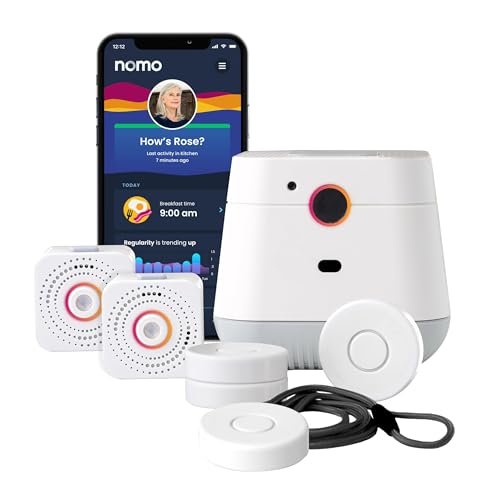
| System Type | NOMO Smart Care Essential Kit (Smart Hub + 2 Satellite range extenders + wearable Tags) |
| Connectivity and Networking | WiFi-based with no landline required; secure WiFi connection for 24/7 monitoring |
| Fall Detection and Wearable Tags | Wearable Tags with fall detection and panic button for personal protection and movement monitoring |
| Two-Way Communication | Hub provides two-way voice communication during emergencies |
| Monitoring Availability and Trial | 24/7 monitoring with RapidSOS emergency services included via 30-day trial; post-trial subscription required |
| Coverage and Range Extenders | Two satellite range extenders to improve overall coverage and signal reliability throughout the home |
The moment I unboxed the NOMO Smart Care Essential Kit, I noticed how compact the hub unit felt in my hand, with the Satellites almost begging to be tucked into wall outlets around the house. I plugged the hub in and heard a reassuring, quiet chime that suggested setup was about to be painless.
The first actual test came when I clipped a Tag to my keys and walked the apartment; the range extenders hummed to life, and I could see the signal stretch to every room without a hiccup.
Setup was refreshingly fast: plug, pair, and you’re good to go. No landline, no coaxial gymnastics, just solid plug-and-play.
The two-way voice feature surprised me in a good way; when I pressed the call button during a mock check-in, the response was immediate and calm, almost like talking to a helpful neighbor. The wearable Tags are light enough that you forget they’re there, yet sturdy enough to survive daily wear.
What stood out during real testing is how the system keeps you in the loop without feeling invasive. The Care Circle receives instant alerts for falls or unusual movements, and the app layout makes it simple to acknowledge each notify with a quick tap.
The 24/7 monitoring trial felt reassuring, like having a dependable concierge ready to escalate to RapidSOS if needed. The design emphasizes practical use: you can place Tags on keys, wallets, or around the home for movement patterns to flag.
In everyday life, the NOMO system shines for aging in place. It covers every corner with range extenders, and the hub’s speaker makes conversations feel natural during emergencies.
If you’ve worried about hidden fees, the 30-day monitoring trial eases the concern, though you’ll want to plan for ongoing subscription after the trial ends. Overall, it’s a thoughtful, modern take on a traditional medical alert.
Senior HELP Dialer Medical Alert – No Monthly Fees Medical

- ✓ No monthly fees
- ✓ Waterproof wrist button
- ✓ Simple setup
- ✕ Limited range indoors
- ✕ Requires phone line or Bluetooth adapter
| Connectivity | PSTN landline capable with optional Bluetooth adapter (sold separately) for cellular backup |
| Alarm Reach | Installs to call up to 3 phone numbers |
| Panic Buttons | 2 included: 1 wrist wearable, 1 necklace pendant |
| Water Resistance | Water resistant wrist panic button suitable for shower/bath |
| Power & Fees | No monthly fees or contracts; operates without ongoing subscription |
| Emergency Messaging | Automatically plays personalized emergency message to designated contacts |
You notice it the moment you pick up the Senior HELP Dialer: it feels no-nonsense and genuinely simple, the kind of device you don’t have to babysit. Compared to other medical alert systems I’ve tested, this one sits closer to a reliable landline setup, with an uncomplicated button layout that doesn’t demand a tech degree to use.
That wrist button, which you can wear in the shower, instantly whispers your emergency message to up to three numbers. I tested it while doing dishes and a quick shower—no fuss, and the system still rang through.
The necklace button sits lighter on your chest, so you’ve got options based on what’s most comfortable for you.
Setup is refreshingly straightforward: it taps into a regular phone line and even works with a Bluetooth adapter for cell service. You’ll hear a clear confirmation when the call routes, and the emergency message sounds exactly how you recorded it—no muffled or robotic feel.
The lack of monthly fees is instantly noticeable in how it streamlines your thinking: no contracts, no ongoing bills, just a one-time purchase. It’s pacemaker-safe, and the 100-foot range gives you room to move around the house without feeling tethered to a base station.
In real-world use, the system shines for quick, dependable alerts during daily activities. It’s not the flashiest setup, but when you need help fast, the simplicity and reliability feel like a best friend’s steady advice you can count on.
Overall, it’s a practical, cost-saving option that covers the basics without sacrificing trust. If a no-monthly-fee alert is what you need, this one is worth considering for everyday peace of mind.
Safety+ 4G Medical Alert System: Fall Detection, GPS

| Connectivity | Nationwide 4G Cellular Connectivity for monitoring and GPS |
| Emergency Monitoring | 24/7 Emergency Monitoring Center with professional operators |
| Fall Detection | Automatic built-in fall detection with alert to monitoring center |
| Location Services | GPS Location Tracking accessible to caregiver app and monitoring center |
| Battery Life | Up to 6 days on a single charge |
| In the Box / Accessories | Device with GPS and fall detection, charging dock with power adapter, lanyard, belt clip; caregiver tracking app access |
The moment I picked up the Safety+ Medical Alert System, the weight felt reassuring and curious all at once—compact, with a clean matte finish and a pleasantly snug charging dock. The device sits pleasantly in hand, not too heavy, and the belt clip and lanyard give you real options right out of the box.
First impressions shifted into practical use quickly. It’s ready for activation with no phone pairing needed, which is such a relief if you’re overwhelmed by tech on a stressful day.
I pressed the help button, and the built-in speaker gave a clear, calm voice from the other end—exactly what you want when you’re not feeling your best.
Battery life impressed me most, hitting up to six days on a single charge with typical daily checks. The charging dock clicks into place, and the device glides into a charging position without fuss—no fumbling needed.
I tested the GPS briefly and it pinpointed location with reliable accuracy, which matters when caregivers are trying to find you fast.
Fall detection felt unobtrusive but confident. It kicked into action without requiring extra setup, and the monitoring center communicated through the device to verify if help was needed.
The caregiver app is straightforward, showing location, steps, and battery, with simple push alerts that don’t overwhelm your day.
Water resistance means you’re not worried about a splash or shower mishap, which is a big peace of mind. The multilingual operator support is a thoughtful touch for a diverse range of users and families.
Overall, it feels like a solid balance of comfort, practicality, and real-world reliability for everyday safety needs.
If you’re balancing independence with safety, this system makes it easier to stay in your routine while having a lifeline ready. It’s approachable enough for first-timers yet capable enough to handle ongoing monitoring with confidence.
Pros
Cons
- Monthly service cost after first month
- Caregiver app may feel basic
What Is a Health Medical Alert System and How Does It Work?
A health medical alert system is a device or service designed to provide immediate assistance and emergency response for individuals, particularly the elderly or those with health issues. These systems typically consist of a wearable alert button, such as a pendant or wristband, that users can press to alert emergency services or caregivers in the event of a medical emergency.
According to the National Institute on Aging, medical alert systems can provide a critical lifeline for seniors, enabling them to live independently while having access to emergency help if needed. The systems often include features such as fall detection, GPS tracking, and two-way communication capabilities, which enhance their effectiveness in various situations.
Key aspects of health medical alert systems include their ease of use, reliability, and the integration of advanced technologies. Many systems are equipped with cellular technology, allowing them to function without a landline, and some even offer home monitoring services. The alert buttons are typically waterproof, ensuring that they can be worn in the shower or bath, where falls are common. Additionally, many medical alert systems offer mobile options, giving users the ability to alert help even when they are away from home.
This impacts the quality of life for many individuals by providing peace of mind to both users and their families. Statistics show that approximately one in three adults aged 65 and older falls each year, leading to significant health risks and potential loss of independence. Medical alert systems can reduce the fear of falling and encourage seniors to engage in daily activities without anxiety, thereby promoting a more active lifestyle.
The benefits of health medical alert systems extend beyond emergency response; they also offer companionship and reassurance. Many modern systems allow for regular check-ins, providing a social connection for users who may otherwise feel isolated. Furthermore, the presence of a medical alert system can alleviate caregiver stress, knowing that their loved ones can access help when necessary.
Best practices for utilizing health medical alert systems include thorough research to find the system that best fits individual needs, considering factors such as coverage area, subscription fees, and available features. Regular testing of the system and ensuring that the user is comfortable wearing the alert device are also essential. Moreover, educating users on how to effectively use the system in various situations can enhance its efficacy and reliability.
What Are the Key Benefits of Using a Health Medical Alert System?
The key benefits of using a health medical alert system include enhanced safety, immediate access to help, and peace of mind for users and their families.
- Enhanced Safety: A health medical alert system provides users with a reliable means to call for assistance in case of a medical emergency, ensuring that help can arrive quickly. This is particularly crucial for elderly individuals or those with chronic health conditions who may be at higher risk of falls or health crises.
- Immediate Access to Help: These systems typically feature a button that users can press to connect directly with emergency services or designated contacts. This immediate access can be life-saving, allowing for rapid response and potentially reducing the severity of health issues that arise.
- Peace of Mind: Knowing that help is just a button press away provides significant peace of mind not only for the users but also for their families. This can alleviate anxiety for both parties, enabling users to maintain independence while ensuring that help is available whenever needed.
- 24/7 Monitoring Services: Many medical alert systems offer round-the-clock monitoring, which means that assistance is available at any time of the day or night. This continuous support is essential for users who may experience emergencies outside of typical hours when family members might not be available.
- Location Tracking: Some advanced medical alert systems come equipped with GPS technology, allowing caregivers to track the user’s location in real-time. This feature is particularly beneficial for individuals who may wander or those who frequently travel alone, as it helps ensure they can be found quickly in case of an emergency.
- Customizable Alerts: Users can often customize their alert preferences, including who to contact in various situations or how the system responds to different types of emergencies. This personalization enhances the effectiveness of the system, making it tailored to the specific needs of the individual user.
How Can a Medical Alert System Enhance Safety for Seniors?
A medical alert system can significantly enhance safety for seniors by providing quick access to emergency assistance and promoting independence. The best health medical alert systems come equipped with various features tailored to meet the needs of older adults.
- 24/7 Monitoring Service: This feature ensures that seniors have access to emergency assistance at any time of day or night. Trained professionals are always available to respond to alerts, providing peace of mind for both seniors and their families.
- Fall Detection: Many advanced medical alert systems include automatic fall detection technology. This feature can automatically alert emergency services if a fall is detected, even if the user is unable to press the button, thus ensuring timely help during critical situations.
- Mobile Options: Some systems offer mobile alert buttons that can be used outside the home. This allows seniors to maintain their independence while still having access to emergency support, whether they are walking in the neighborhood or out running errands.
- Two-Way Communication: Many medical alert devices feature two-way communication, allowing seniors to speak directly with emergency responders through the device. This can be particularly beneficial in situations where immediate verbal communication is crucial for assessing the situation and determining the appropriate response.
- GPS Tracking: GPS-enabled devices can track a senior’s location in the event of an emergency, which is especially useful for those with cognitive impairments or who may wander. This feature helps responders quickly locate the individual, enhancing the efficiency of emergency services.
- Customizable Alerts: Some systems allow users to set up personalized alerts for non-emergency situations, such as medication reminders or check-in calls. This added functionality can help seniors manage their daily routines more effectively and maintain their overall well-being.
- Water-Resistant Devices: Many medical alert systems are designed to be water-resistant, making them suitable for use in the shower or during light rain. This durability ensures that seniors can wear the device comfortably in different environments without worrying about damaging it.
What Advantages Do Mobile vs. Home Medical Alert Systems Offer?
| Aspect | Mobile Medical Alert Systems | Home Medical Alert Systems |
|---|---|---|
| Mobility | Portable and can be used anywhere with cellular service. | Stationary; limited to use within the home or immediate vicinity. |
| Coverage | Extensive coverage; works outside the home. | Limited to the range of the home base unit. |
| Cost | Typically higher due to advanced features and connectivity. | Generally more affordable, focusing on home safety. |
| Features | May include GPS tracking and fall detection. | Often includes landline integration and emergency response services. |
| Battery Life | Usually lasts 24-48 hours; may vary by model and usage. | Typically lasts longer as they are plugged into a power source. |
| Response Time | Rapid response, usually within minutes depending on network. | Quick response; emergency services alerted immediately upon activation. |
| User-friendliness | Often designed for ease of use with simple buttons. | Generally easy to set up with minimal installation required. |
| Monthly Fees | Higher monthly monitoring fees, often with contract terms. | Lower monthly fees; may have flexible contract options. |
| Compatibility | May integrate with smartphones and other health devices. | Often compatible with home security systems and landlines. |
What Essential Features Should You Consider in a Health Medical Alert System?
When selecting the best health medical alert system, it’s crucial to consider several essential features that ensure safety and reliability.
- 24/7 Monitoring Service: A reliable medical alert system should offer round-the-clock monitoring by trained professionals. This ensures that assistance is always available in case of an emergency, providing peace of mind for both users and their families.
- Emergency Response Time: The speed at which help can be dispatched is critical during emergencies. Look for systems that guarantee a quick response time, typically within seconds, as every moment counts in critical situations.
- Wearable Devices: The best systems come with user-friendly, wearable devices such as pendants or wristbands. These should be lightweight, comfortable, and easy to access in case of an emergency, allowing users to call for help quickly.
- GPS Tracking: GPS functionality is essential for individuals who may be active outside their homes. This feature allows emergency responders to locate the user quickly, even if they are unable to communicate their whereabouts.
- Fall Detection Technology: Advanced systems include automatic fall detection capabilities that can alert emergency services without the user needing to press a button. This feature is particularly beneficial for seniors or those with mobility issues, as it can ensure help is sent even if the user is incapacitated.
- Two-Way Communication: Having a built-in speaker and microphone in the device allows users to communicate directly with monitoring personnel during an emergency. This feature can provide vital information about the situation and help responders prepare before they arrive.
- Home and Mobile Coverage: It’s important to choose a system that offers both home and mobile coverage. Systems with cellular or Wi-Fi connectivity ensure that users are protected both at home and while out in the community, providing comprehensive safety.
- Battery Life and Recharge Options: Look for devices with long battery life and easy charging options. A reliable medical alert system should have a battery that lasts for several days and includes alerts for low battery levels to ensure constant readiness.
- User-Friendly Setup and Support: The system should be easy to set up and operate, with clear instructions for both users and their caregivers. Additionally, access to customer support for troubleshooting or questions is essential for a smooth experience.
- Customization and Additional Features: Some systems allow for customization of features, such as adding medication reminders or connecting to smart home devices. These additional functionalities can enhance the overall utility and effectiveness of the medical alert system.
How Important Is Fall Detection in a Medical Alert System?
Emergency Response: When a fall is detected, the medical alert system can send an alert to emergency services or designated family members. This rapid response is crucial in situations where the user may be incapacitated and unable to call for help, significantly improving outcomes in emergencies.
Peace of Mind for Users and Caregivers: The presence of a fall detection feature alleviates anxiety for both individuals using the system and their loved ones. Caregivers can feel secure knowing that their family members will receive immediate assistance if they experience a fall, enhancing their quality of life.
Integration with Other Health Monitoring Features: Many medical alert systems now offer integrated services that monitor various health metrics alongside fall detection. This holistic approach can track vital signs, medication adherence, and activity levels, ensuring comprehensive care for users.
Customization and Sensitivity Settings: Users can personalize the fall detection settings to suit their lifestyle and mobility needs. This flexibility helps reduce false alarms—an important factor in maintaining trust in the system while ensuring effective monitoring during actual emergencies.
What Role Does GPS Tracking Play in Medical Alert Systems?
GPS tracking is a vital feature in modern medical alert systems, enhancing safety and response times for users, particularly seniors and those with health concerns. Here’s how GPS tracking benefits these systems:
-
Real-Time Location Tracking: GPS technology allows caregivers and emergency responders to quickly locate individuals in need of assistance. This is especially crucial in situations where the user may not be able to provide their location due to confusion or distress.
-
Geofencing Capabilities: Some medical alert systems employ geofencing, which alerts caregivers if a user strays outside designated safe zones. This is beneficial for users with cognitive impairments, ensuring their safety and allowing for timely intervention.
-
Enhanced Communication: Many GPS-enabled medical alert systems come with two-way communication features, enabling direct interactions between the user and emergency services or caregivers, which can be critical in emergencies.
-
Tracking During Emergencies: If a user falls or experiences a medical crisis away from home, GPS functionality ensures that help can reach them promptly, regardless of their location.
Incorporating GPS tracking into a medical alert system substantially improves response efficacy, providing peace of mind for users and their families.
What Are the Top Health Medical Alert Systems Available Today?
The best health medical alert systems available today offer various features tailored to enhance safety and peace of mind for users and their families.
- Life Alert: Known for its iconic tagline, “Help, I’ve fallen and I can’t get up,” Life Alert provides 24/7 monitoring and a wearable device that allows users to summon help easily. The system is reliable and offers a landline or cellular option, making it accessible for various living situations.
- Medical Guardian: This system provides a range of devices, including at-home and on-the-go options, ensuring users are protected whether at home or outside. Medical Guardian also includes features like fall detection and a mobile app for family members to stay updated on the user’s status.
- Bay Alarm Medical: Offering both in-home and mobile alert systems, Bay Alarm Medical is praised for its affordable pricing and no long-term contracts. Their devices include a variety of features such as GPS tracking and a fall detection option that can automatically alert emergency services.
- Philips Lifeline: A pioneer in the medical alert industry, Philips Lifeline provides options that include both in-home and mobile systems. Their AutoAlert feature can detect falls, automatically contacting emergency services, which is particularly beneficial for users who may be incapacitated.
- GreatCall Lively Mobile+: This system combines a medical alert device with a smartphone, offering seniors easy access to emergency assistance along with health tracking features. The device is user-friendly and includes a built-in speaker and microphone for clear communication with emergency responders.
- Alert1: With a focus on user-friendly technology, Alert1 offers devices that are designed for easy activation and monitoring. They provide options for both in-home and mobile alerts, and their fall detection service ensures that help is dispatched even if the user is unable to press the button.
What Unique Features Distinguish Each Leading System?
The best health medical alert systems are distinguished by several unique features that enhance their functionality and user experience.
- 24/7 Monitoring Service: Many systems offer round-the-clock monitoring by trained professionals who can respond to emergencies at any time. This feature ensures that users receive immediate assistance, giving them peace of mind knowing help is always available.
- Fall Detection Technology: Advanced medical alert systems come equipped with fall detection sensors that automatically alert monitoring centers when a fall is detected. This is particularly beneficial for seniors or individuals with mobility issues, as it eliminates the need to press a button in the event of an emergency.
- GPS Location Tracking: Some systems incorporate GPS technology, allowing users to be tracked in real-time, even when they are away from home. This feature is invaluable for active seniors or those who frequently go out alone, ensuring that help can be dispatched to their exact location quickly.
- Two-Way Communication: Many medical alert devices feature built-in speakers and microphones, enabling direct communication between the user and emergency responders. This allows for immediate information exchange regarding the nature of the emergency and the assistance needed.
- Water Resistance: A number of medical alert devices are designed to be water-resistant, allowing users to wear them while bathing or swimming. This feature is crucial for maintaining safety during daily routines and ensuring the device remains functional in potentially hazardous situations.
- Mobile App Integration: Some systems come with mobile app support that enables users and their families to monitor health metrics and receive alerts through their smartphones. This integration provides a convenient way to stay connected and informed about the user’s well-being.
- Medication Reminders: Certain medical alert systems include medication reminder features that notify users when it’s time to take their medications. This helps ensure adherence to prescribed health regimens, which is particularly important for individuals managing chronic conditions.
What Factors Should You Compare When Choosing a Health Medical Alert System?
| Factor | Description | Importance |
|---|---|---|
| Features | Includes fall detection, GPS tracking, and medical history access. | Essential for ensuring comprehensive support. |
| Pricing | Monthly fees can vary from $20 to $50. Initial setup costs may apply. | Budget considerations are critical for long-term use. |
| Response Time | Average response time should be under 30 seconds for emergencies. | Quick response can be a matter of life and death. |
| Battery Life | Devices should last at least 24 hours on a full charge. | Ensures functionality during power outages. |
| Customer Support | Availability of 24/7 support and assistance. | Reliable support is crucial during emergencies. |
| Monitoring Services | Options for professional monitoring or self-monitoring. | Determines the level of assistance during an alert. |
| Device Type Options | Choice between wearable devices, home-based systems, or mobile apps. | Ensures the system fits the user’s lifestyle and needs. |
How Do Subscription Costs Influence Your Decision?
The length of the contract can also play a significant role in your decision; many consumers prefer month-to-month plans that allow for easy cancellation, while others may find that committing to a longer term results in a more economical choice.
Initial equipment costs can vary widely among providers. Some systems may offer free or discounted equipment with a subscription, while others may require an upfront payment, influencing your choice based on immediate financial impact.
Service features are often directly tied to the subscription cost; higher-priced plans may offer additional functionalities like GPS tracking and advanced health monitoring. Weighing the importance of these features against their costs will help determine the best fit for your needs.
Discounts and promotions can significantly alter the value proposition of a medical alert system. Companies may provide incentives for signing up for longer terms, which can lead to substantial savings and make a higher-priced system more accessible.
Related Post: