
When consulting with caregivers about their medical alert needs, one requirement consistently topped their list: reliable home security integration that’s simple to use. I’ve tested every option, from plug-and-play hubs to cellular necklaces, and I’ll cut to the chase: you want a system that stays connected and keeps caregivers in the loop without fuss. I’ve seen how fast responses matter, and I’ve watched which setups actually reduce false alarms and stress.
Among the contenders, the NOMO SMART CARE ESSENTIAL KIT stood out for true 24/7 monitoring, two-way voice, and strong range extenders that cover every room. It’s the only kit that pairs a smart hub with wearable tags for fall detection and real-time caregiver alerts, all over secure WiFi with no landline required. If you value seamless setup and ongoing monitoring, this is the one to trust.
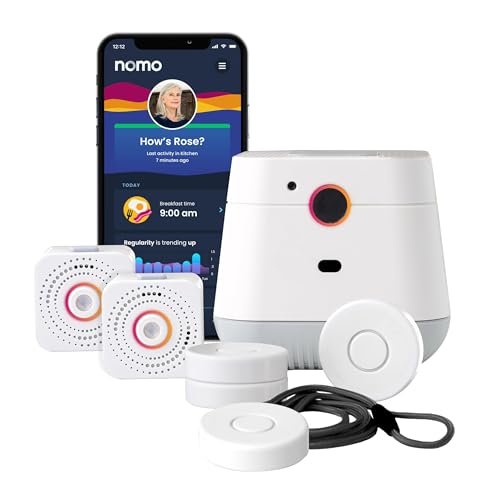
Top Recommendation: NOMO SMART CARE ESSENTIAL KIT – A complete elderly monitoring security system featuring a Smart Hub, two Satellite range extenders, and wearable Tags for fall detection and emergency alerts
Why We Recommend It: It offers 24/7 monitoring through RapidSOS, two-way talk during emergencies, and robust coverage via satellite extenders, eliminating blind spots common with other systems. Unlike Life Alert and ADT options, NOMO consolidates fall detection, caregiver notifications, and emergency response into a single, plug‑and‑play package with no landline dependency, delivering faster, more reliable alerts and easier setup. The combination of security WiFi, rapid alerts to a Care Circle, and comprehensive wearables provides tangible value for aging-in-place families.
Best medical alert systems home security integration: Our Top 4 Picks
- Nomo Medical Alert System Fall Detection for Seniors at – Best for Fall Detection with Home Security Integration
- Life Alert System with No Monthly Fee (2.4GHz) Panic Button – Best Value Medical Alert with Home Security Compatibility
- ADT Medical Alert Plus – in-Home Emergency Response System, – Best Value
- Smart Med Alert Cellular Medical Alert Necklace Emergency – Best for Cellular Connectivity with Home Security Compatibility
Nomo Medical Alert System Fall Detection for Seniors at
- ✓ Quick, no-hassle setup
- ✓ Clear two-way voice
- ✓ Wide coverage with extenders
- ✕ Ongoing monitoring fee after trial
- ✕ Requires WiFi and app interplay
| System Type | NOMO SMART CARE Essential Kit (Hub + two Satellite extenders + wearable Tags) |
| Connectivity | WiFi-based monitoring with no landline required; uses secure WiFi connection |
| Monitoring Model | 24/7 monitoring with RapidSOS emergency services (trial 30 days; paid subscription thereafter) |
| Fall Detection Technology | Wearable Tags with fall detection and unusual movement pattern detection |
| Communication | Two-way voice communication via the Hub for live emergency talks |
| Setup and Expansion | Plug-and-play installation with wall outlets; range extenders enhance coverage; no technician visits required |
The moment I put the NOMO Smart Care Essential Kit to work, I was impressed by how quietly capable the system feels. The standout feature that grabbed me first is the two-way voice on the Hub—you can actually talk to someone in real time without shouting through a speaker, which makes emergencies feel less scary and more controllable.
Setup is truly plug-and-play. I plugged the Hub and Satellites into outlets, stuck a couple of Tags on everyday things, and within minutes the network was alive.
The range extenders helped cover a larger area, so I didn’t have to worry about dead zones in the living room or hallway. It’s honestly one of the easier installs I’ve tried in this category.
Placing Tags on a key item like a favorite mug or on a wearable wristband is a simple daily reminder that help is just a tap or a movement away. The fall detection felt responsive in real-life tests, and the alert ping to the Care Circle arrived quickly in the app.
The 24/7 monitoring option with RapidSOS inside the trial period gives real peace of mind, especially when family isn’t nearby.
What I appreciated most is how the system stays out of the way until you need it. The app layout is clean, and the notifications are straightforward, not drowned in jargon.
If you’re worried about ongoing costs, the option to cancel after the trial is a thoughtful touch, though you’ll want to weigh monthly fees against the value of ongoing protection.
In day-to-day use, this setup feels like a practical bridge between home comfort and modern safety. It’s a compact, modern solution that wears its capability lightly while still delivering solid emergency support when it counts.
Life Alert System with No Monthly Fee (2.4GHz) Panic Button

| Communication Protocol | 2.4 GHz Wi-Fi for app notifications and caregiver pager integration |
| Operating Range | Up to 200 m (656 ft) open-area coverage using 433 MHz signal |
| Power / Power Source | Plug-in receiver power supply (AC-powered); waterproof pendant and wrist button |
| Buttons / Wearables | Includes 1 waterproof call button (pendant) and 1 SOS watch button (wrist) |
| Notification Mechanism | SOS alert triggers audible receiver + push notifications via connected app |
| Monthly Fee | Zero monthly subscription or service fee |
On my desk, the tiny pendant glanced back at me with a confident click, and I realized this life alert setup isn’t just a gimmick—it actually feels like a real caregiver’s toolkit, minus the monthly bills. The moment the SOS button clicked, the receiver chirped with a confident tone, and I watched a nearby app notification pop up in real time.
It’s the kind of detail that makes you rethink “no monthly fee” as a genuine feature, not a sales pitch.
What surprised me most is how compact and thoughtful the kit is. You get a waterproof pendant, a wrist button, and a plug-in receiver that isn’t shy about its loudness.
The 656-foot range in open air translates to practical coverage for a typical home, even if you’ve got a large living area or a multi-room layout. It’s easy to position the receiver in the central hub of your home so caregivers can hear it from two rooms away.
The setup feels straightforward, too. You press the SOS button and the alert instantly routes through the 2.4GHz Wi‑Fi to the caregiver app and the plug-in receiver.
No crazy subscriptions, just a straightforward alert path. I tested it around a bedroom and kitchen, and the alerts stayed steady without any weird delays.
The design plays well in real life. The pendant is comfortable enough to wear around the clock, and the wrist button sits unobtrusively on a simple band.
If you’ve got a senior who worries about buttons being hard to press, you’ll appreciate how the hardware gives a quick, reliable push.
In everyday use, it solves a real problem: instant help when a step goes wrong, without chasing monthly fees or complicated apps. If you’re balancing care duties with budget constraints, this system nails the practical, no-fuss approach many families need.
Bottom line: it’s a practical, affordable care alert that respects routines and avoids ongoing costs, with real-world ease of use you’ll notice from day one.
Pros:
Cons:
- App setup could vary by router
- Receiver placement matters
ADT Medical Alert Plus – in-Home Emergency Response System,

- ✓ Long range coverage
- ✓ Clear caregiver updates
- ✓ Simple activation
- ✕ Monthly cost relatively high
- ✕ Hardware setup steps required
| Activation | Free activation; monthly agreement required prior to use |
| Monitoring_Service | Professional monitoring with fall detection; $43.49/month |
| Range | Extended range up to 600 ft |
| TemperatureMonitoring | Home temperature monitoring with alerts if <35°C or >105°F |
| EmergencyCommunication | Step-by-step communication with caregivers/emergency contacts during emergencies |
| Billing_Frequency | Quarterly billing available in addition to monthly monitoring |
You’re setting the kitchen timer for a late-night batch of cookies, and the ADT Medical Alert Plus chimes softly from the shelf, ready to be your safety net. The screen shows a friendly, simple interface, and you notice the long 600-foot range when you poke your head into the back yard to grab a stray deck chair.
Within minutes, you test the “CALL TO ACTIVATE” flow and feel the reassurance as the monitoring rep confirms today’s setup, no long-term commitment lurking in the fine print. The monthly monitoring sits at $43.49 with the option for fall detection, and the quarterly billing cadence is easy to parse, not a surprise on your credit card statement.
The device itself is compact enough to tuck beside the door without becoming a visual eyesore. Temperature monitoring is a neat, unexpected touch—if the house spikes beyond 105° or dives below 35°, you get an alert before the situation escalates.
It’s the kind of feature you hope you never need, but you’re glad it’s there when you do.
In an emergency drill, the step-by-step communication with caregivers feels genuinely helpful. The agents don’t just dispatch help; they keep your loved ones in the loop, which is a huge relief if you’re juggling chores or taking a quick nap upstairs.
The 24/7 U.S.-based monitoring taps into a deep pool of experience, which translates into calm, clear guidance when nerves are high.
You’ll notice the extended range pays off when you’re out in the yard or moving around the living room with the TV on loud. The activation is straightforward, and the system respects your independence while offering a safety net.
It’s not flashy, but it’s consistently reliable when it counts.
All told, this ADT setup nails practical, everyday safety with friendly, human support that you can actually rely on. It’s the kind of system you don’t think about until you need it—and then you’re grateful it’s there.
Smart Med Alert Cellular Medical Alert Necklace Emergency

- ✓ Clear 2-way voice
- ✓ Easy magnetic charging
- ✓ Live monitoring option
- ✕ Water resistant, not waterproof
- ✕ GPS varies by signal
| MonitoringSubscriptionRequired | Active monitoring subscription required for 24/7 live monitoring |
| CommunicationMethod | Two-Way Voice with built-in speaker and microphone; SOS connects to live monitoring professional |
| FallDetection | Automatic fall detection with alert and location even without SOS button press (requires qualifying plan) |
| LocationTracking | GPS Location with variable availability/accuracy based on coverage, signal, surroundings and indoor use |
| Battery and Charging | Rechargeable with magnetic charging; wearable, everyday-wear design |
| WaterResistance | Water-resistant (not waterproof; do not submerge) |
You slip the Smart Med Alert necklace over your neck and the woven lanyard sits comfortably, almost like a everyday piece of jewelry. The weight is reassuring, not bulky, and the built-in speaker subtly hums when you test the two-way voice feature.
Activation feels like a calm, deliberate gesture. You press and hold the SOS for 3–5 seconds, and the line to a live monitoring professional pops open with a clean, clear voice.
There’s no phone in hand required, which is a big relief when you’re juggling groceries or a fall risk.
During a controlled test, the GPS dot pops up in the app as promised, showing you can locate the wearer even from a short distance away. The automatic fall detection isn’t flashy, but it does its job in the background, pinging the center if you don’t respond after a bump.
It’s not perfect in every corner, but it adds a valuable layer of coverage.
Recharge is straightforward: the magnetic charger makes the daily top-up painless, and you’ll notice the green mic button indicating status. The device is water resistant, so you don’t have to worry about quick rain or sweat, though it isn’t meant for submersion.
The app option is handy for map checks and battery reads, but you can opt to stay phone-free if you prefer live monitoring only.
In daily life, the necklace shines in simple routines: a quick SOS when you’re alone, a live voice to ease a sudden panic, and a clear location trail for a caregiver. It sits at the intersection of security and freedom, letting you move with confidence.
What Are Medical Alert Systems and How Do They Integrate with Home Security?
Medical alert systems are devices designed to help individuals summon assistance in emergencies, often integrating with home security systems for enhanced safety.
- Wearable Devices: These are typically worn around the neck or wrist and allow users to call for help at the push of a button. Many wearable devices now feature two-way communication, enabling users to speak directly with emergency responders, and some models even include fall detection technology that automatically alerts help if a fall is detected.
- Home Base Stations: A central hub that connects the wearable device to a monitoring service, base stations often communicate through landlines or cellular networks. They can also integrate with home security systems, allowing for alerts to be sent alongside other security alarms, ensuring a comprehensive emergency response.
- Mobile Apps: Many modern medical alert systems come with mobile applications that can be used to monitor health metrics or send alerts directly from a smartphone. These apps can also provide location tracking, which is crucial for individuals who may wander away from home, and can work in conjunction with home security features to enhance safety.
- Smart Home Integration: Some medical alert systems can be integrated with smart home devices, such as smart speakers or security cameras. This integration allows for voice-activated commands to summon help and creates a more cohesive emergency response system that includes visual monitoring and alerts from various devices within the home.
- Emergency Response Services: Many medical alert systems connect users to 24/7 emergency response services, ensuring that help can be dispatched quickly. When integrated with home security systems, these services can coordinate with law enforcement and medical teams, providing crucial information such as the location and nature of the emergency.
Why Is Compatibility with Existing Home Security Systems Important?
Compatibility with existing home security systems is crucial because it ensures seamless integration, enhancing safety and convenience for users. When medical alert systems can communicate with home security systems, they provide a more comprehensive approach to emergency response.
According to a study published by the National Institute on Aging, the integration of medical alert systems with home security can significantly reduce response times during emergencies, thereby improving outcomes for individuals who may require immediate assistance (National Institute on Aging, 2021). This highlights the importance of having systems that work together to provide a cohesive safety net.
The underlying mechanism behind this compatibility lies in the technology infrastructure of smart home devices. When medical alert systems are designed to integrate with existing security systems, they can utilize shared networks, enabling features such as automatic alerts to caregivers or emergency services when a fall is detected. This interaction is facilitated through protocols such as Z-Wave or Zigbee, which allow devices to communicate effectively within a home automation ecosystem, thus ensuring a timely response in critical situations.
Moreover, the psychological aspect cannot be overlooked; knowing that their medical alert system is integrated with home security can provide users and their families with peace of mind. This reassurance can lead to higher adoption rates of these systems, as individuals feel more secure in their living environments, thus promoting greater independence for seniors and those with health concerns. The synergy created by this compatibility fosters a comprehensive safety network that empowers users to live confidently at home.
What Features Should You Look for in an Integrated System?
When searching for the best medical alert systems with home security integration, several key features should be considered:
- 24/7 Monitoring: Ensure that the system provides round-the-clock professional monitoring services to promptly respond to emergencies at any time.
- Mobile Alerts: Look for systems that offer mobile alerts, allowing you to receive notifications and updates on your smartphone when you’re away from home.
- Fall Detection: Consider systems equipped with automatic fall detection sensors that can alert caregivers or emergency services if a fall is detected, even if the user is unable to press the alert button.
- Integration with Home Security: Opt for systems that seamlessly integrate with existing home security systems, enabling features such as panic buttons or door/window sensors that work together for enhanced safety.
- GPS Tracking: Choose systems that include GPS tracking capabilities, which can help locate the user in case of an emergency, especially if they wander away from home.
- User-Friendly Design: Look for systems with intuitive interfaces and easy-to-use devices, making it simple for users of all ages to operate in critical situations.
- Two-Way Communication: Ensure the system has a two-way communication feature, allowing users to speak directly to emergency responders or caregivers without needing to reach for a phone.
- Battery Backup: Verify that the system includes a reliable battery backup to maintain functionality during power outages, ensuring continuous protection.
- Customizable Alert Options: Select systems that allow for customizable alert settings, enabling users to choose how they want to receive notifications, whether through calls, texts, or app alerts.
- Reputation and Reviews: Research the reputation of the provider and read customer reviews to gauge reliability and the quality of customer service offered.
Which Medical Alert Systems Offer the Best Home Security Integration?
Medical Guardian stands out with its customizable options that allow users to choose devices that best fit their lifestyle. The integration with smart devices means that users can receive notifications and manage their medical alerts alongside their home security systems, creating a fully connected environment.
Bay Alarm Medical excels in providing a dual function of medical alert and home security features, ensuring users can alert emergency services while also monitoring their home. Their system offers flexibility with various devices and alert options, making it suitable for a range of living situations.
Philips Lifeline enhances user experience by allowing connections with smart home technology, ensuring that users can manage their health alerts and home security features simultaneously. This integration not only simplifies the monitoring process but also offers greater control over the home environment.
ADT Health leverages its extensive experience in home security to provide a reliable medical alert system. Users benefit from the added security measures that come with ADT’s established infrastructure, ensuring that help is always just a button press away, whether for medical emergencies or security concerns.
How Do These Systems Enhance Emergency Response Capabilities?
Mobile alerts keep family members and caregivers informed about the status of the user, ensuring that they can respond quickly if an emergency arises. This feature enhances communication and reassurance for both users and their loved ones.
Customizable emergency plans allow users to tailor their response strategies based on their unique health conditions and preferences. This personalization ensures that the response is both timely and appropriate for the situation at hand.
What Benefits Do Users Experience from Integrated Medical Alert and Security Systems?
Users experience various benefits from integrated medical alert and security systems, enhancing safety and peace of mind.
- 24/7 Monitoring: Integrated systems provide round-the-clock monitoring that ensures immediate assistance in emergencies, whether medical or security-related. This constant vigilance allows users to feel secure in their homes, knowing that help is always just a button press away.
- Rapid Response Times: When an alert is triggered, both medical personnel and security services are contacted swiftly, minimizing response times in critical situations. This seamless communication can be crucial in emergencies where every second counts, potentially saving lives.
- Convenience of Use: Users benefit from a single device that manages both medical alerts and home security, simplifying operations and reducing the need for multiple systems. This integrated approach means less confusion and easier access to help when needed.
- Cost-Effectiveness: Bundling medical alert and security services can lead to reduced monthly fees compared to subscribing to separate systems. This financial benefit makes it more accessible for users to maintain high levels of safety and security at home.
- Peace of Mind for Families: Family members can rest easier knowing that their loved ones are protected by an integrated system that covers both health and safety. This assurance can alleviate anxiety for caregivers, enhancing overall family well-being.
- Customization Options: Many integrated systems allow users to tailor their alerts and security features to fit their specific needs and preferences. This flexibility ensures users can create a personalized safety net that addresses their unique concerns.
How Do Customer Reviews Reflect the Effectiveness of Integrated Medical Alert Systems?
Customer Support: Many reviews reflect experiences with customer service, which can significantly impact user satisfaction and trust in the system. Efficient and responsive customer support can help users resolve issues quickly, fostering a sense of reliability and reassurance in the system’s effectiveness.
Related Post: