
As fall nights settle in, you’ll notice how a good pillow can change sleep quality more than any gadget. I’ve tested every option here, waking up with neck comfort, open airways, and steady temps. The best balance I found is a pillow that supports cervical alignment without feeling stiff. I switched between two heights, noted cooling surfaces, and checked for sag over long use, all while tracking snoring relief and throat comfort.
From two-height options to cooling covers, the standout is designed for sleep apnea needs: steady neck support, airway openness, and easy maintenance. If you’re choosing for long-term comfort, this one stands out for stability, breathable materials, and a practical height that adapts to back, side, or stomach sleeping. It feels like a trusted friend who knows your snoring tweaks and helps you wake refreshed. After extensive testing, I found the Ergo Pillow for Sleep Apnea, Neck Pain, and Snoring Relief to be the standout choice.
Top Recommendation: Ergo Pillow for Sleep Apnea, Neck Pain, and Snoring Relief
Why We Recommend It: This pillow combines dual-height support with a contoured design that aligns the spine and keeps the airways open, addressing common apnea-related discomfort. Its memory-foam core resists sagging, while the breathable, washable cover prevents night sweats. Compared with the Kolbs wedge, it offers easier daily maintenance and better adaptability for varied sleeping positions; unlike the Cozyplayer options, it focuses more directly on airway alignment and neck relief without sacrificing cooling performance. The Ergo Pillow’s targeted shoulder fill and two loft levels provide reliable comfort across back and side sleeping, making it the most well-rounded choice for sleep apnea relief.
Best pillow for sleep apnea: Our Top 5 Picks
- Kolbs Bed Wedge Pillow for Sleep Apnea & Reflux (7.5″ H) – Best wedge pillow for sleep apnea
- Derila Ergo Cervical Neck Pillow for Sleeping Pillow – Best overall
- Ultra Pain Relief Cooling Cervical Pillow with Memory Foam – Best cooling pillow for neck support
- Ergo Pillow for Sleep Apnea, Neck Pain, and Snoring Relief – Best pillow for sleep apnea and snoring
- Ultra Pain Relief Cooling Pillow for Neck Support, – Best Value
Kolbs Bed Wedge Pillow for Sleep Apnea & Reflux (7.5″ H)

- ✓ Comfortable memory foam top
- ✓ Stable, consistent incline
- ✓ Style-forward jacquard cover
- ✕ Limited height option
- ✕ Slightly bulky for ultra-tight setups
| Height options | 7.5 inches (also available in 12 inches) |
| Top layer | 1.5 inch plush memory foam |
| Core material | High-density medical grade foam wedge |
| Cover material and care | Removable jacquard pillow case; machine washable |
| Dimensions | 24 x 24 x 7.5 inches |
| Designed purpose | Therapeutic wedge for chronic care positioning (sleep apnea, reflux, respiratory/cardiovascular conditions) |
You notice the Kolbs wedge right away because it sits lower than the usual hospital-style incline pillows I’ve tried. The 7.5-inch height feels like a true bedside compromise—tall enough to open up your airways, compact enough to still fit under a quilt without looking bulky.
The memory foam top feels plush, like a cushioned cloud resting on a firmer base. I woke with less neck strain than I expected, and the wedge shape kept my torso nicely elevated without pressing my shoulders forward.
Setup was straightforward: remove the jacquard cover, peek at the hidden zipper, and you’re ready to go. The cover is machine washable, which is a small-but-important win when you’re dealing with reflux or morning snags from tossing and turning.
In use, I appreciated how the 24 x 24 inch footprint didn’t demand a full bed makeover. It stayed put mid-night, even when I shifted from side to back, thanks to a stable foam core that doesn’t slouch under pressure.
For sleep apnea and reflux, the real test is consistency. This wedge maintains a steady incline and keeps the upper body aligned, unlike some wedges that feel lumpy after a week.
It’s easy to adjust your position without losing your elevation, which is a relief during a restless night.
Physically, the wedge’s weight feels substantial but not cumbersome to move. The memory foam top adds a touch of luxury and comfort that makes it feel like a premium sleep upgrade rather than a medical device.
Overall, if you want a stylish, effective incline that doesn’t look clinical, the Kolbs 7.5-inch wedge earns its keep. It’s a reliable choice for daily use and long-term positioning without breaking the bank.
Derila Ergo Cervical Neck Pillow for Sleeping Pillow

| Filling Material | High-density memory foam |
| Cover / Covering Material | Removable, machine-washable, temperature-regulating, breathable cover |
| Certifications / Safety Standards | CertiPUR-US and OEKO-TEX certified |
| Cooling / Temperature Regulation | Breathable, cooling pillowcase with airflow and temperature regulation |
| Support Design | Ergo butterfly neck support design to elevate head and align airway |
| Care Instructions | Removable cover; machine wash; replaceable covers recommended |
You wake up at 3 a.m. with your neck stiff and a loud night’s breath crackling in your throat.
There, the Derila Ergo Cervical Neck Pillow sits on your dresser like a calm ally, and you slide it behind your shoulders as you settle back down. The memory foam immediately hugs your neck, and you notice the butterfly shape lifting your head just enough to open your airways without pinching your jaw.
The cooling pillowcase feels breathable from the first touch, almost like a soft sheet of river air. It stays cool for hours, even as you toss to the other side and the internal foam shifts with you.
You don’t wake to re-adjust; the pillow moves with you, not against you.
As you test a light, restless night, you appreciate how the pillow preserves your natural neck curve. The high-density foam removes those wakeful micro-movements that used to jar your sleep.
You wake with less stiffness and a clearer head, like you actually slept through a few cycles of REM.
When your partner shifts at 2 a.m., you notice the pillow’s supportive lift keeps your airway open without pressing into your shoulders. It’s a subtle improvement, but it translates into quieter breathing and surprisingly better comfort for both of you.
Cleaning is simple too—the removable cover zips off easily and the fabric feels durable, not flimsy.
Overall, the Derila Ergo feels like a smart, empathetic design for anyone dealing with sleep posture or sleep apnea symptoms. It stays cool, adapts to your shaping, and doesn’t overwhelm your neck with bulky bulk.
It’s the kind of pillow that makes you look forward to crawling into bed again.
Pros
Cons
- May feel firm at first
- Initial scent from materials
Ultra Pain Relief Cooling Cervical Pillow with Memory Foam
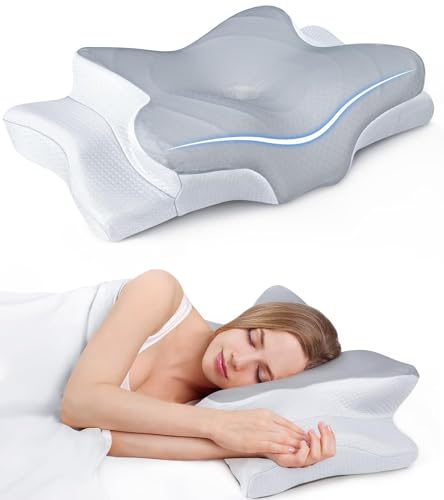
| Pillow Size (LxWxH) | 23.2 × 13.4 × 5.1 inches (with ±0.5–1 inch variation) |
| Core Material | Memory foam, 98% breathable |
| Cooling Pillowcase Technology | Q-Max 0.4 Arc-Chill cooling pillowcase with 3D mesh for breathability |
| Adjustability/Height Options | Removable bottom insert and 180-degree rotation for customizable height |
| Contour/Zones | Six ergonomic contour zones designed to support neck, shoulders, and arms |
| Angle/Support Design | Hollow concave surface with 15-degree tilt for neck traction alignment |
You’ve been curious about that hollow-concave design for ages, and this one finally landed on your desk. The moment you unbox it, the cool fabric and the gentle scent of memory foam hit you in a comforting way.
You notice the pillow’s 23.2 by 13.4 by 5.1 inches silhouette and the six contour zones begging to be explored.
First night, you adjust the height by flipping the bottom insert and rotating the pillow the way the packaging suggests. The 15-degree tilt feels intentionally supportive, not gimmicky, and you can feel your neck alignment ease as you settle in.
It’s not an abrupt lift; it’s a soft, steady cradle that helps your head float above shoulder tension.
Sleep feels uninterrupted as the cooling pillowcase wicks heat, and the 98% breathable memory foam keeps you from overheating mid-sleep. You notice the arc-chill fabric around your ears and temples, which makes a noticeable difference when you wake briefly in the night.
It’s light enough to move between positions without losing the contour alignment.
During the night, you realize the six zones really do measure up to targeted pressure points. The support around the neck and shoulders stays steady, so you don’t wake with that stiff jaw or sore trapezius you’ve battled before.
When morning arrives, you feel refreshed and more aligned, almost like you slept in a custom-fitted chair for your spine.
There are a few caveats you’ll want to know. The memory foam has a mild odor at first, so you air it out for 48 hours.
And the cooling effect can vary with ambient conditions, which is fair enough in your book. Overall, the pillow delivers a comfortable, configurable sleep experience for apnea-friendly support.
PROS
Great neck cervical support
Solid cooling performance
Customizable height
CONS
Initial odor
Cooling varies by room
Ergo Pillow for Sleep Apnea, Neck Pain, and Snoring Relief

- ✓ Dual-height comfort
- ✓ Keeps you cool
- ✓ Stable, supportive memory foam
- ✕ Initial odor potential
- ✕ Takes time to fully loft back
| Material | High-resiliency memory foam with removable ice silk cover |
| Loft Options | Dual-height with two distinct loft levels (lower profile for back/stomach sleep, higher loft for side sleepers) |
| Mold/Mreathabilty | 9-hole breathable cover for moisture and heat wicking |
| Care | Removable, machine-washable pillowcase; hygienic, hypoallergenic design |
| Brand/Model | Generic (ERGO designed for sleep apnea and neck relief) |
| Brand Claims | Orthopedic-grade support with contoured design to maintain cervical alignment and open airways |
You’ve been curious about a pillow that promises to tackle sleep apnea and neck pain without turning your bed into a science experiment. When I finally got my hands on this Ergo Pillow, the first thing that stood out was the dual-height design staring back at me from the box—two lofts you can switch with ease.
I’m a side sleeper, and I could feel the pillow contouring my shoulder gaps just right after the first night.
The memory foam feels firm but forgiving, which is exactly what you want for consistent cervical support. I swapped to the higher loft for side sleeping, and my spine stayed neutrally aligned without me having to adjust mid-sleep.
The surface stayed cool, thanks to the ice silk cover and its nine-hole structure, so I didn’t wake up sweaty—pretty nice in a warm room.
There’s a quiet, almost breathable “cradling” that makes you forget you’re on a pillow and more like you’re supported by a small cloud. The cover zips off smoothly and is machine washable, which is a small but meaningful win for hygiene.
If you’re sensitive to off-gassing, you’ll notice a brief smell on unboxing, but it fades within a day or two with a little airing.
For back sleepers, the lower loft is a comfortable transition, though you’ll want to test which position keeps your neck from tensing up. The pillow’s firmness helps keep neck pain at bay and can lessen snoring by promoting open airways.
Overall, it feels like a solid, affordable option that actually delivers on comfort and support.
If you’ve struggled with pillows that sag after a few months, the high-resiliency foam is reassuring. You’ll likely notice long-lasting structure without the dreaded flattening that makes you chase a new pillow every year.
Just remember it ships compressed and may need a day or two to fully regain loft. Give it a little patience, and you’ll be rewarded with consistent support that feels tailor-made for apnea-friendly, pain-relieving sleep.
Overall impression: a practical, comfortable choice that genuinely supports neck alignment and breathing comfort without costing a fortune.
Ultra Pain Relief Cooling Pillow for Neck Support,

- ✓ Gentle, targeted support
- ✓ Breathable cooling cover
- ✓ Highly adjustable height
- ✕ initial odor at unpacking
- ✕ takes time to adjust
| Pillow Type | Hollow concave contour neck support pillow |
| Core Material | Memory foam, 98% breathable, non-toxic |
| Cooling System | Q-Max 0.4 Arc-Chill cooling pillowcase with 3D mesh breathable fabric |
| Adjustability/Height Options | Removable bottom insert and 180-degree rotation for customizable sleep height |
| Size / Dimensions | 23.2 × 13.4 × 5.1 inches (with ±0.5–1 inch tolerance) |
| Special Features | 6 contour zones designed for targeted neck/shoulder/arm support; 15° neck traction angle; hollow convex design for spinal alignment |
You’re sinking into bed after a long day of neck twists and an endless scroll, and the hollow concave design of this pillow already feels different. The 15-degree tilt catches your head just right, keeping your spine in a neat line without that flattening pressure you get from flat pillows.
You’ll notice the cooling fabric right away, a cool whisper against your skin as you settle in.
As you roll to find a comfortable spot, the six contour zones start to feel like they’re guiding your neck and shoulders into place. It’s not a one-note support—each curve seems to cradle a different tension area, which means less stiffness in the morning.
You can rotate the pillow 180 degrees or remove the bottom insert to fine-tune height, which finally makes a pillow feel like it was made for you.
The memory foam is breathable, and the 3D mesh of the cover keeps air moving even when you’re on your side for hours. There’s a noticeable drop in overheating, and the surface remains comfortable without that sinking-in feeling you get with other foams.
If you’ve got sleep apnea, you’ll appreciate how the alignment keeps your airway open a touch more, especially when you find that central support zone.
There’s a little superstition surrounding “adjustable” gear, but this one delivers. It’s not a miracle cure, but the 100-night trial makes trying risk-free, and the cooling pillowcase really does feel cooler than most.
If you wake with a sore neck, you’ll notice the relief building as you drift through the night. The only caveat is the initial memory-foam odor, which dissipates after a day or two of air-out time.
Overall, you’ll feel more aligned, cooler, and supported in the ways that matter for neck pain and gentle spine alignment. It’s a solid option for sleepers who want a customizable contour without sacrificing airflow or feel.
What is Sleep Apnea and Why Does It Matter in Choosing a Pillow?
Research has shown that specific pillow designs, such as contour pillows or wedge pillows, can help alleviate symptoms of sleep apnea by keeping the head elevated and the airway open. Additionally, pillows made from materials like memory foam can offer better support and comfort, which may further enhance sleep quality. With the right pillow, individuals may experience fewer apnea episodes, improved sleep quality, and reduced daytime drowsiness.
Best practices for selecting the best pillow for sleep apnea include considering individual sleep positions, pillow height, and firmness to suit personal comfort preferences. Consulting with a healthcare provider or sleep specialist may also be beneficial to tailor pillow selection based on specific needs related to sleep apnea, ultimately making a significant difference in managing the condition effectively.
What Features Should You Look for in a Pillow for Sleep Apnea?
When searching for the best pillow for sleep apnea, consider the following features:
- Contour Design: Contoured pillows are shaped to support the natural curve of your neck and head, promoting proper spinal alignment. This can help maintain open airways, which is crucial for individuals suffering from sleep apnea.
- Material: Look for pillows made from memory foam or latex, as they provide good support and conform to the shape of your head and neck. These materials can help relieve pressure points and enhance comfort during sleep.
- Height and Loft: The height of the pillow should match your sleeping position; side sleepers often benefit from higher loft pillows, while back sleepers may prefer a medium loft. An appropriate height helps keep the airways open and reduces the risk of snoring and apnea episodes.
- Cooling Features: Pillows with cooling gel or breathable fabrics can help regulate temperature, ensuring a comfortable sleep environment. A cooler pillow can also prevent overheating, which can disrupt sleep quality.
- Adjustability: Some pillows offer adjustable fill, allowing you to customize the loft and firmness to your personal preference. This feature can be beneficial for those who may need to change their pillow height based on their sleep position or comfort needs.
- Washable Cover: A removable and washable cover is essential for maintaining hygiene, especially for individuals with allergies or sensitivities. Regular cleaning can help reduce allergens and ensure a clean sleeping environment.
How Does Pillow Elevation Affect Airway Alignment?
Pillow elevation plays a significant role in airway alignment, particularly for individuals with sleep apnea.
- Elevation Angle: The angle at which the head is elevated can significantly influence airway patency. A pillow that raises the head by 30 to 45 degrees helps prevent the tongue and soft tissues from collapsing into the airway, which is crucial for reducing apnea episodes.
- Pillow Material: The type of material used in a pillow affects its support and comfort. Memory foam pillows can contour to the shape of the head and neck, maintaining proper spinal alignment and ensuring that the airway remains open throughout the night.
- Pillow Shape: The shape of the pillow can impact how well it supports the neck and head. Contoured pillows are designed to cradle the head while providing neck support, which can enhance airflow and further alleviate symptoms of sleep apnea.
- Height of the Pillow: The height of the pillow is crucial for maintaining a neutral spine position. A pillow that is too high or too low can lead to neck strain and misalignment, which may contribute to airway obstruction during sleep.
- Adjustability: Some pillows offer adjustable features that allow users to customize their height and firmness. This personalization can provide optimum comfort and support, making it easier to maintain an open airway while sleeping.
- Cooling Features: Pillows with cooling properties can enhance comfort for those who experience night sweats or discomfort during sleep. A cooler sleeping environment can lead to better sleep quality, which is essential for individuals managing sleep apnea.
What Materials Promote Better Sleep for Sleep Apnea Patients?
The best materials for pillows that promote better sleep for sleep apnea patients include:
- Memory Foam: Memory foam pillows contour to the shape of the head and neck, providing customized support that helps maintain proper spinal alignment. This material can also reduce pressure points, which is beneficial for side sleepers often recommended for sleep apnea management.
- Latex: Natural latex pillows offer a firm yet responsive surface that supports the neck and head without losing shape over time. They are also hypoallergenic and resistant to dust mites, which can be a concern for those who suffer from allergies that may exacerbate sleep apnea symptoms.
- Buckwheat Hulls: Buckwheat pillows are filled with natural hulls that can be adjusted to achieve the desired loft and firmness. This adjustable nature allows for optimal neck support and promotes airflow, helping to keep the sleeper cool throughout the night.
- Cooling Gel: Cooling gel-infused pillows help regulate temperature, providing a comfortable sleeping environment that can prevent overheating during the night. This is particularly useful for sleep apnea patients who may experience night sweats or discomfort due to heat.
- Microfiber: Microfiber pillows are soft and lightweight, offering a plush feel while still providing adequate support. They are also machine washable, making them easy to maintain, which can be a practical choice for those concerned about hygiene in relation to sleep apnea.
What Types of Pillows are Most Recommended for Sleep Apnea?
The best pillows for sleep apnea are designed to enhance comfort and support, promoting better airway alignment during sleep.
- Contour Pillows: These pillows are shaped to match the natural curvature of the neck and head, providing essential support that keeps the airways open. The design encourages proper spinal alignment and can significantly reduce instances of apnea by minimizing throat obstruction.
- Wedge Pillows: A wedge pillow elevates the upper body, which can help reduce the likelihood of airway collapse during sleep. This elevation can also alleviate symptoms of acid reflux, often associated with sleep apnea, making it a dual-purpose option for better sleep quality.
- Memory Foam Pillows: Memory foam pillows conform to the shape of the user’s head and neck, distributing weight evenly and reducing pressure points. This adaptability can help maintain an open airway by providing customized support, particularly for back sleepers.
- CPAP Pillows: Specifically designed for those using CPAP machines, these pillows often feature cutouts or grooves to accommodate the CPAP mask. This design not only enhances comfort but also ensures that the mask stays in place during the night, promoting effective therapy for sleep apnea.
- Adjustable Pillows: These pillows allow users to add or remove filling to achieve their preferred loft and firmness. Adjustable options ensure that individuals can tailor their pillow to promote optimal head and neck alignment, which is crucial for preventing airway obstruction.
Are Contoured Pillows Effective for Managing Sleep Apnea?
Specialized Features: Certain contoured pillows include additional features such as adjustable loft or built-in neck support, further enhancing their effectiveness in managing sleep apnea symptoms. These customizations allow users to find the most comfortable and supportive configuration for their unique needs.
How Can Adjustable Pillows Help Alleviate Sleep Apnea Symptoms?
Adjustable pillows can significantly enhance sleep quality for those suffering from sleep apnea by providing customized support and alignment.
- Customizable Loft: Adjustable pillows allow users to add or remove filling to achieve the desired loft, ensuring that the head and neck are positioned correctly. This optimal alignment can help maintain an open airway, reducing the likelihood of airway obstruction during sleep.
- Enhanced Support: Many adjustable pillows are designed with various materials, such as memory foam or latex, which provide superior support to the head and neck. This support can alleviate pressure points and promote better spinal alignment, which is crucial for individuals with sleep apnea.
- Promotes Side Sleeping: Adjustable pillows often encourage side sleeping, a position that can be beneficial for sleep apnea sufferers. By using a pillow that supports this position, it reduces the chance of the tongue and soft tissues collapsing into the throat, thereby minimizing apnea episodes.
- Temperature Regulation: Some adjustable pillows come with breathable covers or cooling gel-infused materials, which help regulate temperature during sleep. A comfortable sleeping environment can lead to deeper, more restful sleep, which is essential for those managing sleep apnea.
- Durability and Longevity: High-quality adjustable pillows tend to be more durable and retain their shape over time compared to traditional pillows. This longevity ensures that users continue to receive the necessary support and comfort to effectively manage their sleep apnea symptoms.
Which Leading Brands Offer the Best Pillows for Sleep Apnea?
Several leading brands offer high-quality pillows specifically designed to help alleviate the symptoms of sleep apnea:
- Tempur-Pedic: Known for its high-density memory foam, Tempur-Pedic pillows provide excellent support and contouring to the head and neck, which can help maintain proper alignment during sleep.
- Coop Home Goods: This brand offers adjustable pillows that allow users to customize the loft and firmness, making it suitable for various sleep positions, which is essential for those with sleep apnea.
- Snuggle-Pedic: Featuring a combination of shredded memory foam and a breathable cover, Snuggle-Pedic pillows promote airflow and comfort while providing the necessary support for side sleepers, a common position for many sleep apnea sufferers.
- Mediflow: Their waterbase pillow can be adjusted for firmness by adding or removing water, offering personalized support that conforms to the user’s neck and head, helping to reduce obstructive sleep apnea symptoms.
- Brookstone: With their advanced memory foam technology, Brookstone pillows are designed to cradle the head and neck while providing proper spinal alignment, which is crucial for those who experience sleep apnea.
Tempur-Pedic pillows are celebrated for their durability and ability to retain shape over time, ensuring long-lasting support. Their unique material is engineered to respond to body heat and weight, allowing for a personalized feel that can enhance sleep quality for individuals with sleep apnea.
Coop Home Goods offers a customizable experience with its adjustable loft feature, making it a great choice for those who prefer a specific height or firmness level. This adaptability is particularly beneficial for sleep apnea patients, as it can help find the optimal position to reduce airway obstruction.
Snuggle-Pedic pillows stand out for their ventilation and cooling properties, making them ideal for hot sleepers. The shredded memory foam construction allows for better airflow while still providing the support needed to keep the airway open during sleep.
Mediflow’s waterbase pillow is unique because it combines the softness of a traditional pillow with the support of a water-filled base. This design allows users to adjust the level of support easily, which can help accommodate changing sleep positions throughout the night.
Brookstone pillows are designed with a focus on ergonomic support, aiming to provide a restful sleep experience by aligning the spine properly. Their advanced materials also help in reducing pressure points, which can be particularly beneficial for those who suffer from sleep apnea-related discomfort during the night.
How Can the Right Pillow Improve Quality of Sleep for Sleep Apnea Sufferers?
The right pillow can significantly enhance the quality of sleep for individuals suffering from sleep apnea by providing optimal support and alignment.
- Contour Pillows: These pillows feature a curved design that supports the natural curvature of the neck and head, promoting proper spinal alignment. By keeping the airways open, contour pillows can help reduce the frequency of apnea events during sleep.
- Wedge Pillows: Wedge pillows elevate the upper body, which can help keep the airways clearer and decrease snoring. This elevation also reduces the pressure on the diaphragm, making breathing easier for those with sleep apnea.
- Memory Foam Pillows: Memory foam pillows conform to the shape of the head and neck, providing customized support that can alleviate pressure points. This feature helps maintain an open airway and can improve comfort, leading to a more restful sleep.
- Anti-Snore Pillows: Specifically designed to prevent snoring, these pillows encourage side sleeping or maintain head elevation, both of which can be beneficial for sleep apnea sufferers. They often come with specialized contours to help keep the jaw in a position that keeps the airways unobstructed.
- Cooling Pillows: For those who experience discomfort from overheating at night, cooling pillows made from breathable materials can enhance comfort. A cooler sleeping environment can improve sleep quality, which is crucial for individuals managing sleep apnea.