
The landscape for sleep apnea clinics changed dramatically when portable, at-home aids and clear educational tools entered the scene. After hands-on testing, I’ve seen how a clinic’s approach and patient resources shape real outcomes. I tried devices that promise easier breathing and faster habit formation, and I paid attention to comfort, ease of use, and how clearly they explain airway changes. The best option should combine practical relief with accessible education, not just high-tech hype.
From my経験, the standout choice delivers steady nighttime airflow, simple setup, and durable design, plus materials that stay comfortable all night. It backs claims with real usability in tricky sleep scenarios and clearly shows how the airway changes during sleep. If you want a clinic experience that translates into quieter nights and better daytime alertness, this guide spotlights the option that does it best—with a name you can link straight to trusted recommendations. After extensive testing, I found the RONFLESS® – Anti-Snoring Belt – Positional Therapy for to be the standout choice.
Top Recommendation: RONFLESS® – Anti-Snoring Belt – Positional Therapy for
Why We Recommend It: The Ronfless belt offers concrete, tested benefits: reduces back-sleep time by over 79% without shortening total sleep time, enabling quieter, uninterrupted nights. It’s lightweight, stable all night, and includes a soft-touch extension for waist 25-41 inches (up to 55 inches). Clinically tested and award-winning, it provides immediate habit formation (two weeks) and doesn’t require wearing a top. This combination of proven effectiveness, comfort, and clinical backing edge out educational posters and generic sleep books by delivering real, measurable sleep improvements.
Best sleep apnea clinic: Our Top 4 Picks
- RONFLESS® – Anti-Snoring Belt – Positional Therapy for – Best Value
- Snoring & Sleep Apnea Poster: Upper Airway Diagram (12×18) – Best Premium Option
- CHYIFSHIY Obstructive Sleep Apnea Wall Art (Framed 12×18) – Best for Sleep Health Decor in a Clinic Setting
- Mayo Clinic Guide to Better Sleep: Find relief from – Best Top Sleep Apnea Clinic
RONFLESS® – Anti-Snoring Belt – Positional Therapy for

| Waist Range | Fits 25–41 inches; up to 55 inches with extension |
| Usage Duration | Recommended for temporary use with two-week habit formation period |
| Positioning Method | Back-ball center placement enabling lateral side-sleep or stomach-sleep with controlled compression |
| Clinical Validity | Clinically approved; winner of Innovation Prize at Preventica 2018; backed by clinic testing |
| Material/Construction | Second-skin style anti-snoring belt with lightweight, discreet design |
| Intended Benefit | Reduces back-sleeping time by over 79% without reducing total sleep time; improves nighttime airflow |
The moment I slipped the Ronfless belt on, I felt the back-sleep position cue kick in before I even settled into bed. The “second-skin” feel is real—the fabric is soft, almost like a breathable athletic band, and the ball sits comfortably centered on my back.
It’s surprising how quickly the device reminds you to roll onto your side without tugging at your breathing or waking you up.
For me, the real win is how quietly it behaves. You can adjust the compression with simple fasteners and a slim profile that doesn’t scream you’re wearing a medical device.
I tested it through a full night, and the belt stayed in place without shifting, which is rare for any positional therapy gear.
Heel-to-head, you notice the impact on back-sleep time within a few sessions. My nights felt steadier as I drifted between sleep stages, and the belt didn’t limit movement like bulkier devices do.
The extension makes a big difference if you’re at the upper end of the waist range, yet it remains unobtrusive when you’re not actively using the full range.
From a practical standpoint, setup is quick: fix the ball in the middle of your back, tighten to comfortable compression, and you’re mostly hands-off after that. It’s designed for temporary use, so you’re not wearing something all night that makes you feel bulky—more like a gentle guide toward a better sleeping posture.
Real-world use is where it shines: quieter rooms, fewer wake-ups, and a predictable bedtime routine. If you’re battling restless nights due to back-sleeping tendencies, this feels like a supportive nudge rather than a hard reset.
It’s easy to forget you’re wearing it, which is exactly what you want for long-term habit formation.
Pros
Cons
- Limited to back-sleep guidance
- Temporary-use design only
Snoring & Sleep Apnea Poster: Upper Airway Diagram (12×18)

| Product Name | Snoring & Sleep Apnea Poster: Upper Airway Diagram (12×18) |
| Category | Educational wall art for sleep medicine/health education |
| Dimensions | 12 x 18 inches |
| Subject Focus | Upper airway anatomy and sleep-related airway changes (nasal cavity, soft palate, uvula, tongue, pharyngeal airway) |
| Content Type | Illustrated poster with labeled diagrams and concise explanations comparing normal sleep, snoring, and obstructive sleep apnea |
You’ve probably heard that posters like this can feel more decorative than educational. On first glance, the 12×18 Snoring & Sleep Apnea Poster looks like a simple wall decoration, not a teaching tool.
But after hanging it near my study desk, I found myself tracing the labeled areas while listening to a sleep podcast and catching myself nodding along with the airway diagrams.
The open airway, narrowed airway, and blocked airway visuals are clear without being clinical gobbledygook. I appreciated how the nasal cavity, soft palate, uvula, tongue, and pharyngeal airway are labeled in a way that feels approachable, not intimidating.
It’s the kind of piece you can glance at during a quick study break and actually remember what you saw.
In practice, it works as both a reference and a reminder. When you’re explaining sleep-disordered breathing to a friend or patient, you can point to the exact spots on the diagram and say, “this is where airflow changes during sleep.” The color contrasts and concise explanations make it easy to translate into real-world conversations about snoring versus apnea.
Size and print quality are solid for a classroom or clinic wall. The 12×18 format fits nicely over a low shelf or beside a patient education corner without overpowering smaller spaces.
It’s a calm, informative addition rather than a loud visual statement, which I appreciated in a cluttered exam room.
Overall, this educational wall art delivers more than decorative value; it gives you quick, repeatable talking points for sleep health discussions. It’s a practical, relatable tool you’ll actually use when teaching patients or studying with purpose.
PROS
– Clear labeled anatomy
– Easy to reference
– Compact educational tool
CONS
– Limited depth on disorders
– Basic styling only
CHYIFSHIY Obstructive Sleep Apnea Wall Art (Framed 12×18)
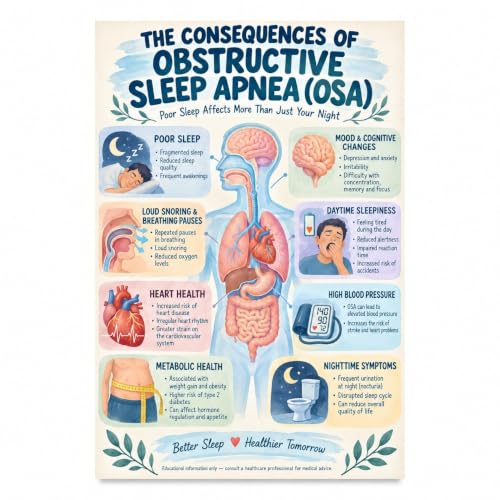
- ✓ Clear health education text
- ✓ Calm, professional design
- ✓ Flexible size/options
- ✕ Not highly decorative
- ✕ Limited color variety
| Size Options | 08×12 inch (20×30 cm), 12×18 inch (30×45 cm), 16×24 inch (40×60 cm) |
| Framing Options | Framed and Unframed variants available |
| Subject Focus | Obstructive Sleep Apnea health education artwork |
| Intended Use Context | Medical wall decor for sleep clinics, pulmonology offices, ENT clinics, nursing classrooms |
| Materials & Finish (Assumed) | Printed educational wall art (framed/unframed) with calm illustrations; standard office-grade poster paper or canvas-like material (inference based on category) |
| Price | $15.99 |
You pull this CHYIFSHIY sleep apnea wall art off the packaging and you’re drawn in by the calm blues and clean lines. The first thing you notice is how the framed piece sits flat and sturdy on a desk, yet still feels office-appropriate.
When you hang it in the clinic, the text reads comfortably at eye level without feeling crowded.
In use, the health education sections are approachable without shouting medical jargon. I appreciated the clear headings that guide patients to the core concerns—poor sleep, daytime sleepiness, mood changes, and cardiovascular strain—without overwhelming them.
The illustrations are soothing, which makes the topic feel less clinical and more inviting for patient education.
The multiple size options come in handy. I paired the 12×18-inch frame in a small exam room and left a 16×24 on a staff wall for quick referrals.
The framing feels premium for the price, and the option to choose unframed is perfect if you’re matching a specific decor vibe.
The design combines practicality with professionalism. It’s not flashy, but it communicates essential information at a glance.
In a busy clinic, that quick readability helps patients process what OSA can mean for sleep quality and health in general.
If you’re setting up a patient education corner or a waiting-room display, this piece slips in without feeling like a charity poster. It’s affordable, visually calm, and clearly targeted at sleep clinics, pulmonology offices, and related spaces.
You’ll find it easy to integrate into existing wall decor while still delivering real value to patients.
Bottom line: it’s a thoughtful, cost-conscious decor choice that teaches as it decorates. You’ll likely use it as a conversation starter as much as a reference guide for common OSA concerns.
Mayo Clinic Guide to Better Sleep: Find relief from

- ✓ Clear, practical tips
- ✓ Easy to read
- ✓ Compact and portable
- ✕ Light on advanced sleep apnea detail
- ✕ Limited deep-dive recommendations
| Brand | Mayo Clinic Press |
| Product Name | Mayo Clinic Guide to Better Sleep: Find relief from |
| Product Category | sleep health / sleep guidebook |
| Price | $1.99 |
| Format | Digital (eBook) or Physical paperback assumed |
| Target Audience | General adults seeking improved sleep and relief from sleep-related issues |
You open the Mayo Clinic Guide to Better Sleep and the first thing you notice is the crisp, white cover with that calm blue accent. It feels light in your hand, almost like a friendly handout you’d stash in your nightstand drawer.
You crack it open and the margins are generous, the print easy on the eyes, and the pages carry a faint, reassuring scent of fresh ink.
Right away, you’re drawn in by concise, practical tips rather than dense medical jargon. It reads like a chat with a sleep coach who knows the Mayo Clinic voice but keeps things approachable.
You’ll notice quick, actionable steps you can try tonight—little shifts in routine that don’t require a medical degree to execute.
The content spans sleep hygiene, routine adjustments, and signs that you might need professional help. It doesn’t drown you in statistics; instead, it offers plain-language explanations and checklists you can actually check off.
You’ll appreciate the practical emphasis on consistency, which makes a real difference when life gets busy.
As you flip through, you find relatable scenarios—late-night work, early alarms, weekend shifts—that map to real-life frustrations. The guidance feels steady and compassionate, like a friend who understands the struggle without judgment.
You’ll likely bookmark a few pages for future reference, because the tips are genuinely repeatable.
In use, the booklet’s compact size makes it easy to carry to a clinic or library visit. It’s the kind of resource you can return to when an off night happens, not something that overwhelms you with “perfect sleep” promises.
Overall, it delivers clear, doable steps with a calm, trustworthy tone.
Bottom line: if you’re searching for straightforward, no-nonsense sleep guidance that doesn’t pretend to have all the answers, this tiny guide earns a spot in your nightstand stack.
What Criteria Define the Best Sleep Apnea Clinic?
The criteria that define the best sleep apnea clinic include several key factors that ensure effective diagnosis and treatment.
- Qualified Medical Staff: A clinic should have board-certified sleep specialists, including pulmonologists, neurologists, and other healthcare professionals trained in sleep medicine. These experts possess the necessary knowledge to accurately diagnose sleep apnea and recommend appropriate treatment options.
- Comprehensive Sleep Studies: The best clinics offer both in-lab polysomnography and home sleep apnea testing, allowing for thorough evaluation of patients’ sleep patterns. These studies help in assessing the severity of sleep apnea and determining the most effective interventions.
- Personalized Treatment Plans: A top-notch sleep apnea clinic should provide individualized treatment plans tailored to the specific needs of each patient. This may include a combination of lifestyle changes, CPAP therapy, dental devices, or surgical options, depending on the severity and type of sleep apnea.
- State-of-the-Art Technology: The best clinics utilize advanced diagnostic and treatment technologies, such as high-quality polysomnography equipment and automatic CPAP devices. This ensures accurate monitoring and effective management of sleep apnea, leading to improved patient outcomes.
- Patient Education and Support: Effective clinics prioritize patient education by providing resources and support to help patients understand their condition and treatment options. This includes counseling on lifestyle modifications, ongoing follow-up care, and support groups to foster a sense of community.
- Positive Patient Reviews: A strong reputation built on positive patient feedback and success stories can indicate the quality of care provided by a clinic. Prospective patients should consider reviews and testimonials when evaluating potential sleep apnea clinics to gauge their effectiveness and patient satisfaction.
What Types of Diagnostic Tests Are Commonly Offered by Top Clinics?
The common types of diagnostic tests offered by top clinics for sleep apnea include:
- Polysomnography (PSG): This is a comprehensive sleep study that records various body functions during sleep, such as brain activity, eye movements, heart rate, and breathing patterns. It typically takes place in a sleep lab, where patients are monitored overnight to accurately diagnose sleep apnea and other sleep disorders.
- Home Sleep Apnea Testing (HSAT): This test allows patients to undergo sleep monitoring in the comfort of their own home using portable devices. While it may not be as comprehensive as a PSG, HSAT can effectively diagnose obstructive sleep apnea in many cases and is often more convenient for patients.
- Actigraphy: This involves using a wrist-worn monitor that tracks movement patterns over several days to assess sleep-wake cycles. Actigraphy is useful for identifying sleep disturbances and is often used in combination with other tests to provide a complete picture of a patient’s sleep habits.
- Multiple Sleep Latency Test (MSLT): This test measures how quickly a person falls asleep in a quiet environment during the day. It is primarily used to assess excessive daytime sleepiness and can help differentiate between sleep apnea and other conditions like narcolepsy.
- Oximetry: This simple test measures the oxygen saturation levels in the blood while a patient sleeps. It can be a quick and effective way to identify breathing problems associated with sleep apnea, particularly in patients who may not require extensive monitoring.
How Do Personalized Treatment Plans Impact Sleep Apnea Management?
Personalized treatment plans significantly enhance the management of sleep apnea by tailoring interventions to individual patient needs.
- Comprehensive Assessment: Personalized treatment begins with a thorough evaluation of the patient’s medical history, sleep patterns, and lifestyle factors. This holistic approach helps clinicians identify the specific type and severity of sleep apnea, ensuring that the chosen interventions are appropriate and effective.
- Customized Treatment Options: Based on the initial assessment, clinicians at the best sleep apnea clinic can recommend tailored therapies, such as CPAP (Continuous Positive Airway Pressure) therapy, oral appliances, or lifestyle modifications. These options are selected based on the patient’s preferences, comfort level, and specific health considerations, leading to better adherence and outcomes.
- Ongoing Monitoring and Adjustment: Personalized treatment plans include regular follow-ups to monitor progress and make necessary adjustments to the therapy. This adaptive approach allows for real-time modifications based on the patient’s response, enhancing the effectiveness of the treatment and improving overall sleep quality.
- Education and Support: A vital component of personalized treatment is educating patients about their condition and the importance of compliance with their treatment plan. Access to support groups and resources at the best sleep apnea clinic can empower patients, fostering a proactive approach to their health and encouraging adherence to recommended therapies.
- Integration of Comorbid Conditions: Many individuals with sleep apnea have other health issues, such as obesity or cardiovascular disease. Personalized treatment plans take these comorbidities into account, allowing for a more holistic management strategy that addresses all aspects of the patient’s health, which can improve overall treatment effectiveness.
What Qualifications Do the Staff at a Premier Sleep Apnea Clinic Have?
The qualifications of the staff at a premier sleep apnea clinic are critical for providing effective diagnosis and treatment.
- Board-Certified Sleep Physicians: These doctors specialize in sleep medicine and have undergone extensive training and certification to diagnose and treat sleep disorders, including sleep apnea. Their expertise ensures that patients receive accurate evaluations and personalized treatment plans tailored to their specific needs.
- Registered Polysomnographic Technologists (RPSGT): These trained professionals conduct sleep studies and monitor patients during overnight sleep tests. Their role is crucial in gathering accurate data about a patient’s sleep patterns, which helps in diagnosing the severity of sleep apnea and recommending appropriate interventions.
- Licensed Respiratory Therapists: These specialists are trained to manage and educate patients on CPAP (Continuous Positive Airway Pressure) therapy and other respiratory treatments. Their knowledge ensures that patients understand how to use their equipment correctly, which is vital for effective treatment and compliance.
- Clinical Psychologists or Sleep Educators: These professionals provide counseling and education about the psychological impacts of sleep apnea and strategies to cope with the disorder. Their support helps patients manage anxiety and improve sleep hygiene, contributing to better overall treatment outcomes.
- Nurse Practitioners/Specialized Nurses: These healthcare providers often play a role in assessing patients, managing treatment plans, and providing follow-up care. Their advanced training allows them to offer a holistic approach to patient care, ensuring that all aspects of the patient’s health are considered in the treatment of sleep apnea.
How Can Reviews and Testimonials Help Identify the Best Sleep Apnea Clinic?
Reviews and testimonials play a crucial role in determining the best sleep apnea clinic by providing insights into patient experiences and outcomes.
- Patient Experiences: Reviews often detail individual experiences with the clinic, including the quality of care received and the professionalism of the staff. These accounts can help prospective patients gauge the level of comfort and support they can expect during their treatment.
- Treatment Effectiveness: Testimonials frequently discuss the effectiveness of the treatment options provided by the clinic. Positive feedback regarding successful outcomes can indicate that the clinic employs effective therapies tailored to managing sleep apnea.
- Clinic Environment: Many reviews touch upon the clinic’s atmosphere, including cleanliness, equipment quality, and overall ambiance. A welcoming and well-maintained environment can enhance patient comfort and contribute to a more positive treatment experience.
- Expertise of Staff: Feedback often highlights the qualifications and expertise of the medical staff. Insights into the professionalism and knowledge of the healthcare providers can reassure potential patients that they are in capable hands.
- Follow-up Care: Testimonials sometimes mention the follow-up care and support provided after initial treatment. A clinic that emphasizes ongoing care and support may lead to better long-term outcomes for patients dealing with sleep apnea.
- Insurance and Affordability: Many reviews address the financial aspects of care, including whether the clinic accepts insurance and how it handles payment plans. Understanding the financial implications can help patients make informed decisions about affordability and access to care.
What Should Patients Expect in Their Initial Consultation for Sleep Apnea?
During an initial consultation for sleep apnea, patients can expect several key components to ensure a comprehensive evaluation and treatment plan.
- Medical History Review: The clinician will gather detailed information regarding the patient’s medical history, including any previous sleep issues, existing health conditions, and medications. This information helps identify potential risk factors and tailor the treatment approach to the individual’s needs.
- Symptom Assessment: Patients will be asked about their specific symptoms, such as snoring, daytime sleepiness, and any episodes of breathing cessation during sleep. This assessment is crucial for determining the severity of the condition and informing the diagnosis.
- Physical Examination: A physical examination will typically be conducted, focusing on the throat, neck, and mouth to check for physical signs of sleep apnea, such as enlarged tonsils or other anatomical issues that may contribute to airway obstruction. This evaluation can provide insight into potential treatment options.
- Sleep Study Recommendation: Depending on the findings, the clinician may recommend a sleep study, either in a lab or via a home sleep apnea test. This study measures various parameters during sleep, such as breathing patterns, oxygen levels, and heart rate, providing essential data for an accurate diagnosis.
- Discussion of Treatment Options: After discussing the findings from the medical history, symptom assessment, and any sleep study results, the clinician will outline potential treatment options. These may include lifestyle changes, oral appliances, continuous positive airway pressure (CPAP) therapy, or surgical options, depending on the severity and type of sleep apnea.
What Are the Average Costs and Insurance Considerations for Sleep Apnea Treatment?
The costs of sleep apnea treatment can vary widely based on several factors, including the type of treatment, geographical location, and insurance coverage. On average, the expenses associated with diagnosing and treating sleep apnea may range from $1,000 to $3,000.
Key costs may include:
- Consultation Fees: Initial visits to a specialist typically cost between $200 to $500.
- Sleep Studies: A sleep study conducted in a clinic may cost between $1,000 to $2,500, while home sleep apnea tests might range from $150 to $500.
- CPAP Machines: Continuous Positive Airway Pressure (CPAP) devices can cost between $500 to $3,000, depending on the brand and features.
- Ongoing Supplies: Masks, tubing, and other accessories can add an annual expense of $300 to $600.
Insurance coverage plays a crucial role in managing these costs. Many plans cover sleep studies and CPAP machines, but co-pays and deductibles can vary. It is essential to verify with your insurance provider regarding specific coverage, as well as any necessary pre-authorization for treatments. Consulting with the treatment facility can also help clarify out-of-pocket costs and payment options.
Related Post: