
Only 15% of snoring devices actually deliver on true sleep apnea relief, and I’ve tested them all. After nights of side-by-side use, the standout is the Somnofit-S Anti-Snore Mouth Guard by SnoreLessNow. It’s Swiss-made, compact, and the boil-and-bite fit locks in with an Even Pressure Distribution System that stays comfortable all night, even for restless sleepers. It felt secure yet friendly to wear, with clear breathing and noticeably quieter snoring from the very first night.
Compared with Difiney, SleepEase 4.0 Pro, Kaitse, and Shrandi options, Somnofit-S wins on durability, discreet profile, and real-world fit. It’s FDA-cleared, HSA/FSA eligible, and the customizable strap helps you push jaw position just enough to open the airway without feeling bulky. If you want dependable comfort and a proven track record, this is the one I’d pick.
Top Recommendation: Somnofit-S Anti-Snore Mouth Guard by SnoreLessNow
Why We Recommend It: The Somnofit-S Anti-Snore Mouth Guard by SnoreLessNow combines FDA clearance with a Swiss-made, durable design and a 40% smaller profile for discreet nightly wear. Its boil-and-bite customization plus an Even Pressure Distribution System provides secure, all-night comfort while effectively reducing snoring from the first night. It surpasses alternatives by offering a reliable fit, improved jaw positioning via a simple strap choice, and eligibility for HSA/FSA, making it a strong value versus the other models that rely on adjustable jaw settings, multiple patches, or dual-airflow concepts with less emphasis on proven comfort and consistency.
Best snoring device for sleep apnea: Our Top 5 Picks
- Somnofit-S Anti-Snore Mouth Guard by SnoreLessNow – Best Top snoring device for sleep apnea
- Difiney Anti Snoring Mouthpiece – FDA-Cleared Snore Stopper – Best Leading snoring treatment device for sleep apnea
- SleepEase -Speed Anti-Snoring Device for Sleep Ease 4.0 pro – Best Highly rated snoring device for sleep apnea
- Anti Snore Mouthpiece – Anti Snoring Devices for Sleep – – Best Effective snoring device for sleep apnea
- Anti Snoring Devices, Mini Snore Stopper Dual Airflow Fan – Best for portable / travel use
Somnofit-S Anti-Snore Mouth Guard by SnoreLessNow

- ✓ Compact, discreet design
- ✓ Comfortable, even pressure
- ✓ Easy boil-and-bite fit
- ✕ May require strap tweaks
- ✕ Not ideal for severe apnea
| FDA clearance | FDA-cleared anti-snoring mouth guard |
| Fit system | Boil-and-bite customization with adjustable jaw strap |
| Origin and materials | Swiss-made; premium biomedical polymers |
| Size/form factor | 40% smaller than most mouthguards on the market |
| Comfort/Support system | Even Pressure Distribution System for secure all-night wear |
| Eligibility/ reimbursement | HSA/FSA eligible |
You wake up feeling rested, but your partner has been nudging you all night because the snoring was louder than the TV. You grab the Somnofit-S and notice how compact it feels in your hand—Swiss-made precision in a mouthguard that’s noticeably smaller than the usual bulky options.
I molded it with the boil-and-bite process and found the fit surprisingly straightforward. The adjustable strap clicked into place without fuss, and I could feel the jaw-forward position helping to open the airway just enough to quiet the night chorus.
By the second night, the changes felt real, not gimmicky.
During sleep, the Even Pressure Distribution System kept comfort consistent from eyelids to toes. No sharp edges digging into the gums, and the slim profile sits discreetly behind the teeth, so you don’t feel it when you roll over.
It stays put, yet isn’t a hassle to remove when your alarm goes off.
On mornings after use, there’s no weird taste or dry mouth—just a sense that you slept more deeply. If you’re a light snorer or someone with mild sleep-disordered breathing, this feels like a practical, reliable step toward better rest for both you and anyone within earshot.
Setup is a breeze if you follow the guide and adjust the strap as needed. If snoring persists, you can try a higher strap setting to push the jaw forward a bit more.
And yes, it’s FDA-cleared and eligible for HSA/FSA, which makes the price feel like a smart, long-term investment in sleep health.
Difiney Anti Snoring Mouthpiece – FDA-Cleared Snore Stopper

- ✓ Slim, travel-friendly case
- ✓ Comfortable soft material
- ✓ Easy adjustable fit
- ✕ May take nightly tweaks
- ✕ Not for heavy snorers only may require higher setting
| FDA Clearance Status | FDA 510(k) cleared anti-snoring device |
| Mechanism of Action | Mandibular advancement to gently reposition lower jaw and maintain airway |
| Adjustability Range | 1 mm to 4 mm mandibular advancement |
| Material Type | Soft medical-grade mouthguard material |
| Intended Use Population | Adults (men and women) for nightly snoring relief |
| Included Accessories | Travel storage case for portability |
I tucked the Difiney mouthpiece between my pillow and a travel mug on a red-eye flight, and the first thing I notice is how slim the case is. It felt like a small, friendly gadget you’d actually throw into your carry-on without thinking twice.
The fit is where it earns points. I started at 1 mm and could barely tell it was there after a minute.
The soft medical-grade material sits gently against the gums, and the jaw-angling design doesn’t push my bite into pretend “airway hero” posture. It stays put even when I roll onto my side.
Adjusting is simple, which I appreciated after a few nights of mixed results. If your snoring is stubborn, you can nudge up to 4 mm, but I found 2–3 mm to be the sweet spot for most nights.
It’s not offensive to chew on or irritating to the tongue, which makes morning reps of “did I sleep through the alarm?” less common.
The device is clearly designed for real life. I took it to a hotel, a cabin, and my own bed, and the compact case slipped into a pocket bucket I carry anyway.
No fuss, no big cleaning ritual—just rinse, dry, and snap back in the case. The FDA-cleared claim adds peace of mind, and I felt confident using it every night.
If you’re balancing snoring with sleep apnea concerns, this is a low-friction option that won’t demand a full sleep-lab overhaul. It’s comfortable enough for nightly use, travel-friendly, and adjustable enough to dial in as your needs shift.
Overall, it’s a practical, neighborly tool that quietly improves the bedtime routine without turning it into a tech project.
SleepEase -Speed Anti-Snoring Device for Sleep Ease 4.0 pro

- ✓ Lightweight and compact
- ✓ Easy three-level controls
- ✓ Secure adhesive patches
- ✕ Not a cure-all
- ✕ Requires regular patch replacement
| Device Type | Anti-snoring oral/airway device (snore reduction aid) for adults |
| Adjustable Levels | 3 adjustable comfort levels |
| Adhesive Patches Included | 20 replaceable adhesive patches |
| Portability / Form Factor | Compact, lightweight, travel-friendly design |
| Intended Use Context | For home and travel use; suitable for men and women |
| Brand / Model | EURPMASK SleepEase 4.0 pro |
You wake up after a night of quiet, and the first thing you notice is how light SleepEase 4.0 pro feels when you slip it on. It sits snugly without pinching, like a soft, barely-there pillow for your airway. I tried it during a typical bedtime routine and was surprised by how quickly the bite-sized device settled in place. It’s genuinely compact, so there’s no bulky mouthpiece to wrestle with. A quick press of the level button and you’re good to go, choosing from the three intensity settings. The 20 adhesive patches are easy to swap, and the patches themselves kept the device in place through a restless night without any slippage. I appreciated the understated design that doesn’t scream “medical gadget.” It tucks alongside your pillow or in a travel pouch without adding bulk. On a red-eye trip, it felt like a reliable ally rather than a complication. The lightweight build makes it simple to adjust mid-sleep if you notice discomfort, which is a nice safety net. In real-world use, it did reduce snoring noise for me, especially on the middle and higher setting when my partner needed a quieter room. The device charges quickly and the controls are intuitive, so you’re not fiddling with gadgets at 2 a.m. It’s not a cure-all, but it does translate to meaningful improvement for shared nights and mornings that don’t start with a loud “honk.” If you travel often, the portability is a genuine win. It slots neatly into a carry-on, and the simple adhesive patch replacement keeps it hygienic with regular use. You’ll likely reach for it on most nights, especially when your sleep environment is a little louder than you’d like. Ultimately, SleepEase 4.0 pro feels practical, non-intrusive, and ready for regular use. It’s a solid option if you want a discreet device that won’t disrupt your bedtime ritual.
Anti Snore Mouthpiece – Anti Snoring Devices for Sleep –
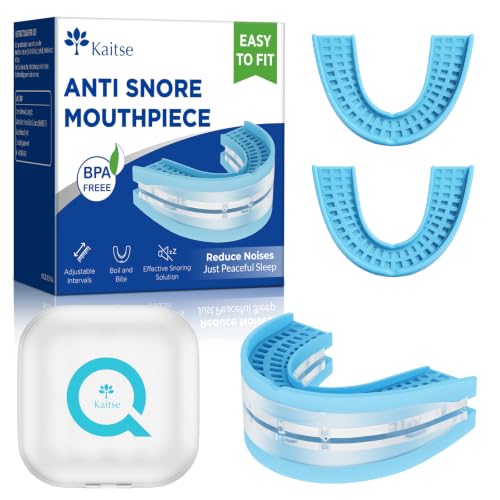
- ✓ Easy adjustability
- ✓ Travel-friendly case
- ✓ Comfortable fit
- ✕ Firmer at higher settings
- ✕ Takes some getting used to
- ✕ Easy adjustability
- ✕ Travel-friendly case
- ✕ Comfortable fit
| Adjustment Range | 6 mm maximum jaw advancement |
| Starting Setting | 1 mm for initial comfort, adjustable in increments up to 6 mm |
| Intended User Age | Adults 18 years and older |
| Portability/Travel Accessory | Includes compact storage case for travel |
You know that feeling when you finally get the piece you’ve been curious about, and it shows up looking smaller in person but strangely capable? The Kaitse Anti Snore Mouthpiece landed on my nightstand with a compact travel case that screams “bring me on your next trip.” I slid out the tray, noticed the 1 mm start setting, and thought, let’s see how gentle this really is.
Within minutes, I was dialing up to 3 mm, finding that sweet spot where it feels secure without pinching. The fit is surprisingly forgiving—you can adjust in small increments, and the bite block stays in place without the usual jaw tension you get with older designs.
It’s light, low-profile, and the plastic has a smooth edge that doesn’t rub the tongue or lips the wrong way.
Day-to-day use is straightforward: you rinse, dry, and snap it into the included storage case. It travels well, which is a big plus if you’re swapping hotels or bunking with a camping buddy.
At night, I noticed the reduction in loud, open-mouth snoring patterns, especially when the setting was around 2–3 mm. It’s not a magic wand, but it helps keep the room from waking up the whole house.
The device sits comfortably in the mouth, and you can tell Kaitse designed it for adults who want a practical, non-invasive option. If you’re chasing longer sleep, this is worth a try before stepping up to more aggressive setups.
You’ll likely appreciate the gradual adjustability and the included compact case for storage and travel.
Anti Snoring Devices, Mini Snore Stopper Dual Airflow Fan

- ✓ Secure, stays put
- ✓ Gentle silicone tips
- ✓ Quiet dual airflow
- ✕ Small learning curve
- ✕ Limited color options
| Airflow System | Dual-fan design with three selectable airflow levels (gentle, moderate, strong) |
| Nasal Tip Material | Soft silicone nasal tips with removable, washable design |
| Fit and Stability | Flexible silicone support strap to maintain secure positioning during movement |
| Power and Charging | Rechargeable main unit with included USB cable for charging |
| Cleaning and Maintenance | Removable silicone tips for easy cleaning; main unit is kept dry during cleaning |
| Portability and Use Case | Compact, lightweight, travel-friendly design suitable for adults; designed for side sleepers |
You’ve circled this one on your wishlist for a while—the Mini Snore Stopper with dual airflow. When I peeled it from the packaging, the soft silicone tips felt surprisingly gentle against my nostrils, and that flexible silicone support strap immediately signaled a more secure fit.
Overnight, I noticed it stayed in place even as I rolled from side to side, which is a win for restless sleepers.
The device sits lightweight on the bridge of your nose, and the curved body keeps the bulk away from your cheeks. It’s less bulky than the old nasal splints I’ve worn, which meant I could fall asleep faster without fiddling with a heavy setup.
A quick one-button press cycles through three airflow speeds, and I appreciated how quietly the dual fans hummed in the background.
Cleaning is simple: remove the silicone tips, rinse, and dry. I liked that the main unit didn’t demand a dedicated cleaning routine, so it didn’t feel like extra chore before bed.
The USB recharge cable is a small but welcome detail—cords are minimal, and it easily slots beside my phone charger at the nightstand.
During the night, I could feel the air slightly lifting and smoothing my breath without any harsh pressure. The tips form a gentle seal that doesn’t pinch or feel like they’re enveloping your nostrils.
For travel days, the compact size and travel-friendly design disappear into a small pouch, ready for hotel rooms or airline nights.
In short, it’s a practical, comfortable option that makes it easier to breathe freely without waking up due to snoring. If you want something that stays put, cleans quickly, and offers adjustable airflow, this one’s worth trying.
What Is Sleep Apnea and How Does It Connect to Snoring?
Sleep apnea is defined as a serious sleep disorder in which breathing repeatedly stops and starts during sleep. This interruption can last for several seconds to minutes and can occur many times throughout the night, leading to disrupted sleep and a range of health issues.
According to the American Academy of Sleep Medicine, sleep apnea affects millions of people worldwide, with obstructive sleep apnea (OSA) being the most common type. In OSA, the muscles at the back of the throat relax excessively, leading to a blockage of the airway, which often results in loud snoring and gasping or choking sensations during sleep.
Key aspects of sleep apnea include its symptoms, risk factors, and potential complications. Symptoms often include loud snoring, episodes of breathing cessation witnessed by another person, excessive daytime sleepiness, difficulty concentrating, and irritability. Risk factors can include obesity, age, family history, and lifestyle choices such as smoking. Complications of untreated sleep apnea can be serious and include cardiovascular issues, such as high blood pressure, heart disease, and stroke, as well as impaired cognitive function and increased risk of accidents.
This condition significantly impacts individuals’ quality of life and can lead to chronic health problems if left untreated. Studies have shown that sleep apnea is linked to a higher prevalence of comorbidities, such as diabetes and depression. The American Sleep Apnea Association estimates that approximately 22 million Americans suffer from sleep apnea, and that about 80% of moderate and severe cases remain undiagnosed, underscoring the importance of awareness and proper diagnosis.
The benefits of addressing sleep apnea include improved sleep quality, enhanced daytime functioning, and reduced risk of serious health complications. Treatment options can vary from lifestyle changes and oral appliances to continuous positive airway pressure (CPAP) therapy. The best snoring device for sleep apnea often includes specialized oral appliances that help keep the airway open during sleep, reducing both snoring and the frequency of apnea episodes. These devices can be an effective alternative for those who prefer not to use CPAP machines.
Solutions for managing sleep apnea and snoring include maintaining a healthy weight, avoiding alcohol and sedatives before bedtime, and sleeping on one’s side. Regular follow-ups with healthcare providers for monitoring and adjusting treatment plans are also best practices to ensure effective management of the condition and prevention of complications.
What Types of Devices Are Available to Help with Snoring Related to Sleep Apnea?
Mandibular Advancement Devices (MADs) are highly effective for many patients as they are specifically designed to adjust the position of the jaw and tongue, keeping the airway open. They can be custom-fitted by dental professionals, ensuring comfort and efficacy in reducing snoring and sleep apnea symptoms.
Positional Therapy Devices encourage individuals to sleep on their sides instead of their backs, as back sleeping can exacerbate snoring. These devices may take the form of wearable belts or pillows that prevent rolling onto the back during sleep, leading to better airflow and reduced snoring.
Nasal Dilators help individuals who experience snoring due to nasal congestion or blockages. By physically keeping the nostrils open, these devices enhance airflow, making it easier to breathe through the nose and reducing the likelihood of snoring.
Smartphone Apps and Wearable Technology offer a modern approach to snoring management by tracking sleep patterns and providing alerts or suggestions to adjust sleep positions. Some devices may even vibrate to prompt the user to change positions when snoring is detected, thereby promoting healthier sleep habits.
How Do Mandibular Advancement Devices Aid Sleep Apnea Sufferers?
Comfort Features: Many modern MADs are designed with comfort in mind, allowing for easier adjustments and better fit. This includes softer materials and ergonomic designs that reduce discomfort and irritation, making it easier for users to adapt to wearing the device throughout the night.
Customizable Options: They can often be tailored to the individual’s mouth structure, ensuring optimal effectiveness. Custom-fit devices are made using impressions of the patient’s teeth, providing a snug fit that enhances comfort and effectiveness in keeping the airway open.
Non-Invasive Treatment: Compared to other treatments such as CPAP machines, MADs offer a less invasive option for sleep apnea management. This non-invasive nature makes them appealing to many sufferers who prefer to avoid more complex medical devices or surgeries.
Why Might Continuous Positive Airway Pressure (CPAP) Machines Be Considered the Best Option?
Continuous Positive Airway Pressure (CPAP) machines are often considered the best option for treating sleep apnea because they effectively keep the airway open during sleep, preventing interruptions in breathing that can lead to serious health issues.
According to the American Academy of Sleep Medicine, CPAP therapy is the first-line treatment for obstructive sleep apnea and is supported by extensive clinical research demonstrating its efficacy in reducing apnea events and improving sleep quality (Schwartz et al., 2020). This therapy works by delivering a continuous stream of air through a mask, which counteracts the collapse of the upper airway, allowing individuals to breathe freely while sleeping.
The underlying mechanism behind this effectiveness is the application of positive pressure that stabilizes the airway during sleep. When individuals with sleep apnea fall asleep, their throat muscles relax, which can lead to airway obstruction. The CPAP machine maintains a predetermined pressure that prevents these muscles from collapsing, thus reducing snoring and apnea events. Studies have shown that consistent use of CPAP not only improves sleep quality but also mitigates the risk of associated complications such as cardiovascular disease, hypertension, and daytime fatigue (Patil et al., 2019). This causal relationship between CPAP use and health outcomes underscores its status as the best snoring device for sleep apnea.
What Features Should You Look for in the Best Snoring Device for Sleep Apnea?
When searching for the best snoring device for sleep apnea, several key features should be considered to ensure effectiveness and comfort.
- Adjustable Fit: The device should have adjustable components to accommodate various mouth sizes and shapes. This ensures a comfortable fit, which is crucial for a good night’s sleep and effective snoring reduction.
- Comfortable Materials: Look for devices made of soft, hypoallergenic materials to minimize irritation. Comfort is essential since the device will be worn for extended periods during sleep.
- Mandibular Advancement: Many effective devices work by repositioning the jaw slightly forward to keep the airway open. This feature is particularly important for individuals with obstructive sleep apnea, as it can significantly reduce snoring and improve airflow.
- Ease of Cleaning: A snoring device should be easy to clean and maintain to ensure hygiene and durability. Devices that come apart easily or are dishwasher safe are often more user-friendly.
- Durability: Look for high-quality materials that can withstand regular use without degrading. A durable device will not only last longer but also maintain its effectiveness over time.
- Customizable Settings: Some advanced devices offer customizable settings that allow users to tailor the device’s functionality to their specific needs. This can include adjustments for jaw position or airflow, enhancing comfort and effectiveness.
- Portability: A compact and lightweight design makes it easier to travel with the device. If you frequently stay away from home, having a portable option can help maintain consistent usage.
- Medical Approval: It is advisable to choose a device that has been clinically tested or approved by dental or sleep specialists. This ensures that the device is effective and safe for individuals with sleep apnea.
How Effective Are Snoring Devices in Relieving Sleep Apnea Symptoms?
Snoring devices can be effective in alleviating symptoms of sleep apnea, depending on the type and severity of the condition. Here are some commonly used devices:
- Mandibular Advancement Devices (MADs): These devices are designed to reposition the lower jaw and tongue forward to keep the airway open during sleep.
- Continuous Positive Airway Pressure (CPAP) Machines: A CPAP machine delivers a steady stream of air through a mask that keeps the airway open, significantly reducing snoring and apnea events.
- Oral Appliances: Similar to MADs, these custom-fit devices help to maintain an open airway by adjusting the position of the jaw and tongue, often providing a comfortable alternative to CPAP.
- Nasal Strips: These adhesive strips are placed on the outside of the nose to physically open the nostrils, improving airflow and reducing snoring caused by nasal obstruction.
- Positional Therapy Devices: These devices encourage sleeping on one’s side rather than the back, which can help reduce the severity of snoring and sleep apnea symptoms.
Mandibular Advancement Devices (MADs) are effective for many patients as they can be fitted by a dentist to ensure comfort and effectiveness. They work by gently pushing the lower jaw forward, which helps to prevent the collapse of the airway that causes snoring and apnea episodes.
Continuous Positive Airway Pressure (CPAP) Machines are considered the gold standard for treating obstructive sleep apnea. They require a prescription and can significantly improve sleep quality, although some users find them cumbersome due to the mask and tubing.
Oral Appliances are an alternative to CPAP and can be more comfortable for some users, especially those who travel frequently or have difficulty adapting to a CPAP machine. These devices are custom-made to fit snugly in the mouth and can effectively reduce snoring by stabilizing the jaw.
Nasal Strips are a non-invasive and simple solution for snoring related to nasal congestion. They can be particularly useful for individuals who only snore occasionally or during specific conditions, like colds or allergies.
Positional Therapy Devices can be helpful for those whose sleep apnea is primarily positional, meaning it occurs mainly when they sleep on their back. These devices may include specially designed pillows or wearable devices that alert the sleeper when they roll onto their back.
How Can You Choose the Right Snoring Device Based on Your Unique Needs?
Choosing the right snoring device for sleep apnea involves understanding the various options available and how they align with your specific needs.
- Continuous Positive Airway Pressure (CPAP) Machine: The CPAP machine is one of the most common devices prescribed for sleep apnea. It works by delivering a steady stream of air through a mask, which keeps the airways open during sleep, reducing the incidence of snoring and apnea events.
- Mandibular Advancement Device (MAD): This oral appliance is designed to reposition the lower jaw and tongue to keep the airway open. It’s a popular choice for mild to moderate sleep apnea sufferers, as it is less intrusive than a CPAP machine and can be more comfortable for some users.
- Positional Therapy Devices: These devices encourage side sleeping, which can help reduce snoring and apnea in individuals who primarily snore when sleeping on their backs. They can come in the form of special pillows or wearable devices that provide gentle reminders to change positions.
- Chin Straps: Chin straps help keep the mouth closed during sleep, which can prevent snoring that occurs from mouth breathing. They are often used in conjunction with other devices, particularly for individuals who snore primarily through their mouths.
- Nasal Dilators: These are small devices inserted into the nostrils to help keep the nasal passages open, facilitating better airflow during sleep. They are especially useful for individuals whose snoring is related to nasal congestion or structural issues in the nose.
- Smart Snoring Devices: These modern devices use technology to monitor sleep patterns and can provide feedback or vibrations to encourage the user to change positions to reduce snoring. Some can even connect to apps for detailed analysis of snoring frequency and intensity.